


DC’s Woman of Tomorrow, Today.

Directed by Craig Gillespie
Starring Milly Alcock, Eve Ridley, Jason Momoa
Rated PG-13
Released June 26th, 2026
Watching Supergirl, the second installment of the DCU, you’re going to learn a lot about the different effects different colored suns have on Kryptonians. The rays of a yellow sun grant them powers, red suns negate their powers, and green suns can prove fatal. What about purple suns? Or blue moons, for that matter? I don’t know. Perhaps those will be covered down the line. The Last Daughter of Krypton, Kara Zor-El (Milly Alcock), is not in a very good place, mentally. She has been through a lot for a twenty two year old. Actually, it’s her birthday week, so now she’s twenty three. And she’s going to celebrate on a planet far away from Earth. She’s going to a planet orbiting a red sun, so she can get properly drunk. Wearing a tan trench coat and sporting a Blondie t-shirt, Kara downs a few shots and dances to music while doing her best to ignore the bar’s fellow alien patrons and her depressive feelings.
One barfight later (it wasn’t her fault, I swear), Kara becomes entwined with a young girl named Ruthye (Eve Ridley), who is obsessed with exacting mortal revenge on a particularly nasty Brigand. The Brigands are pirates that would not look out of place performing in one of Earth’s professional wrestling events. One of these ruffians is the deplorable Krem of the Yellow Hills (Matthias Schoenaerts), a human trafficker who murders innocents without a second thought. Among those casualties are Ruthye’s family. Kara does her best to explain to Ruthye why revenge is not a positive pursuit for one’s life, yet Ruthye remains undeterred, following Kara from the bar back to her ship. As her dog Krypto jumps and plays around their feet, Kara explains to Ruthye for the umpteenth time why she should not go after Krem. This is when the Brigand materializes and shoots Krypto with a poison dart before stealing Kara’s ship to go offworld. So begins Kara and Ruthye’s quest to find Krem and save Krypto. All of the revenge stuff will have to be sorted out when the time comes.
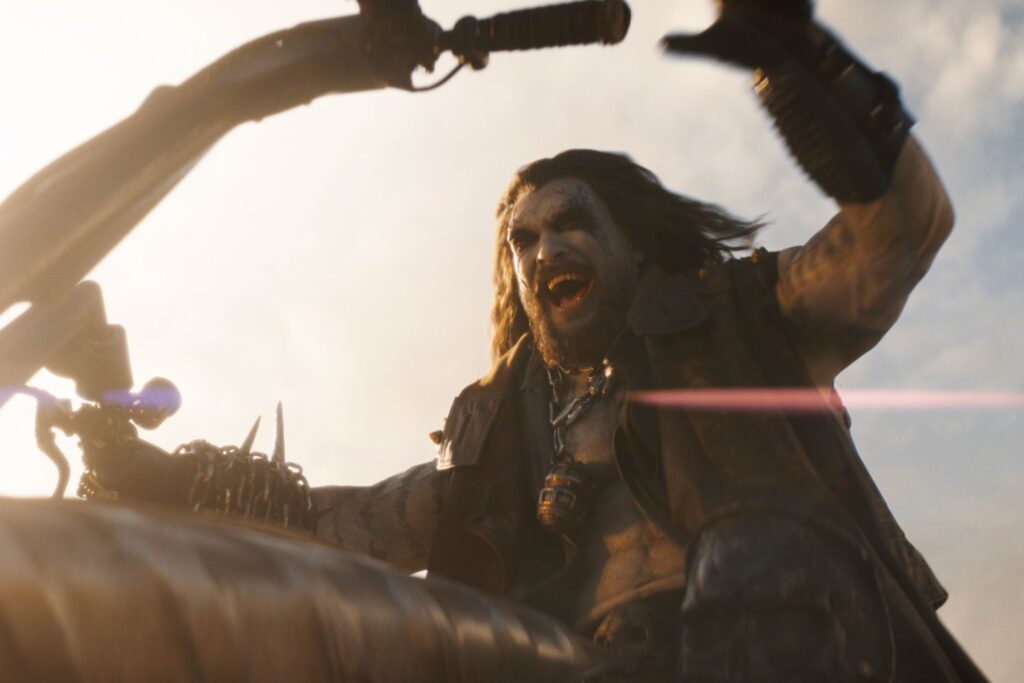
Along the way Kara and Ruthye cross paths with a crass, violent, space-motorcycle riding bounty hunter named Lobo (Jason Momoa), who is tracking a Brigand named Drom Baxton (Diarmaid Murtagh). I have never been a fan of the character of Lobo, and back in the day I would wince whenever he’d show up in a comic book I was reading. Instead of badass and cool, I found the character nothing but annoying and tried to avoid him at all costs. I felt the same way watching this movie. Anytime Lobo popped up I just wanted him to go away. This is absolutely not a knock on Jason Momoa’s performance, as he pretty much embodies the role perfectly. If you’re a fan of the character then I guess you’ll have a smile on your face each time he says “bastich.” I am just happy he’s not in the film very much. Let’s not have a Lobo spin-off, alright? This was enough.
Perhaps the best scenes of the film involve Argo City, a remnant of Krypton that served as Kara’s birthplace. Seeing flashbacks of her growing up happy with her parents Zor-El (David Krumholtz) and Alura (Emily Beecham) before tragedy inevitably strikes is heartbreaking. We learn how she meets her puppy dog Krypto, we see what becomes of Argo City, and we witness her first meeting with her cousin Kal-El (David Corenswet) on Earth. Milly Alcock anchors these scenes effortlessly, conveying Kara’s heartache while also demonstrating her resolve. It’s a strong performance that cements her as a superhero worth rooting for. And it’s a credit to Alcock that she manages to make costume designers Anna B. Sheppard and Michael Mooney’s tan trenchcoat feel iconic in its own way, before she finally dons the superhero outfit we know and love.
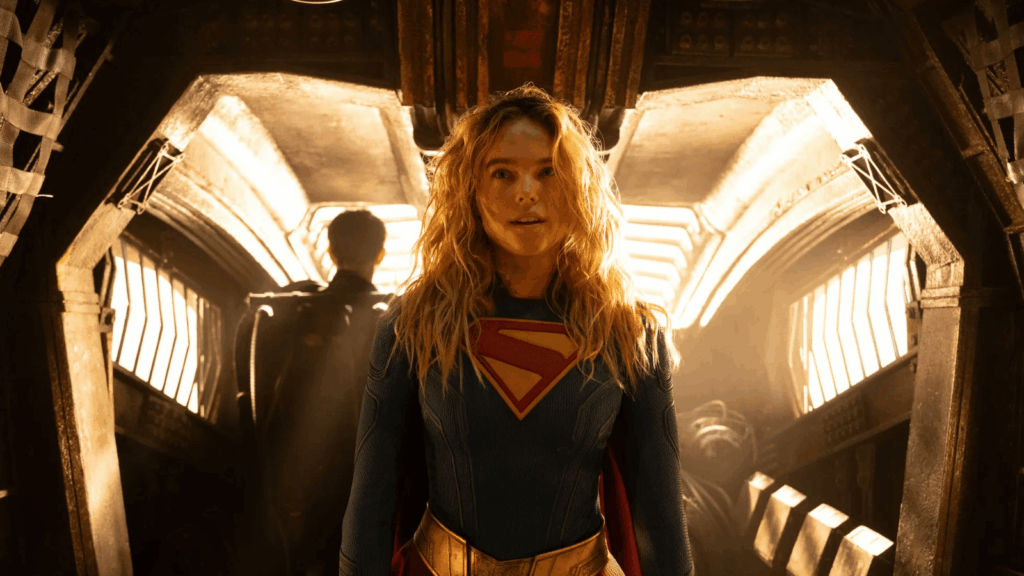
Director Craig Gillespie is known for his work tackling complex women, including the television series United States of Tara, and Physical, and the films Cruella and I, Tonya. He proves to be a good fit for this version of Kara Zor-El, and I’m happy the film spends a bit more time with her pondering her place in the universe rather than merely punching her way through it. That’s not to say that the film’s villain does not have a punchable face. Matthias Schoenaerts makes sure that Krem of the Yellow Hills is seen enjoying his life of violence and brute force, smiling and laughing as he kidnaps and imprisons young girls from planet to planet. Fourteen year old Eve Ridley brings Ruthye to life in memorable fashion as a resolute beacon of righteousness. Ridley and Alcock’s chemistry goes a long way in making this tale of vengeance work as well as it does.
Aside from a few missing characters and some small plot changes, Ana Nogueira’s screenplay wisely doesn’t deviate very much from the excellent graphic novel it’s adapted from, Supergirl: Woman of Tomorrow, an intergalactic riff on True Grit written by Tom King and illustrated by Bilquis Evely. This book gave readers a fresh take on Kara Zor-El in 2022, and has remained a beloved favorite thanks to the talented Evely soaking every page in a kaleidoscope of gorgeous colors, creating a vibrant contrast to Tom King’s gritty script. Without question the biggest difference between the film and the book it’s based on is visual. Instead of recreating the dizzying rainbows of the book, cinematographer Rob Hardy goes for a washed-out, lived in, industrial feel. I don’t think it is nessicarily a bad choice for the film, as a Mad Max wasteland fits the vibe of the story being told, but it’s probably the film’s biggest missed opportunity to leave such striking visuals on the page.
Replacing Ramin Djawadi and Tom Holkenborg, composer Claudia Sarne’s score is pensive and layered, with strings giving way to electronics as tempos rise. There is a darkness here that echoes what Kara is going through, though one can always hear glimmers of hope shining through the songs. It’s a powerful score that meshes well with the film, and it’s a shame that it’s often shoved aside for pop music needle drops. It’s become commonplace for action movies to have popular songs start playing when the heroes start punching the villains, and all too often these moments are more cringeworthy than they are ameliorating. A nice thing about Supergirl is that these pop songs are rather unexpected. I was pleasantly surprised to hear songs from Wet Leg and Wolf Alice, and I even got a kick out of an alien band doing an appropriately loungy cover of The Girl From Ipanema.
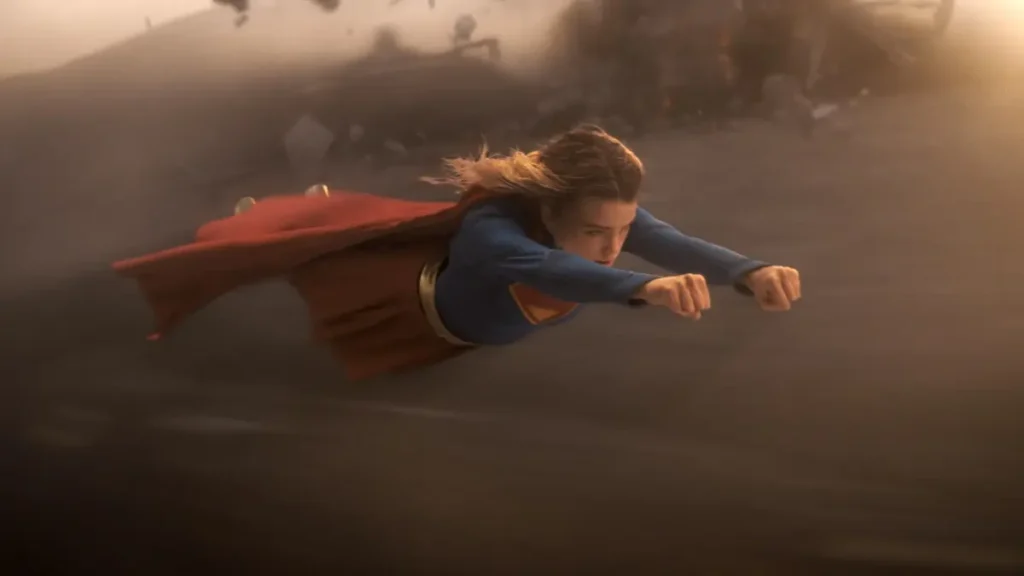
Over the last twenty-plus years, we have endured an overabundance of films based on comic books. After starting out strong, many of these movies started to blend together in a soup of bland corporate key-jangling greed. Unimpressed by constant cameos of characters that are included just so people can say “Look! There is so-and-so!,” audiences are rightly demanding better stories from these films. It makes perfect sense that people are no longer awed simply by scenes of superpowered beings flying and punching and doing computer generated somersaults. Last year’s opening entry into James Gunn’s DCU, Superman, proved that viewers wanted a pulp story with heart. While this film is not free of some unfortunate CGI (notably during a battle at the conclusion), I appreciate that Supergirl gives us an opportunity to become invested in an above average story featuring despicable villains, flawed heroes, and a bitchin’ soundtrack.