


Cultures Clash in This Year’s Thorny Palme d’Or Winner
DIRECTOR: CRISTIAN MUNGIU/2026
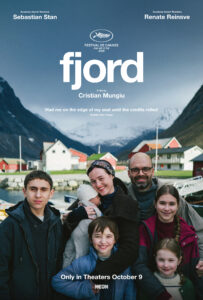
If you’ve decided on dinner and movie tonight, start with the movie—you’ll need the entire dinner to discuss it.
Fjord is the best kind of thorny and provocative, inviting the audience into controversy instead of just feeding them a snappy, manipulative headline. Writer/director Cristian Mungiu is revisiting cultural clashes like in his 2022 drama R.M.N., but instead of dropping us into a Romanian town hall for a debate about immigration, he dramatizes a Rorschach Test about parenting, government responsibility, and their overlaps with cultural heritage and religion.
Renata Reinsve and Sebastian Stan are Lisabet and Mihai Gheorghiu, a cross-cultural, Christian couple who met, married, and began raising their five children in Mihai’s country of Romania. To be closer to Lisabet’s family, they move near her childhood home in Norway, but it only takes a few weeks for their fresh start to sour. When a teacher notices bruises on their eldest daughter (Vanessa Ceban), the school suspects she is a victim of child abuse. In Norway, it only takes this accusation to remove all five children from the Gheorghiu home. And as Lisabet and Mihai fight to regain custody of their children, it becomes clear this dispute isn’t just about their children’s physical safety—they are on trial for their crime of refusing to assimilate.

This roman à clef takes inspiration from a 2015 situation with a Romanian immigrant family, but there are a number of similar cases in Norway that have earned media attention. By removing this story one step from reality, Fjord converts a docudrama into a parable. Mungiu shoots it with the minimalism of a verité documentary: no stylistic flourishes, only realistic exposition, and little interiority. Reinsve and Stan have proven their acting chops in more animated roles, but here they aspire to naturalism. (In the hands of less accomplished actors, these roles might have felt like mere reenactments or veered into melodramatic ebullition.) The most incisive moments are subtle, such as Mihai irking his co-workers by playing “Amazing Grace” on the piano or Lisabet’s compassionate touches in her nursing work. The only visual flair comes from the stunning Scandinavian landscapes, an obvious but apt metaphor for the iciness the Gheorghiu family experiences and for how the Norwegians have designed their schools to be impervious to natural disruption.
Most compelling is what we don’t see. As one character says, “It is impossible to know what happens inside a family’s private life,” and Mungiu is more interested in forcing the audience to examine itself even as the characters must defend their tendentious positions in a courtroom. (Like that French courtroom in 2023’s Anatomy of a Fall, these legal proceedings will feel wild and meandering to Americans. The adage “innocent until proven guilty” holds little weight with Norway’s Child Protection.) Both the government and the film show little interest in the the children’s perspectives, leaving the morality of the adults almost entirely up to us, though neither the religious parents nor the post-religious society will likely earn your full endorsement. Even if you believe the accusations of child abuse to be calumny, you could still leave critiquing how the Gheorghius attempt to regain custody of their children. You may sympathize with Child Protection’s belief it’s better to be safe than sorry, but their devotion to bureaucracy echoes an exhausting piety.
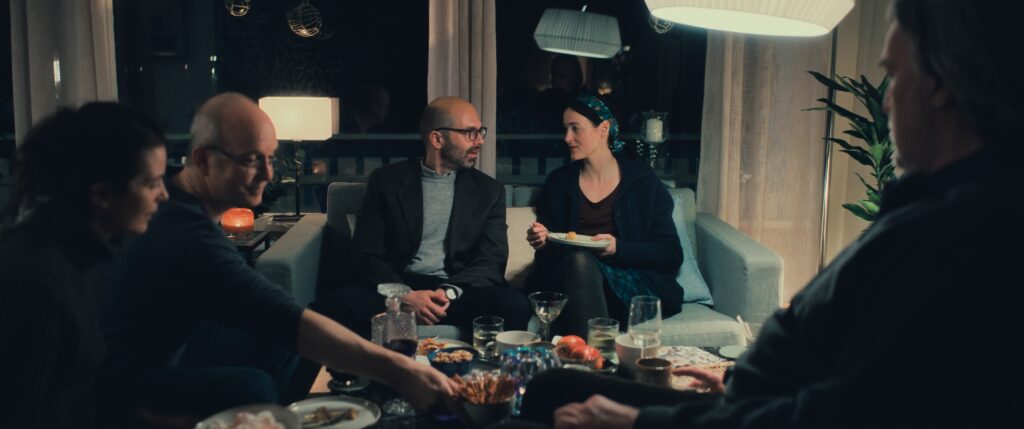
Not every script choice is as acute, like the Gheorghiu children’s connection with their teen neighbor Noora (Henrikke Lund-Olsen), a chaos agent whose purpose so ill-defined in this fable she becomes an annoyance. But the more perceptive beats and the untidy ending will send you out of the theater in a heated conversation. Thankfully, it’s the most intelligent kind that bears little resemblance to the ragebait fueling the Internet. Instead of shouting, Fjord invites questions and send you away with conflicting interpretations about who is right, who is wrong, and how much so—you may still be debating the root of the conflict through dessert.