


Jane Austen’s Classic Novel, Now From Marianne’s Eyes
DIRECTOR: GEORGIA OAKLEY/2026
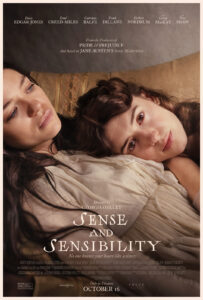
There are few situations tougher than being a single woman—at least in the early 19th century.
Now without a father and not yet with husbands, Elinor (Daisy Edgar-Jones) and Marianne (Esmé Creed-Miles) Dashwood are between the bedrock of financial security and the hard task of finding a permanent place. Because of Mr. Dashwood’s passing, their family home and most of their wealth is transferring to his only male heir, their half-brother John (Tom Brooke) and his less-than-hospitable wife Fanny (Stacy Martin). Though Elinor appears to match well with Fanny’s brother Edward (George MacKay), his family doesn’t approve, and Marianne insists she will only marry for the most passionate kind of romance. The kind (but meddling) Mrs. Jennings (Fiona Shaw) offers the girls, their mother (Caitríona Balfe), and their younger sister Margaret (Bodhi Rae Breathnach) a cozy (read: small) cottage for next to nothing. But they still face a bigger hurdle: With no dowries, the Dashwood daughters have little hope of ever wooing a suitor who might improve their socioeconomic circumstances.
This newest version of Sense and Sensibility also faces a tall order: Though it’s been 30 years, the reputation of the 1995 film still looms large. Starring Emma Thompson, Kate Winslet, Alan Rickman, and Hugh Grant (plus a host of top-notch character actors), it boasts one of the best film casts of the 1990s in sumptuous period detail and directed by Ang Lee. In short, it’s a 7-time-Oscar-nominated embarrassment of riches and still one of the best screen adaptations of Jane Austen’s work.
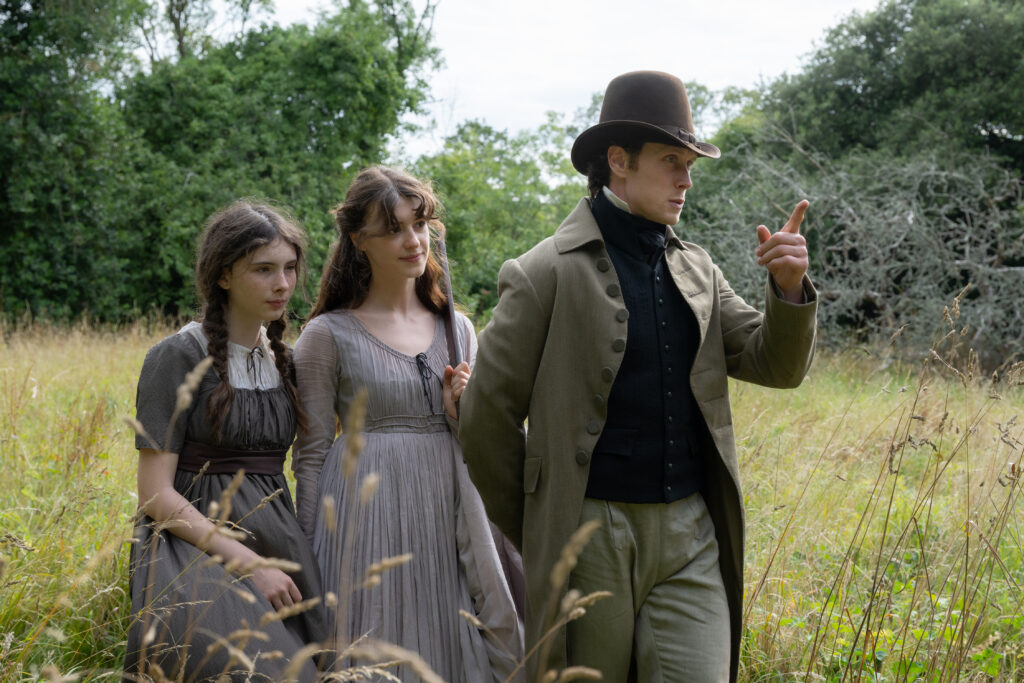
Director Georgia Oakley and screenwriter Diana Reid don’t seem concerned with trying to recreate that exact alchemy. Written by Emma Thompson, the 1995 Oscar-winning script quite literally came from Elinor’s perspective. In that version Margaret observes about Mrs. Jennings, “She talks about things. We never talk about things.” Tension builds because characters talk around their thoughts and feelings, leaving them open to misinterpretation or ignored altogether. Three decades later, Oakley and Reid have decided to tell this story with Marianne’s sensibilities. Marianne declares her infatuation with Willoughby (Frank Dillane) within moments of meeting him, and the other characters are almost as quick to explain themselves. Even the reserved pair of Elinor and Edward discuss the possibility of his breaking family commitments in a bolder way than in the novel. It’s not uncommon for someone to groan aloud in frustration at the events around them.
The visual style is also quite literally less buttoned up, trading tight ringlets peeking out of bonnets for curls cascading down the backs of drapey dresses. With an emphasis on exterior photography, the Dashwoods and their company always seem to be dressing with the weather and their outdoor experiences in mind. (Marianne’s hair usually appears piecey and drippy as if she’s just trekked in the rain.) When a pivotal conversation takes place in the National Gallery, it’s shot in front of large landscape paintings. This is the cottagecore aesthetic of Taylor Swift’s folklore and evermore, while the ’95 rendition is too taciturn to correspond with any of Swift’s heart-forward albums. Even on a budget of only about $25 million, this rendition of Sense and Sensibility still looks stunning. The interstitial moments in the natural world add texture and romance to a society known for its rules of behavior. Most memorably, Marianne stands in the mist surrounded by a horde of hunting dogs, mirroring the emotional crash out she’s experiencing.
What works less well are several major departures from the novel that miss the spirit of Austen’s themes. (Spoiler alert!) Most confounding, Marianne’s two suitors become literal opponents in a duel when they believe Marianne is at the edge of death. Because she has begun to recover, she watches them from the window with delight. Apart from the wild decision to add onscreen violence to an Austen story and its blatant ripoff of Hamilton, this undercuts the maturity Marianne develops over the novel and doesn’t feel congruous with either Colonel Brandon (Herbert Nordrum) or Willoughby’s characters. The update is so out of left field and narratively irrelevant it’s unclear why it was added. Though less conspicuous, the second update also creates inconsistency. In the novel, Edward’s secret engagement is a result of a youthful indiscretion and hidden because his mother would disinherit him if discovered; in this film, his mother plans the engagement that prevents his attachment to Elinor and would disinherit him if he breaks it. This credits Edward with less integrity than if he were staying in a commitment he chose, but Elinor somehow finds his inability to defy his mother and a calculating fiancée attractive. Giving Edward less agency also lowers the stakes. (End spoiler alert.)
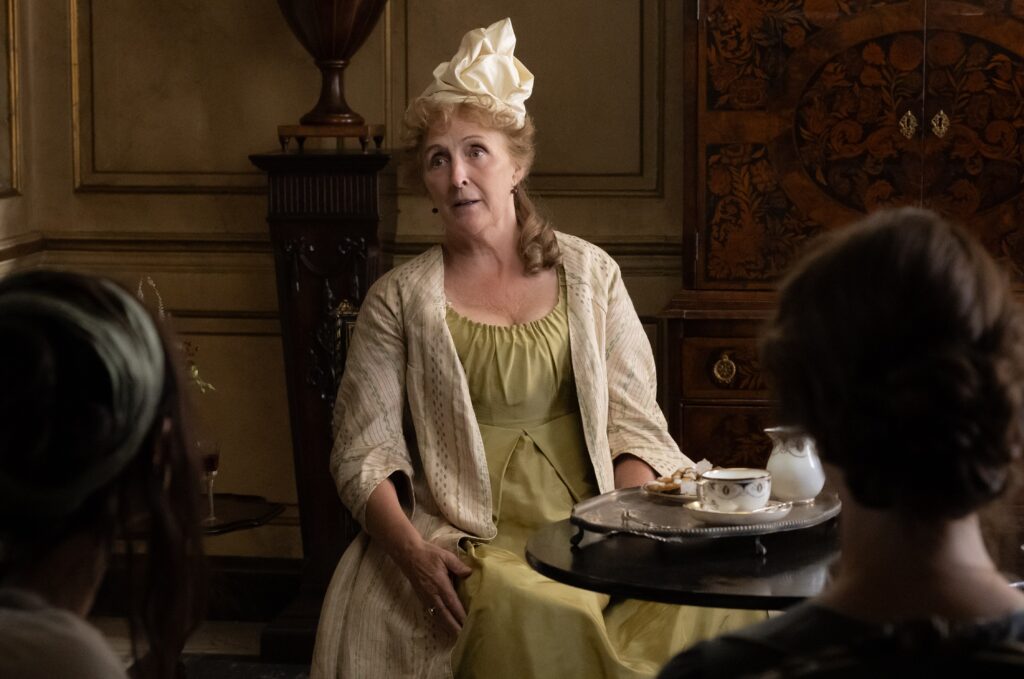
Not surprisingly, Creed-Miles is the standout performer of the film, never overplaying her emotionality into incredulity. She’s only matched in energy by Fiona Shaw, who deserves recognition for her audible-laugh-worthy scene-stealing. Edgar-Jones is also better-suited as the demure Elinor than attempting to meet Glen Powell’s outsized charisma in Twisters or dragging along a listless drama like On Swift Horses. Austen adaptations are best when they capture both the romance and the comedy, a compelling push/pull much like sense competing with sensibility or pride staring down prejudice, and Creed-Miles and Edgar-Jones have that kind of chemistry.