


One Bad Day
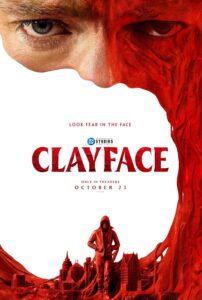
Directed by James Watkins
Starring Tom Rhys Harries, Naomi Ackie, Max Minghella
Released October 23rd, 2026
Rated R
Have you ever found yourself in a dark nightclub, perhaps full of liquid courage, bopping around with your fellow beautiful people to the slinky sounds of Ooh La La by Goldfrapp? You’re too hyped up on the neon vibes to realize this may be a recipe for bad decisions, and that’s when you see a particularly sexy bad decision dancing right in front of you. So goes the night for young up-and-coming actor Matt Hagen (Tom Rhys Harries), who celebrates his recent Academy Award nomination by dancing and then sleeping with the gorgeous Mia Torrez (Joana Ribeiro), the girlfriend of notorious local mob boss Markos Szabo (David Dencik). The morning after results in Szabo’s goons slicing up Hagen’s face six ways to Sunday, remarking that “He ain’t pretty no more” in what amounts to the harshest mutilation scene since Alex Murphy met his fate in Paul Verhoeven’s Robocop.
Hagen goes to the Gotham City Police Department for help, only to face a brick wall of corruption. His subsequent criminal trial against Szabo goes nowhere. Hagen goes broke trying to fix his face through expensive and painful surgeries as he comes to the realization that nobody will be held responsible for the dastardly deeds that have derailed his promising career. After failing to repair his face through traditional means, Hagen seeks out Dr. Caitlyn Corr (Naomi Ackie), a scientist who is pushing the limits of nanotechnology in the hope of being able to regrow skin cells. Dr. Corr warns Hagen that what she does is not akin to plastic surgery, and besides, her experimental tech has never been tested on a human. The disfigured actor says he will sign anything she wants to indemnify her. He is desperate and wants to go all in with the treatments.
It doesn’t take much to convince Dr. Corr to start injecting Hagen with her nanotech, maybe because she recently lost all of her investors and funding. If the procedure is successful it could lead to her repairing her reputation and improving her financial status. Dr. Corr explains that the nanotech she’s injecting into Hagen’s bloodstream will rewire him on a cellular level. The tech is governed by artificial intelligence that will learn how best to repair his face. Should the A.I. get out of control, Dr. Corr is in possession of a killswitch. The sessions are successful, but Hagen’s new face turns out to be as stable as his mental state, which is to say, not very. He decides to exact murderous revenge on not only the mobsters who scarred him, but also on the people he discovers worked with them to cover up the brutal crime.

During his long journey toward complete facial reconstruction, Hagen develops romantic feelings for his doctor/savior. But Dr. Corr is engaged to Gotham City’s lone good cop, John Borrelli (Max Minghella), and she doesn’t seem to return Hagen’s feelings anyway. When the people responsible for maiming Hagen start winding up dead, it doesn’t take Borrelli long to point the finger at his fiancée’s famous patient. What Borrelli is unaware of is the fact that due to his fiancée’s nanotech, Hagen is able to distort his face in such a way as to resemble anyone he chooses. For all of its puppy thrills, Clayface has moments that touch on interesting themes including body dysmorphia, gender identity, and the loss of identity. The filmmakers do not attempt to make Clayface into an anti-hero. By the conclusion of the film he has earned his status as a villain to be feared.
Clayface is set primarily in The Narrows, arguably the worst neighborhood in Gotham City. That’s saying something! It’s a messy, rundown district that seems like it’s on fire 24/7. It certainly makes sense as the kind of place that could birth a vigilante who dresses up like a bat. Clayface is the third theatrical release of the DCU, following Superman and Supergirl, but do not expect there to be mentions of Bruce Wayne, Batman, or any other superheroes. This is a stand-alone story. Those looking for connections to the larger DCU will find them (we see characters enjoying the beach in Coast City, Hagen flies Ferris Air, many scenes are set in Club Vesuvius, etc.), but the film shies away from dialogue forcing a shared universe. It’s a breath of fresh air to have a comic book film that is satisfied to exist on its own terms.
So how did a Batman villain get his own movie before Batman himself is established in this universe? It all comes down to a pitch from respected writer/director Mike Flanagan, who was inspired to write a script based on Feat of Clay, a two-part episode of Batman: The Animated Series in 1992. Unable to direct the film due to other commitments, the reins were handed to James Watkins, the director responsible for many popular scarefests including Eden Lake and The Woman in Black. To re-write Flanagan’s script, Watkins brought in Hossein Amini, who was nominated for an Academy Award for his adapted screenplay of The Wings of the Dove, and has penned such lauded works as The Two Faces of January and Drive. The result is a comic book film that feels untethered from its origins, something more concerned with disturbing audiences rather than making them cheer.

The film had a small budget, which is noticeable with some of the dodgy special effects on display. Sometimes when Hagen morphs his face into other characters it looks like something out of Michael Jackson’s Blake and White music video from 1991. I was disappointed with those moments, but overall the clay effects are impressive. I consider it a compliment to the effects team that I had to look away from the screen a few times, notably when Hagen’s face starts falling off when he’s a passenger on an airplane and he resolves to open up his eyelids with a pair of scissors. The surgery scenes are also difficult to watch, as we see skin being removed and a nose being opened up. There is a post-surgery scene where only one of Hagen’s eyes is visible that reminded me of a shot from Gary Sherman’s Dead and Buried.
The film’s score is courtesy Volker Bertelmann, who is clearly having a good time conveying the film’s moodiness through music. The film’s visuals are also varied, with cinematographer Rob Hardy (who also shot Supergirl) deftly juxtaposing the griminess of The Narrows and the glitz of Club Vesuvius. Tom Rhys Harries, Naomi Ackie, and Max Minghella all turn in solid performances, but I think the film’s secret weapon may be its supporting cast, with David Dencik, Eddie Marsan, and Joana Ribeiro being so memorable. Clayface embraces its R rating with head splattering scenes, nudity, and harsh language. The film may at times remind audiences of David Cronenberg’s remake of The Fly or Coralie Fargeat’s The Substance, but Watkins, Amini, and Flanagan seem to have taken their biggest inspiration from Sam Raimi’s Darkman, a film that also followed a man who uses his temporary face changing abilities to exact revenge.