

Director Jacques Doniol-Valcroze Makes his Move into the French New Wave
DIRECTED BY JACQUES DONIOL-VALCROZE/FRENCH/1960
BLU-RAY STREET DATE: JULY 28, 2026/ICARUS FILMS
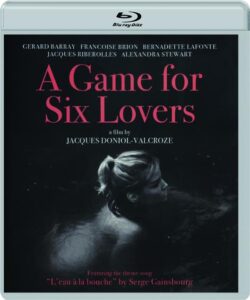
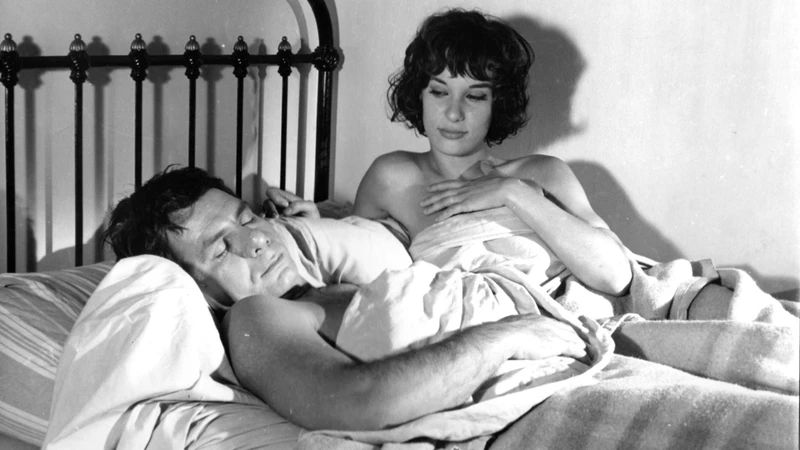
Six sexy people being slyly seductive in a secluded country manor house. This amid some identity duplicity and frequent lusty actions. It’s 1960, it’s black and white, and Serge Gainsbourg music fills the soundtrack. Does anything sound more resoundingly French than this?
It’s also the beginning of the French New Wave, albeit the end of the beginning. Consequently, the near-miss release timing of the sensually satisfying L’Eau a la Bouche (translated, “A Game for Six Lovers”) costfirst time filmmaker Jacques Doniol-Valcroze a permanently enshrined spot in cinema history, where he might’ve resided alongside of his former Cahiers du cinéma cohorts Truffaut, Godard, and Chabrol. Deemed and dismissed as too much yet not enough upon release, Six Lovers has, unintentionally or not, been jilted by the Nouvelle Vague pantheon. Thankfully, Icarus Films has made great amends with it in releasing a beautiful new Blu-ray edition for audiences to become enamored with- maybe for the first time, or maybe upon reunion.
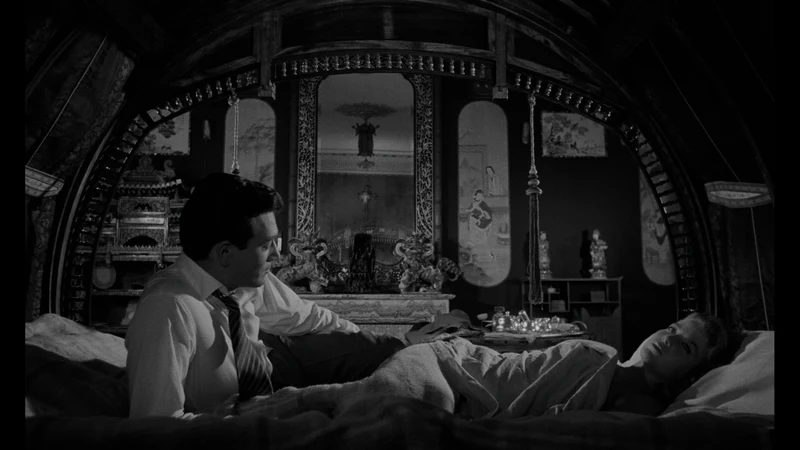
It’s all simple enough. When young blonde women Fifine (Alexandra Stewart) is summoned to the manor by Milena (Françoise Brion), a cousin she’s grown up estranged from thanks to the “family rift of ‘42”, for the reading of a will. Fifine decides it’s best to leave her lover Robert (Jacques Riberolles) back home, lest the relatives disapprove of their cohabitation and open relationship. But when Robert shows up anyway, and Milena assumes he’s Fifine’s brother Jean-Paul, Robert rolls with that and begins seducing Milena. Which is all well and good with Fifine, who’s already set her sites on Miguel (Gérard Barray), Milena’s ex who’s still hanging around. So, with everyone’s pursuits squared away, the weekend can commence without a hitch, no?
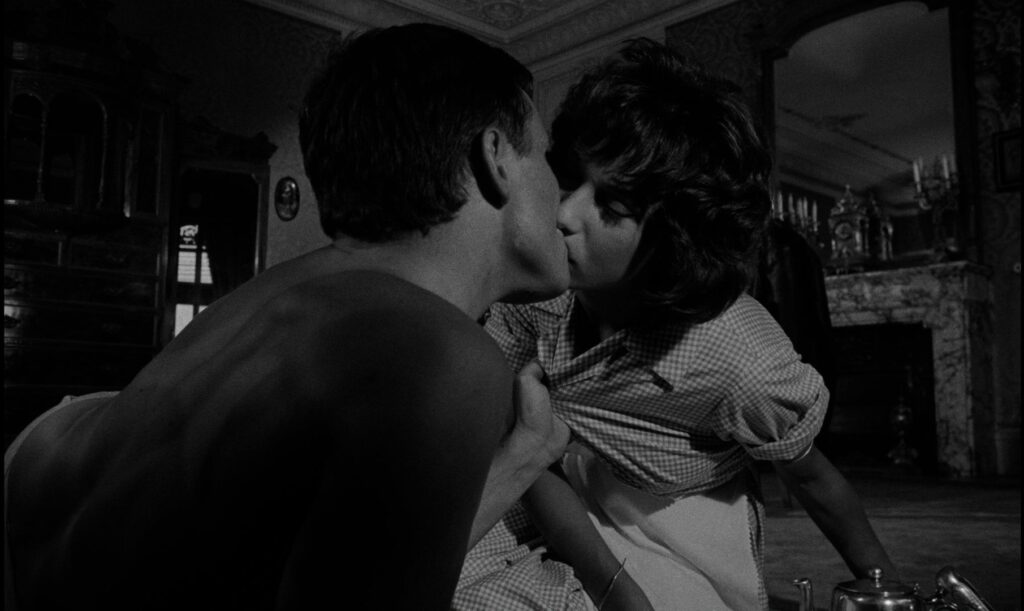
There’s also the head butler, Cesar (Michel Galabru), an undersexed and perpetually gropy man who brags about his staff hirings of young women, hired entirely on the basis of him finding them attractive. To paraphrase the man, “If they don’t “cooperate”, they’re out! When they get too attached, I show them the door!” Well. What’s the new maid, Prudence (Bernadette Lafont), to do in such a gross live-in workplace? The eventual answer doesn’t jibe well at all with improved 2026 gender politics, especially considering that Cesar had just literally chased her up the vast circling stairs of the place to her bedroom, shouting and tearing off almost every garment of her clothing along the way. It’s tough to imagine any era where this sequence plays as anything other than horrific, but Six Lovers opts to simply recover from it. This is it’s only truly glaring black mark.
So, there we have our titular six lovers. But what is the game? Perhaps it’s the hunt for the distraught and missing Fifine, an Act III plight we’re well aware of from the outset, as the film opens with a brief flash-forward of everyone else frantically searching for her. Before we’ve even met any of these people, we’re told that one may’ve taken her own life, “over a fling.”
Or maybe the game is actually one that these people play in their own self-aggrandizing heads, as their actions reveal over time that maybe they’re not the great libertines they believe themselves to be. That, and several other pertinent observations, can be read in the oft lighthearted booklet essay by film writer Michael Barrett. To Barrett’s credit, he also goes out of his way to detail how Six Lovers was received and compartmentalized by various past film scholars in actual print volumes. Just as culturally marginalized films such as Six Lovers ought not be abandoned to the dust bins, nor should such books and the writings therein.
Icarus Films’ Blu-ray of A Game for Six Lovers alsoincludesthe short film The Botanical Avatar of Mademoiselle Flora, which I reviewed as part of Icarus’ Blu-ray collection, Early Short Films of the French New Wave. Presumably, this short is here due to its shared presence of Bernadette Lafont. If Icarus can pluck that film from that collection, I can pluck my write-up of it from my review of said collection:
“Undiagnosed depression dominates The Botanical Avatar of Mademoiselle Flora, Jeanne Barbillon’s 1965 short about female isolation and loneliness. Bernadette Lafont, who would go on to star in Jean Eustache’s internal 1973 epic The Mother and the Whore, plays the dejected Flora with pouty scorn. Her lover, Charles (Louis Mercuret) may as well not be around or makes things worse. Eventually, all she can do is slouch into a pile of fresh vegetables and long to become “one with the waters” of the nearby lake. An effective little film from Barbillon, who barely directed anything else, and is more known for her writing.”
Ever a player but never a master, A Game for Six Lovers proved unfairly to bea losing game for Doniol-Valcroze. That it can now be owned for posterity in high definition, however, is an undeniable win for today’s fans of elegant French cinema.