

Our Favorite Gang of Toys Take on Little Tech
DIRECTOR: ANDREW STANTON, MCKENNA HARRIS (CO-DIRECTOR)/2026

I am very happy to report there are no bad Toy Story movies.
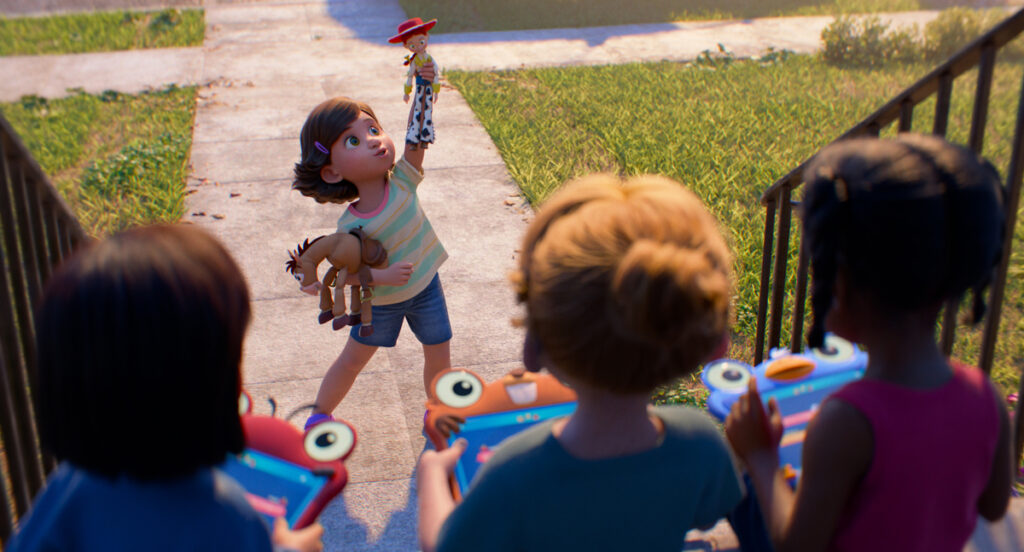
Seven years since we met Forky in Toy Story 4, we return to Bonnie’s bedroom, still full of playtime and imagination into her grade school years. But Bonnie (Scarlett Spears) wishes she weren’t playing by herself. Her shyness has kept her from making friends with the other kids in the neighborhood, though her toys have been trying to help her when her back is turned. Jessie (Joan Cusack) notices that Bonnie’s timidity isn’t the only reason she’s lonely: Kids are spending their time in front of screens instead of in their backyards. When Bonnie’s parents buy her a Lilypad tablet, the toys begin to worry they won’t just be obsolete when Bonnie grows up—what if tech replaces all toys going forward?
Much of this Toy Story continues the traditions that have been building since 1995, once again setting a prison break plot against puffy cumulus clouds and making me cry along the way. Toy Story still resonates three decades after its introduction because every film has led with character, its adroit humor and (at one time groundbreaking) animation used only to support the storytelling. This may be our first Andy-less chapter and Woody (Tom Hanks) and Buzz (Tim Allen) may play more supporting roles, but this world and this cast still feel rich. Jessie is the star in this outing, taking on her largest emotional arc since Sarah McLachlan’s lachrymose crooning revealed her back story in Toy Story 2. Like Woody, Jessie’s Enneagram 2 tendencies lead to a deep fear of abandonment. But Woody, Buzz, and none of the other toys have served as an avatar for their kid like she does for Bonnie. Though we rarely spent time with Andy outside of his bedroom, we know he was social, drawn to adventure, and brave enough to go to sleep away camp. Jessie doesn’t struggle with the same level of anxiety as Bonnie, but they both fear rejection.

While it’s too strong to call this a fresh take for the franchise, it is new (and welcome) narrative choice, and ironic when you consider the Lilypad (Greta Lee) is meant to be an online avatar for Bonnie. Disney isn’t innocent in the evolution of modern technology, from belittling its own vault in a now-defunct deal with Sora AI to accusations of replacing human jobs with AI (not to mention all of the screen time opportunities they design for kids). Thankfully, Toy Story’s ownership hasn’t influenced it to become subliminal propaganda in the way that this year’s Amazon-produced Mercy felt like an ad for Ring doorbells. Lilypad promises self-improvement, fun, and popularity, and Bonnie (and even her parents) are learning the difference between advertising and a guaranteed outcome. Jessie and the gang know Lilypad’s algorithms can’t predict compatible friendships with 100% accuracy because shared interests and location aren’t the only relevant factors. A forgotten potty training tool (Conan O’Brien) reminds us tech is often designed for narrow functions, giving them faster sell-by dates by design.
Without spoiling anything, this also doesn’t turn into an anti-tech manifesto, if for no other reason than it would be silly to pretend kids can live in a world without screens. Toy Story has always been comfortable with a bittersweet ending: Buzz may not replace Woody, but Andy could get a dog for Christmas; Woody’s arm can be fixed, but Andy will still grow up; Andy passes his toys on to Bonnie, but she’ll grow up, too; Woody might find purpose helping lost toys, but he must leave his family. The newest film is another reminder that just because something doesn’t last forever doesn’t mean it wasn’t meaningful, and that “useless” toys feel valuable perhaps because they’re not designed only to help children grow up.