


Steven Spielberg Looks to the Skies Once More for Another Alien Adventure
DIRECTOR: STEVEN SPIELBERG/2026

JIM TUDOR: Two of the latest presidents of the United States have, quite recently and very individually, all but blatantly acknowledged it: UFOs are real. But are they, really? Like Fox Mulder of The X-Files, many of us want to believe. But should we? If they are, and our government knows it, why keep it such a tightly guarded secret? Would indisputable proof that extraterrestrial life forms have made a point of visiting our humble rock really cause mass panic and mean the collapse of sacred belief systems that promote moral order, etcetera? I don’t see why it would. But then again, who knows? These are just some of the Big Questions fueling Steven Spielberg’s latest cinematic meeting of the miraculous and the mundane, Disclosure Day.
An “old man movie” with a young child’s sense of wonder, Disclosure Day exists in a perpetual state of such tension, both internal and external. Besides being the most commercially successful director of all time and one of the few “household name” filmmakers, he’s also a bona fide auteur, always keen to indulge his own interests and obsessions in his distinctly artistic manner. For him, not only can it be both, it must be both. The commercial success only came about because of how remarkably well he helmed the likes of Close Encounters of the Third Kind (1977) and E.T. the Extra-Terrestrial (1982). He directed many other films in many other genres in his six decades of being THE Steven Spielberg. But it’s the mysterious optimism of those two particular films that have cemented his reputation amongst filmgoers. Now, finally, after all these years and all those other films he’s made to convince us that there’s more to him than that, little Stevie Spielberg (as he claims Francis Ford Coppola loves to call him) returns to fly the friendly skies of the great unknown once more.
TAYLOR BLAKE: One of the loveliest things about discussing Spielberg is you can’t overstate his impact or his prowess—his work lives up to the hype, and his knack for understanding what audiences want is unmatched. I once heard someone say Jurassic Park was a behemoth because kids want to be treated like grown ups, and grown ups just want to feel like kids again. (My Googling suggests this succinct descriptor may have come via ScreenCrush, but this comment was relevant as early as Jaws.) His best work—and most of the rest of it—is timeless, accessible, thrilling, and beautiful. In many ways, he’s the platonic ideal of the Hollywood director.
It helps that his interests align with stories that are timeless, accessible, and thrilling by nature. His work has explored ties with the supernatural as early as 1972’s TV movie Something Evil, and almost half of his feature film work has taken place outside of our reality, in no small part to his relationship with the extraterrestrial. Close Encounters and E.T. may be the most beloved, but A.I., War of the Worlds, and Kingdom of the Crystal Skull prove aliens never left his mind. Though less frequently in the 21st century, his films have explored the supernatural (every Indiana Jones adventure), fantastical (Hook, The BFG), and spiritual (Always), often intersecting with science fiction (Jurassic Park, A.I. Artificial Intelligence, Minority Report, Ready Player One) along the way.
One of the loveliest things about Disclosure Day is Spielberg is still at the height of his powers as a storyteller, thrill maker, and idea man, and still at the center of movie culture just months after the Academy and audiences have embraced alien stories like Bugonia and Project Hail Mary. (Though, to be fair, aliens have never not been significant to cinema since special effects took off in the 1950s.) Disclosure Day makes for a fascinating sister project to Close Encounters, again examining characters overwhelmed by the unexplainable, searching for purpose, and behaving by compulsion.

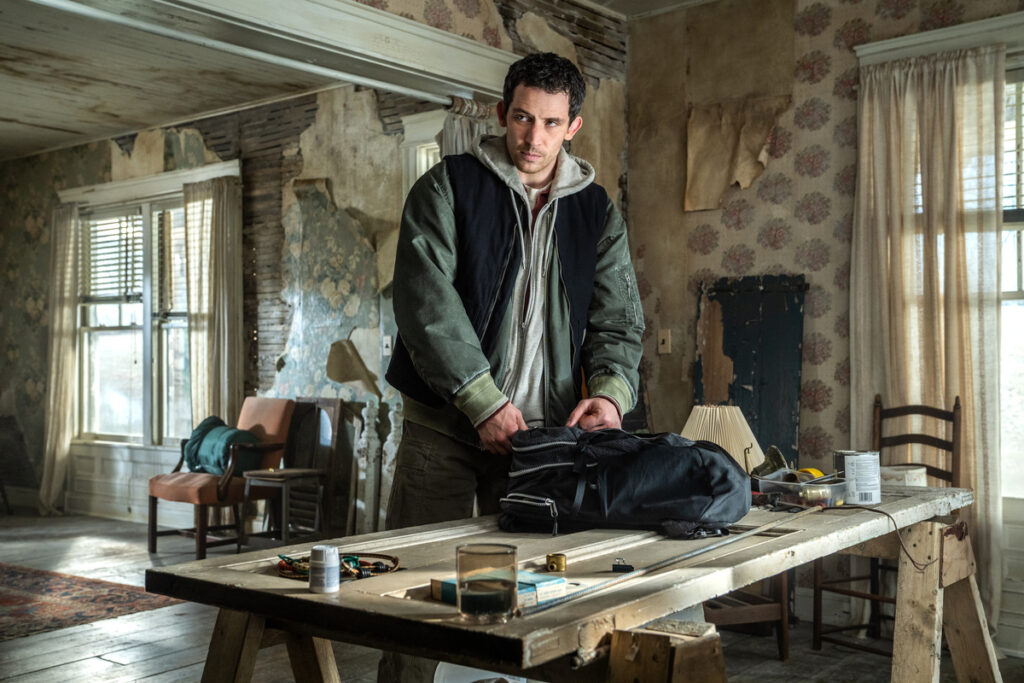
JIM TUDOR: In the quite-effective ramp up to Disclosure Day, geeks such as myself floated the notion that the film is a hush-hush follow-up to Close Encounters. I think we can now safely let people know that if that is the case, it’s very low-level. But that’s okay, as Disclosure Day moves along at a brisk pace (despite the occasional oddly paced scene) from the very first image, which perhaps presciently involves a UFC-style fighting event. With admirable narrative propulsion, we meet the sensitive but staunch Dr. Daniel Kellner, played by a perfectly cast Josh O’Connor. Kellner is being aggressively pursued by big-bad Noah Scanlon (Colin Firth, playing it intriguingly noble in his villainy), CEO of a super-secret government organization called Wardex. Wardex keeps the Big Secret that the government insists on keeping suppressed, but Kellner, who was a cybersecurity guy there, has decided that the public deserves to know. Spoiler alert: It’s about space aliens.
Meanwhile, Kansas City television meteorologist Margaret Fairchild (Emily Blunt, reliably doing her thing) suddenly finds herself involuntarily making a series of ominous clicking sounds while she’s live on the air. This follows a recent, seemingly benign encounter in her apartment earlier that day. Before long, she and her thick-headed boyfriend (Wyatt Russell) find themselves on the run from Wardex. Elsewhere, the same is true of Kellner and his girlfriend, Jane (Eve Hewson). Jane, whom we learn was on her way to becoming a nun before bailing on it, lends the film its most intriguing quality with her spiritual grappling over how the reality of alien life might fit into our knowledge of God’s grand design. And once again, the Jewish Spielberg is leaning heavily and overtly into Christian symbolism and beliefs, an always-fascinating and not uncommon move within his filmography. Her state of existential tumult is exploited by Scanlon in his desperate attempts to find and silence them. Spielberg’s visual method of portraying Scanlon’s invasive maneuvers is simply ingenious, and I can’t believe I’ve never seen it in a movie before.
Apparently though, unrelated to all the secret alien stuff, there’s some sort of world-threatening global political crisis raging in the background of this movie. This intended-as-important detail was lost on me, as I wondered why, midway through the film, a small town gas station was being overrun by people grabbing up food items. I’m guessing this aspect was much more vital as contrast in earlier cuts of the film and David Koepp’s screenplay? I do wish the dichotomy of this human crisis and the race to tell the fractured world that we’re not alone in the universe were better melded throughout the story. In this regard—and maybe only in this regard—it feels as though Spielberg is holding back.
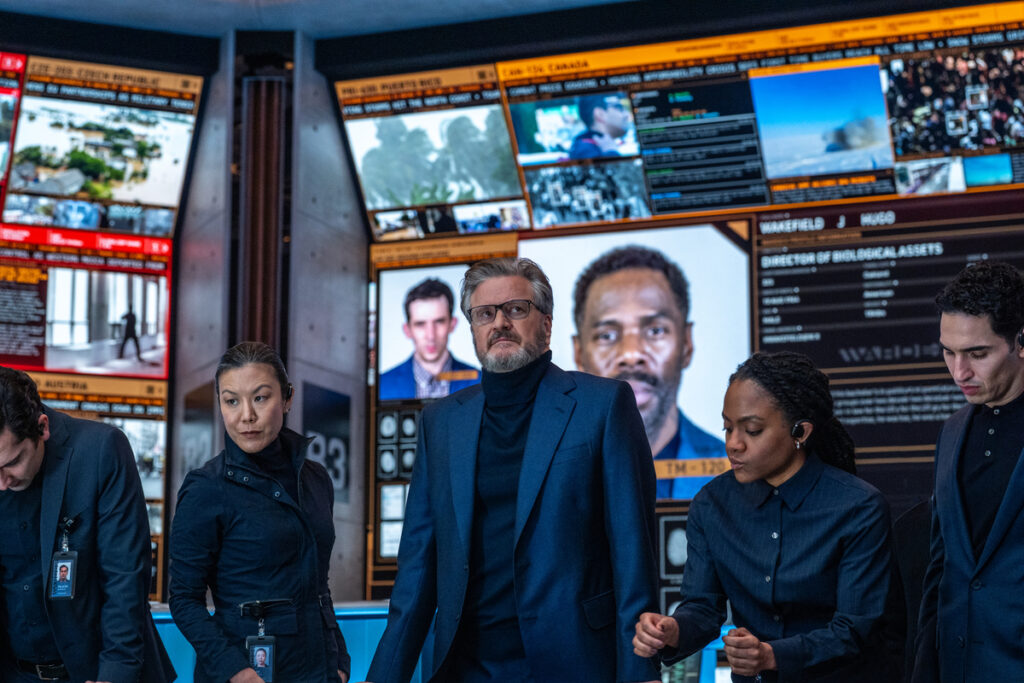
TAYLOR BLAKE: I’m glad I’m not the only one who scratched their head in the gas station scene. I agree it feels like something was cut clarifying what was going on with North Korea, Russia, and/or other nations involved in the pressing news stories Daniel and his alien truther comrade Hugo (Colman Domingo, never letting his exposition dumps wear him) hope to interrupt. That said, Disclosure Day captures the 2020s mood of always feeling on the verge of catastrophe—goodness knows audiences won’t struggle to fill in the gaps with their own fears. And this vagueness—like the “enemy” in Top Gun: Maverick—should prevent this from feeling like a time capsule in 20 years. Spielberg’s underrated War of the Worlds remake was meant to help him process 9/11, but if Gen Alpha and beyond never make that connection, they’ll still understand the big idea.
David Koepp’s script shares some plot overlap with the one he co-wrote for War of the Worlds and the visuals share an aesthetic with Minority Report, but the Spielberg film I keep thinking about is Jurassic Park. Like the characters on Isla Nublar, Margaret, Scanlon, and Daniel (perhaps named for the Biblical man of conviction and apocalyptic visions) are reacting to an ethical quandary presented by a scientific revelation. (Yes, this is a Koepp script, too.) Spielberg values his actors more than Hitchcock’s valued his cattle, but first and foremost, these broad characters represent viewpoints in a spiritual and intellectual debate. As you mentioned, all of these actors are stellar, but there could be a version starring Anne Hathaway, Spielberg fave Mark Rylance, and one of the future Beatles that would still hang together. This isn’t a narrative built on the charisma of Tom Cruise, Harrison Ford, or Tom Hanks—it’s an ensemble piece, and none of the actors perform in styles as singular as Jeff Goldblum or Richard Attenborough. Even the title Disclosure Day reaffirms this movie is leading with the ideas, not character arcs.

JIM TUDOR: Full disclosure: It’s been a couple of days since our screening, and although I remain more positive than not on the film, I’m not so taken with it that I’m making a tremendous point of recommending it outright. That could change for the greater, though, as other opinions roll in, opening further avenues of consideration. While exiting the multiplex auditorium, I stated, “No matter what anyone thinks about Disclosure Day, it’s a movie that, going forward, we’re stuck with.” Meaning, like any new Star Wars or James Bond or Quentin Tarantino film, good or bad, it for sure will be part of the inevitable conversations about their niches from then on. The pertinent niche here being, Steven Spielberg films. Not all of his films qualify here, in fact the majority don’t. Despite his trying to shake the loaded golly-gee-whiz wunderkind reputation (via, say, The Color Purple, Empire of the Sun, etc.) he was initially saddled with, sometimes blatantly trying to avoid making a movie with aliens in it (which is the case with the “transdimensional beings of Indiana Jones and the Kingdom of the Crystal Skull), he seems to have made peace with being great master of the UFO movie. At the end of the day, there’s far worse things to be stuck with. Disclosure Day, despite its trying, may not be the most cutting edge in its convictions on the sway of local terrestrial broadcast television news and whatnot, but hopefully it’s standing as an aspirational work of another struggling medium, cinema, might still be enough to move audiences to truly, engagingly listen.

TAYLOR BLAKE: With more time, I am continuing to mull over it more in the best way, even if I have some qualms about some underbaked CGI work. I hope audiences will choose to listen, even if it’s for the pure entertainment value. The movies you and I are comparing it to are Close Encounters, Jurassic Park, Minority Report, War of the Worlds, all of which are bangers. Does anyone know how to make a car chase, train crash, and mind control more exciting and cohesive than Spielberg? (And does anyone know how to score them better than John Williams?) But Disclosure Day is the best movie I’ve seen yet this year because it offers more than a twisty alien conspiracy, and no sci-fi work has left me thinking so much and feeling so hopeful since Arrival a decade ago. I’ve spent the week considering how this verge-of-catastrophe feeling isn’t unique to the 2020s. How many supposedly world-shattering revelations has humanity uncovered? How many wars, tragedies, and devastations have we survived? And haven’t faith, hope, and love endured though them all?