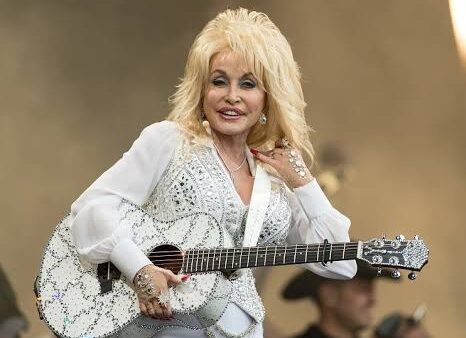


Parton Helped Bolster Women’s Rights in the Workplace
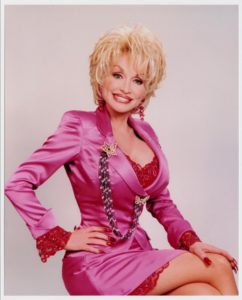
When she made her film debut in 1980, country music star Dolly Parton probably didn’t realize that she would become a hero to working women.
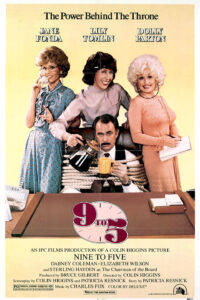
But 9 to 5 — co-starring Jane Fonda, Lily Tomlin and Dabney Coleman — used comedy to examine how poorly women are often treated in office settings. The movie took its inspiration from 9to5, a Boston organization formed in 1973 focusing on improving employment conditions for women.
While receiving mixed reviews from film critics at the time, 9 to 5 proved extremely popular with audience members. It became the second-highest grossing movie released in 1980, taking in more than $103 million (The Empire Strikes Back was No. 1 that year, earning more than $209 million).
Parton agreed to perform in 9 to 5 — but under one condition. She said that she wanted to write and perform the film’s theme song, which became an anthem for working women. In early 1981, her version of “9 to 5” topped several of Billboard’s music charts: the Country Chart, the Hot 100 list and the Adult Contemporary Chart.
“9 to 5” garnered Parton an Academy Award nomination in 1981 for Best Original Song. She also was nominated for three Grammy Awards the following year, winning in two categories: Best Country Song as well as Best Country Vocal Performance/Female.
Tributes worldwide have been paid to Parton for her work as an actor, musician and philanthropist. She died August 25 at the age of 80, leaving behind a legacy as one of the nation’s most beloved entertainers.
The 9to5 organization wrote this about Parton following her death:
“9to5 is deeply saddened by the loss of the legend, advocate and ally Dolly Parton. Parton dedicated her life and used her platform to make the world a better place, and her impact on working women will never be forgotten. Our history and progress, especially in the early years of 9to5, are inseparable from the voice that Dolly Parton gave working women. Inspired by the real stories and experiences of 9to5 members, she gifted us an anthem that has resonated for decades with working people and reminds us there is still so much work to be done. Through her music and her work in film, she helped bring national attention to the real issues that women continue to face in the workplace to this day: sexism, harassment, unequal pay and how the wealthy exploit our labor. … Dolly Parton helped give working women a voice at a pivotal time, and we will continue to honor her legacy until all working women and nonbinary people of color have the economic security they deserve.”
9 to 5 struck a chord with many Americans. It highlighted issues that weren’t receiving the kind of attention necessary to bring about meaningful changes. Using comedy to raise awareness of the problems women face in office settings made the movie more effective.
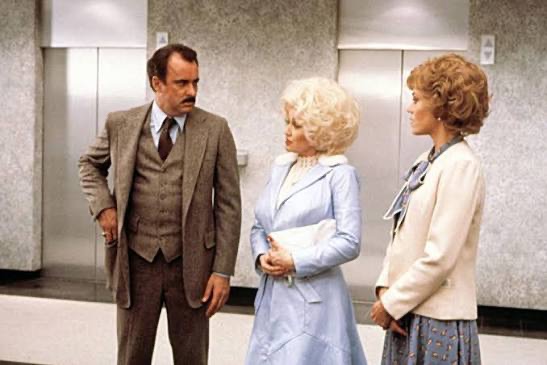
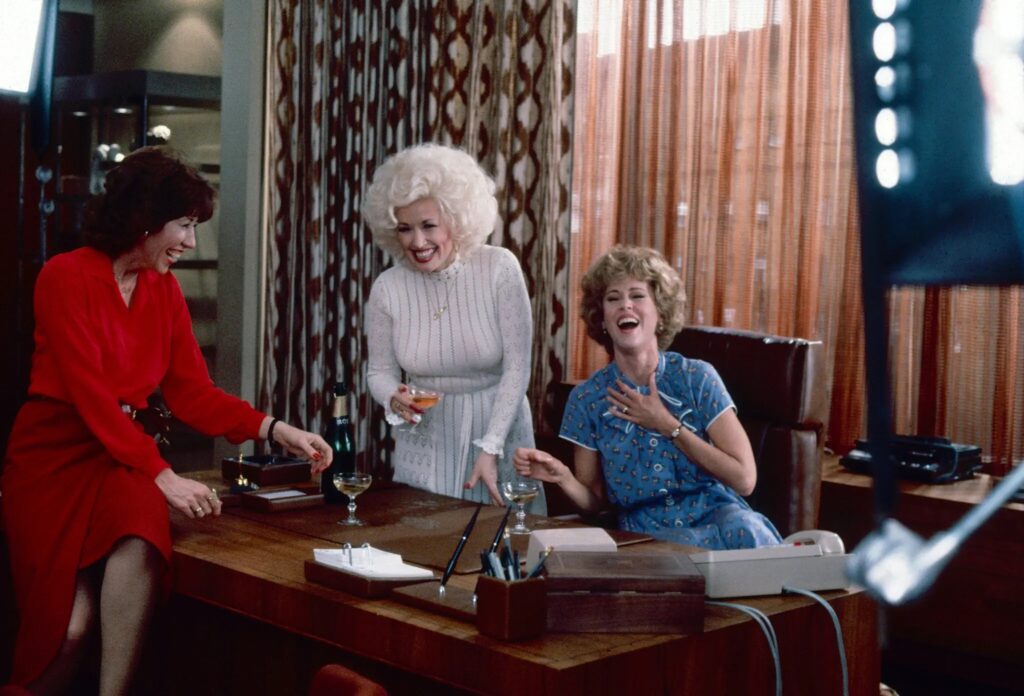
In 9 to 5, Consolidated Companies secretaries Judy Bernly (Fonda), Doralee Rhodes (Parton) and Violet Newstead (Tomlin) fantasize about killing their boss, Franklin Hart (Coleman), due to his atrocious behavior. After taking him captive, they implement reforms that boost productivity.
Fonda came up with the idea for the film after working with representatives of the 9to5 group, but it was initially proposed as a drama. Those involved with the movie eventually decided that developing a comedy would have more appeal.
9 to 5 not only addressed the horrible treatment that women receive from their male bosses in the workplace. It candidly exposed the bias that some women are subjected to by their co-workers due to their appearance.
With a mountain of hair and a physique from a 1950s pin-up calendar, Parton stood out from her fellow actors on the set. Her character is suspected of sleeping with her boss — an assertion she angrily denies. This became a lesson about not judging a book by its cover.
More than 40 years later, 9 to 5 continues to resonate with people.
“The politics of 9 to 5 are rooted in the moment when Second Wave feminism prompted the entrance of millions of middle class white women into the paid workforce and the exit of many of those same women from the marriages they had entered in the Baby Booming 1950s and ’60s. The film was based in part on the experiences of members of the 9to5 National Association of Working Women, a group founded in 1973 that has been led by work/life balance advocates Karen Nussbaum and Ellen Bravo and still exists today,” Rebecca Traister wrote in a May 13, 2015, article for The New Republic. “These working conditions for women have deep roots in American culture. That nonsensical rationale behind higher pay for men stretches back into the 19th century, when teachers’ unions were founded, in part, to battle the misperception that women did not themselves provide economic support for their kin. And, of course, gendered pay inequity has been a reality in practically every field in which women have ever drawn paychecks. The concept of ‘sexual harassment’ as a legal issue — and not simply the way things were — wasn’t drilled into the American consciousness until 11 years after the release of 9 to 5 when Anita Hill testified at Clarence Thomas’s Supreme Court confirmation hearings.
“The policies that the three women [in 9 to 5] institute lead to a decrease in absenteeism and a 20% increase in company productivity over six weeks,” Traister wrote. “Here the movie is making a claim that remains deeply contested: that having women at the top of institutions results in trickle-down improvement for women (and men) working within those institutions.”
9 to 5 extended Parton’s influence in the entertainment industry. She went on to star in other movies such as The Best Little Whorehouse in Texas (1982), Rhinestone (1984) and Steel Magnolias (1989).
The film reflects the stark reality that numerous women confront in their attempt to balance their personal lives with their working environments. Parton was singled out for her wonderful performance in 9 to 5 and for the theme song she created to promote it. Her star continues to shine light on perplexing issues that still plaque women today.