


We Take to the Land of the Eight Islands in the First Month of the Year.
This past month at ZekeFilm, many of our site contributers opted to figuratively venture into the land of the rising sun. What follows are personal “admissions” in the form of unpacking whichever film they chose to watch. As we’re nothing if not suckers for alliteration, we declared it “Japanese January.” (Join us next month for our roundup of “French February”).
As is evident from this smattering of important films, Japan is a country steeped in a complex and complicated history. To the country’s great credit, this has led to a dynamic, varied, and absolutely rich cinematic legacy- one that continues unabated. We hope you enjoy and are enriched by our thoughts on this very diverse assortment of just a few key films of Japan. Below, we’ve got individual takes on not one but two classic Godzilla films, two Akira Kurosawa classics, and a bevy of others you’ll want to check out.
Godzilla (1954)
Directed by Ishiro Honda/Japanese/1954
by Justin Mory
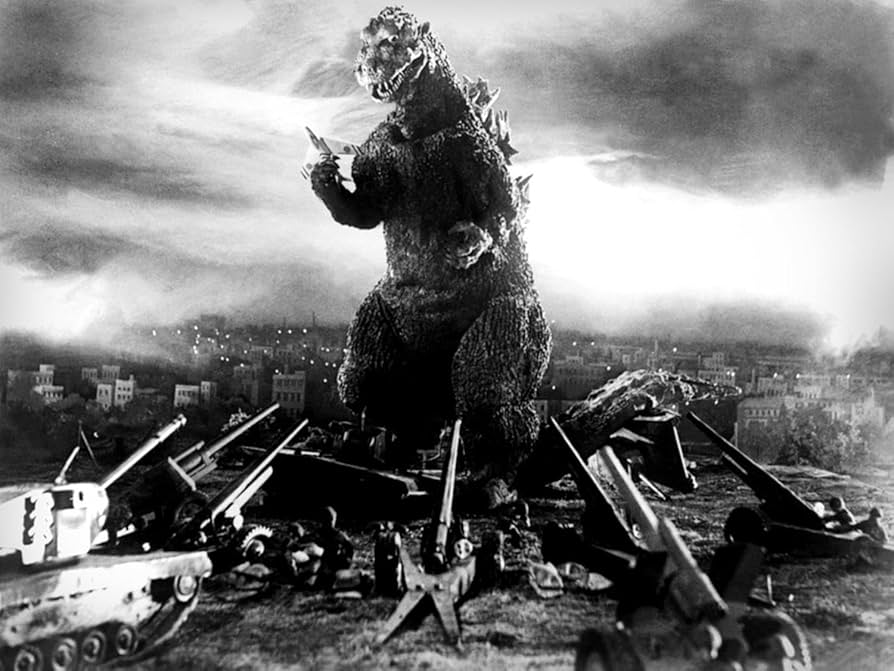
Glaring viewing admission in the classic sense of this feature, I have somehow never seen the original Godzilla (1954), not to mention any of the 50? 100? XXXX? sequels, spin-offs, remakes, and reboots that have littered the cinematic landscape the past 71 years like so much serially-crushed wreckage trampled underfoot of the great glowing beast itself. Redressing that oversight recently in regards to Toho’s Ground Zero for all the Godzillas, Mothras, Gameras, Rodans etc. etc., the Ishiro Honda-directed, Akira Ifukube-scored, and Eiji Tsuburaya-special effected giant monsterpiece certainly set a standard for all kaiju eiga to follow, and remains a surprisingly nuanced screen spectacle entirely deserving of its towering status in Japanese cinema, over which the radioactively awakened visitor from the Jurassic first appears head-and-shoulders above Odo Island’s largest mountain. My initial reaction:
Gojira! The more familiar, less phonetic romanizing of the title monster nevertheless suggests the scale on which the irradiated force of prehistoric nature is conceived, a gigantic survivor of both the A and H bombs: immortal, implacable, even imponderable. Equally indelible are the scenes of evacuating/fleeing citizenry, and of course the ease with which the god-lizard sweeps aside man’s mightiest works, bridges, towers, electrical lines, moving trains, with a mere flick of the dorsal-finned tail or swivel of dragon-scaled hips. Impossible to evaluate or criticize, the original Godzilla remains one of those mythic moments in world cinema on an exact scale with its probable source of inspiration, King Kong (1933) himself, where spectacle is fused with storytelling to create an inescapable, all-destructive metaphor. A first-time viewing suggests not only how effective that metaphor is realized across the intervening seven decades, but also how relevant it remains. Process effects, multi-scale photography, meticulous miniatures, a guy in a rubber suit; balanced against the assortment of opposing characterizations – study the creature or destroy it? – Godzilla emerges from the primordial ashes of imagination to embody and enact humanity’s greatest fears. And of course to stomp the shit out of everything.
Aiding that initial reaction was Criterion’s 2011-released, two-disc DVD, with its wealth of interviews, commentaries, and even the 1956 Hollywood recut, English-dubbed, and partially reshot version titled Godzilla, King of the Monsters!, which inserted sequences with actor Raymond Burr as American reporter “Steve Martin”, matched to the original footage and interacting with varying levels of credibility and success with a Japanese cast. Oddly enough, this subsequently ridiculed redraft ended up highlighting the essential Japanese-ness of the original for me, and I found Burr’s Martin’s screen-surrogate enacting a role for American audiences of the day not unlike the silent Japanese film tradition of the benshi or narrator, his on-screen testimonials and off-screen voiceover a strangely involving witnessing to and commentary on the unfolding tragedy and ginormous spectacle. And indeed, this also may represent the first time an American of record spoke against nuclear testing, even if only indirectly and solely in the monster-realm of imagination.
Seven Samurai
Directed by Akira Kurosawa / Japanese / 1954
by Erik Yates
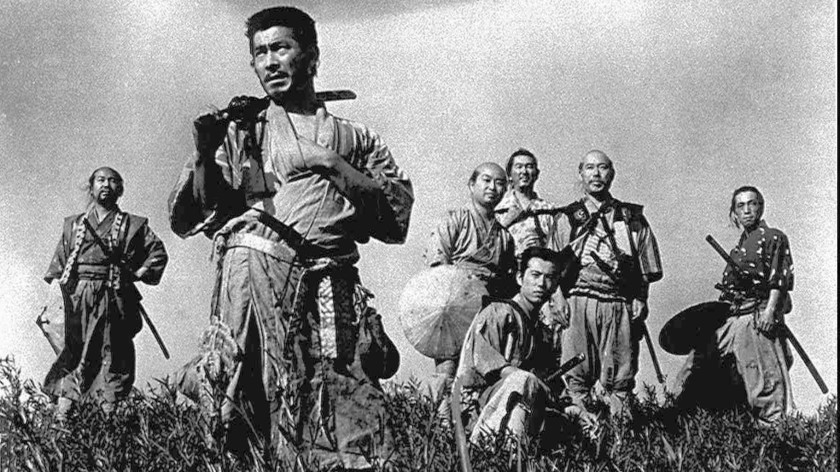
Seven Samurai (Schichinin no samurai) is a huge film admission in any category as Akira Kurosawa is one of the giants of cinema. His influence has spanned decades, across multiple generations. From George Lucas’ Star Wars (heavily influenced by The Hidden Fortress and Seven Samurai) , to a recent Spike Lee and Denzel Washington collaboration on an updated version of Kirosawa’s High and Low. Seven Samurai loomed large as a giant hole in my cinematic bonafides. I’m happy to say that all 3 hours and 27 minutes of run time is an absolute joy to watch. This film is often cited as the template for the modern day action film. A simple plot it may have, but it’s how it builds the stakes, develops the characters, and builds the tension until the ultimate climax, that elevates this film high above its basic narrative structure. It is the Japanese equivalent of a classic western as well. I easily saw the influence on Clint Eastwood’s man with no name films of the 1960’s, and even his 1985 film, Pale Rider.
In Seven Samurai, farmers from a local village are tired of having their food snatched from them by bandits leaving them susceptible to starvation. After years of this exploitation, the village decides to hire a samurai who can protect the village from these bandits. If you can’t fight for yourself, you can try to hire someone else to do the fighting for you. One samurai multiplies into seven, who collectively try to prepare the village for an attack from the bandits, and to teach the poor villagers how to fight for themselves. The film takes its time to develop its characters, both villagers and the samurai. Every character is a three dimensional person with complex motivations, fears, senses of humor, and moral struggles. The Japanese class system is also captured within this story, as are the notions of good vs. evil. Some of the depictions of the female characters seem amiss at times, but the story still feels modern despite its grounding in 16th-century feudal Japan. The music and cinematography are epic in scope and the fighting and battle scenes are very well done. Seven Samurai perfectly reflects the eastern culture it is born from and depicts, while being accessible and built for modern western audiences, even some 72 years later. High and Low was my entry point for Kurosawa (and it is excellent as well), but Seven Samurai is his seminal work, and a fun cinematic experience to boot.
House (1977)
Directed by Nobuhiko Obayashi / Japanese / 1977
by Claire Meisch
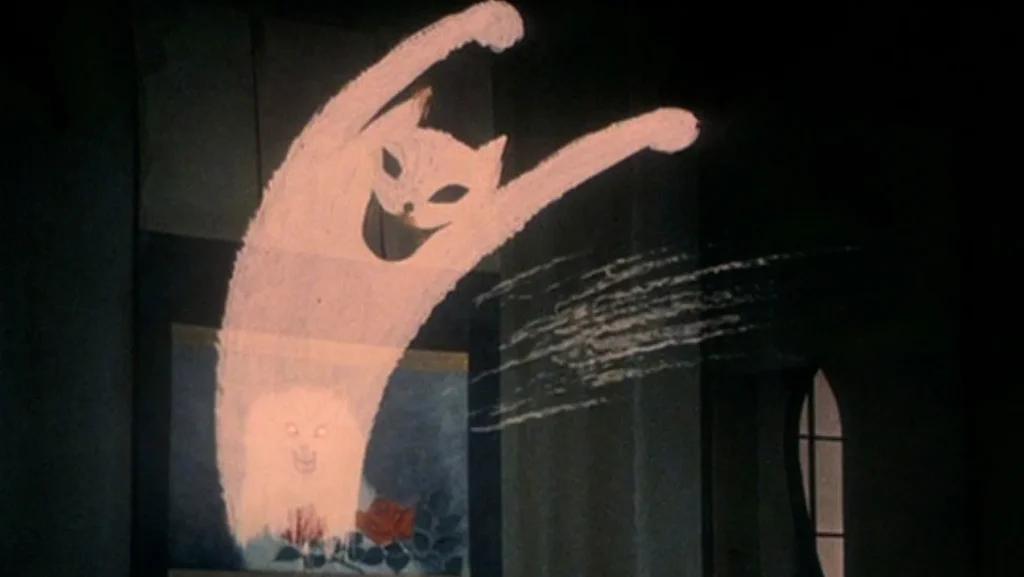

If you would like a general idea of what type of film House is, there is a sequence in which a young girl pulls the disembodied head of her friend from a well and is then bitten on the butt by said head. And that only happens in the first thirty minutes. Nobuhiko Obayashi’s 1977 supernatural horror film is pretty much the definition of unconventional. With psychedelic visuals and experimental style, House has cult-classic written all over it. The love child between a vintage 90s MTV ad and a nightmare acid trip, this film is a psychedelic experience that is an absolute delight to watch. To be quite frank, I’m disappointed that it took me this long to watch it.
The bland synopsis for House by no means prepares the audience for the wild ride they’re about to embark upon. When her father returns home from his latest film project with a new bride, a distraught Gorgeous (Kimiko Ikegami) writes her estranged aunt to beg her to visit her home over the summer. Her aunt readily agrees and Gorgeous invites her friend to tag along. Each of the young schoolgirls are a satirized collection of every female horror archetype imaginable. In case audiences might miss that, the names really sell the point. Gorgeous is stunningly beautiful, Fantasy is an air-headed daydreamer, Prof is an academic genius, Melody is a gifted musician, Sweet is kind and gentle, Kung Fu is impressively athletic, and Mac has an incorrigible appetite. The idyllic countryside and bright summer haze mask the impending sinister events. Auntie’s welcoming demeanor swiftly deteriorates, unexplainable spooky happenings occur at every turn, and the party’s number gradually begins to dwindle. By the final act, House becomes a chaotic sensory overload that abandons itself completely into absurdist horror.
Such a wacky movie deserves an equally nontraditional origin story. Predictably, House fits this bill too. In fact, Obayashi’s initial task was to replicate the success of Spielberg’s Jaws. Commissioned by the legendary Toho company, this project took a significant amount of time to get off the ground. The script itself was mostly inspired by conversations Obayashi had with his pre-teen daughter. In fact, a number of her outlandish suggestions made their way onto the big screen – most notably the aforementioned decapitated head moment. Drawing upon the combination of childhood fears and limitless imagination meant that the final draft strayed wildly from Toho’s original concept. Burdened by a lack of directorial interest that carried on for years, Toho eventually granted Obayashi the green light. With a background in television commercials, House was the director’s first foray into feature-length film. Goodness did he arrive with a bang.
Amidst the floating body parts and cartoonish imagery, there is substantial material to unravel here. Like any good ghost story, House has something to say about the relationship between past and present. One of the few pieces of information we are given about the eerie aunt is that she is still grieving a fiancé who lost his life in WWII. Considering the fact the Obayashi was born in Hiroshima and lived through the bombings, it is hardly a stretch to conclude that this is very much in some ways about a cheery, naive group of teenagers forced to comprehend the wartime trauma endured by the generations before. Outside of generational trauma, there are a handful of other thematic elements weaved into this intricate web. Somewhere there is a point to be made about how House addresses female sexuality. It is by no mistake that the house specifically eats unmarried women. Take into the account, the often scantily clad young girls, and the occasionally homoerotic friendship between Gorgeous and Fantasy and I can guarantee the potential for a lengthy discussion here.
Is it good necessarily? House is likely a project that settles intothe grey area of “it’s so bad it’s good” films for the general masses. While never truly “scary” by any measurable mean, the eye-popping visuals like a car crash: impossible to look away from and chillingly thrilling. There is a little something for everyone between the messy blend of genres, surreal imagery, catchy soundtrack, supernatural scares, comedic gags, and general overall weirdness. This is the type of film that needs to be seen to be entirely understood. In a time of cookie-cutter streamer releases and unwelcome sequels, this kind of outrageousness creativity is a balm to the soul. At the risk of oversimplifying things, House is honestly just fun.
Battle Royale
Directed by Kinji Fukasaku / Japanese / 2000
by Max Foizey
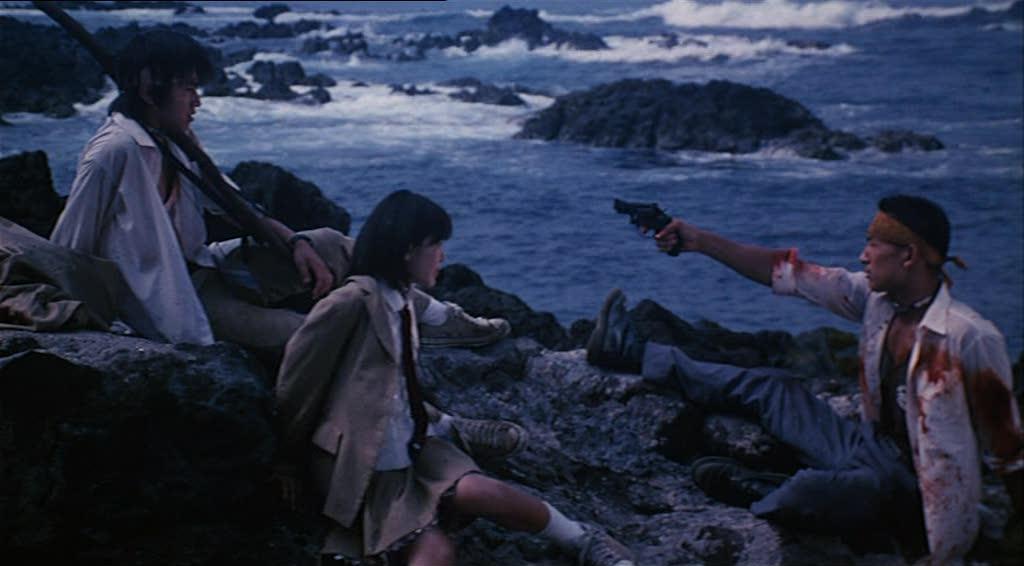
Even after all of the violent movies I’ve seen over the years, I was not prepared for the brutality of Battle Royale. The violence is sudden and shocking, with copious amounts of blood erupting from the bodies of dying school children. We first see the teens on a bus going on a class trip. They seem to be in good spirits, unaware that the snacks they are eating are laced with drugs to knock them out. They wake to find that they’ve been transported to a deserted island to participate in a government-sponsored game of death. They are informed that they must kill one another until only one of them remains. If they refuse, they are killed on the spot. They’ve all been outfitted with collars that allow the powers that be to track them at all times, and can be remotely detonated. The teens have three days to kill or be killed.
Their teacher (Beat Takeshi) shows them an informational video that explains all of this to them, including how the adults have passed a law approving this competition in an effort to curb youth violence. The training video’s host (Yūko Miyamura) is all smiles and tries to make this insane proposition look as normal as possible. The kids each get a backpack, containing bread, water, and a random weapon. There is no time for survival or combat training. They are immediately left to fend for themselves on the island. As with any classroom, there are immediate alliances and cliques formed, as the kids spread out to hide with their friends and do their best to avoid their enemies. Some refuse to fight. Others relish the opportunity to commit murder. It’s a nice touch that the kid who goes on the biggest rampage is an exchange student (Masanobu Ando), since he does not have any allegiance or personal connection with any of the others.
As the children are murdered, we see a kill count on screen (41 to go, 38 to go, 24 to go), begging the question: How exactly is this competition supposed to quell the nation’s problem of youth violence? The schoolchildren know that this battle is ridiculous and unfair. The adults that we see in charge do not seem to question the battle at all. The adults passed the law, the adults set it all up, the adults seem fine with it. That was my takeaway from watching the film, that ultimately, any violence perpetrated by the young is a failing of their elders. And since adults do not want to grapple with this concept, they instead force the young into more violence as some sort of penance. It could be viewed as a denouncement of the judicial system charging children who commit violent acts as adults, or as a criticism of the death penalty.
The American film director Quentin Tarantino has long been a champion of Battle Royale. The DVD release sports a blurb from him that says “My favorite movie of the last 20 years. I wish I had made this movie.” Recently Tarantino made headlines when he said that Suzanne Collins’ The Hunger Games book series was just a rip off of Battle Royale. Of course, many similar stories of governments forcing their young citizens into games of death have been told over the years, including Stephen King’s 1978 novel The Long Walk. Seeing as how Tarantino’s filmography is chock full of references to his influences, it’s easy to dismiss him calling someone else out for telling a similar story.
Battle Royale was directed by Kinji Fukasaku, with a screenplay by his son Kenta Fukasaku, who adapted it from the 1999 novel by Koushun Takami. I watched the special edition of the film, sometimes referred to as the Director’s Cut. It adds three short scenes, titled “requiems,” to the end of the film. They make for an effective and thought provoking coda to the carnage.
Godzilla vs. Hedora
Directed by Yoshimitsu Banno / Japanese / 1971
by Robert Hornak

It’s not just the Godzilla’s-own James Bond-style opening title sequence that makes me go there, but I’d stack this entry into a kitsch-laden double feature with On Her Majesty’s Secret Service for daring to shake up a widely-embraced, but potentially-stagnating mega-series by hiring a one-off director (in this case Yoshimitsu Banno) to fill the franchise with every bit of tell-tale cultural flotsam your yen’ll get you. That’s how you get a giant monster movie that’s also a deeply distracted hodge podge of urgent turn-of-the-decade environmental diatribe, holdover late-‘60s peacenik meet-cute, and a raft of fully off-note animated bumpers of the titular foe in Crayola action, all spackled nice, especially early on, with carefully composed shots of just sludge drifting on water like some buried Tarkovsky PSA.
All of this is not to say it’s a glum misfire, though that’s the mysteriously prevailing wisdom. Instead, the butting together of these wildly flailing parts, in a pastiche-y formula that never truly taxes across its 85 short minutes, feels like it’s shaved down to its primest bits and mixed and matched for whatever spectacle it can fake. At its worst it’s a jumbled trip, as if Godzilla’s been lighting blunts with his radioactive breath. At best, it levels some truly creepy gravitas in its silently drawn-out wilderness battle scenes, driven deeper into darkness by some of the weirdest Godzilla violence of the Shōwa era – see our hero literally blast this smog monster’s balls to dust. And all of it gets jump-started by the gloppy foe’s appearance right away, and already engaging in some scenic Godzilla fu before the half hour mark (never a guarantee). And if any of this is what you’d prefer to call sub-childish tripe, perhaps epitomized by G-man propelling through the air, backwards, powered by breath exhaust, at least it’s not the kaiju cartoon word bubbles in G. v. Gigan the following year.
Speaking of that entry, its touted “Godzilla tower” shtick feels like meta overreach compared to the subtle and fun inclusion in Hedora of a kid playing with his collection of Godzilla toys. That’s in the opening moments of the movie, the boy’s play-battle predicting the gargantuan standoff of the climax while also setting us up with one of my favorite angles in some, but not all, the Shōwa movies: the kid with the telepathic connection to Godzilla – an intended-audience engagement gimmick that straddles a drawn line from early sci-fi (say, randomly, Tobor the Great) through Gigantor, The Iron Giant, the Transformers movies, the obligatory Dragon diptych Pete’s & How To Train Your, and so many more from E.T. to The BFG.
But here, and scattered around the franchise, you’ll find a boy-monster link that belies both the creature’s original incarnation as massive nuclear obliterator of civilian flesh and here as friendly-ish enforcer of global ecological conscience, but also awkwardly accompanies the minor in a perverse lowering into the cheap thrills of watching kid’s-stuff kaijus muck it up in a kaleidoscope of drop-out tropes (these are prehistoric Joe Bucks descending into the psychedelic fringes), that by the time we get to watching Godzilla sate his prehistoric smog-lust with an orgiastic gut-flinging of the bad beast’s entrails, we leave the scene not knowing who the kid’s supposed to be, who Godzilla was fighting for, or whether we should’ve let our 7-year-old kid watch it with us. He loved it, of course, and started drawing monster entrails immediately, so the legacy continues.
And how could he be wrong? It ain’t Ozu, and it ain’t Kurosawa, but it’s definitely a colorful, compact story about a smoggy nightmare of a monster pulling a let’s-kill-Rasputin attack on Godzilla, from spitting toxic mud into his bubbling eye, to clouding him with noxious pollution farts, to burying him alive in a pitful of electric diarrhea, which is for me the eternal parable of the stinky guest who won’t go home till you force him to. A win-win for all ages on family night around the Blu-ray.
High and Low
Directed by Akira Kurosawa / Japanese / 1963
by Taylor Blake
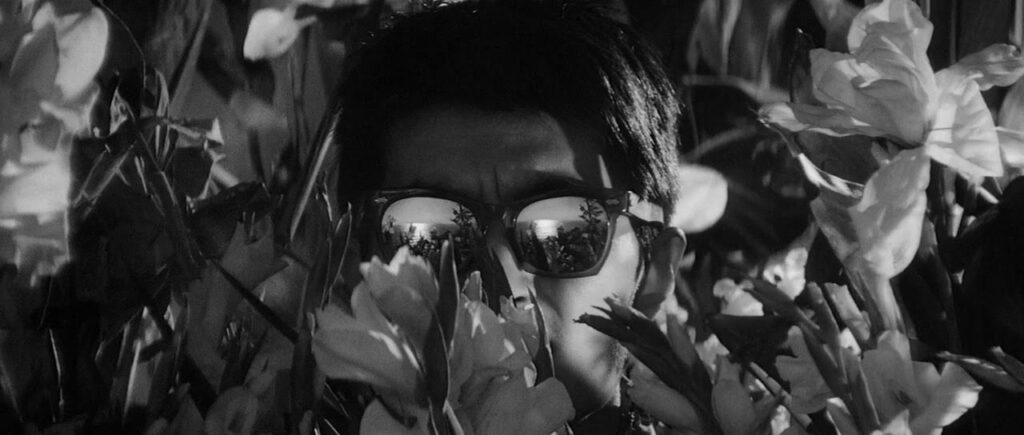
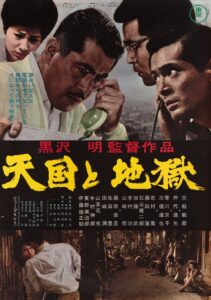
My admission: Until High and Low, I’d only seen period pieces from Akira Kurosawa. There’s a whole other Admissions piece to be written about much more Kurosawa I need to watch, but I’ll take a pause to celebrate High and Low first.
The 1963 film (unlike many Kurosawa calling cards, set in the present day) kicks off with a moral quagmire. Just as Kingo Gondô (Toshirô Mifune) is manipulating his assets to force a takeover of the shoe company he works for, his son is kidnapped for an exorbitant ransom. Well, the kidnapper means to grab his son—instead, he accidentally nabs the son of Aoki (Yutaka Sada), Gondô’s chauffeur. Now Gondô is stuck in a lose-lose situation: lose every yen to his name or lose his employee’s son. But Gondô is just one part of this story. Once he makes his decision, the police take over in their hunt for the kidnapper, pulling at the thinnest threads until they unravel and negotiating with the press about how much they tell the public. Then the police story gives way to the kidnapper’s, which, without giving anything away, reveals he steals scenes, too.
Police work has evolved in 63 years, but High and Low feels as crisp and thrilling as ever. One part character drama and one part crime thriller, it’s as much a showcase for Mifune as it is a plot that pushes you to the edge of your seat. And though I’m much too late to the party, I’m happy to say none of visual style Kurosawa showed off in Ran and Rashomon is lost with modern production design. Gondô’s mid-century mansion, his framing of the slum-laden kidnapper, and a complex, electrifying scene on a train are visually top-notch. I meant to check out High and Low last year around the release of Spike Lee’s remake Highest 2 Lowest, but my fashionably late arrival to this party is better than none at all.
Death by Hanging
Directed by Nagisa Oshima / Japanese / 1968
by Jim Tudor
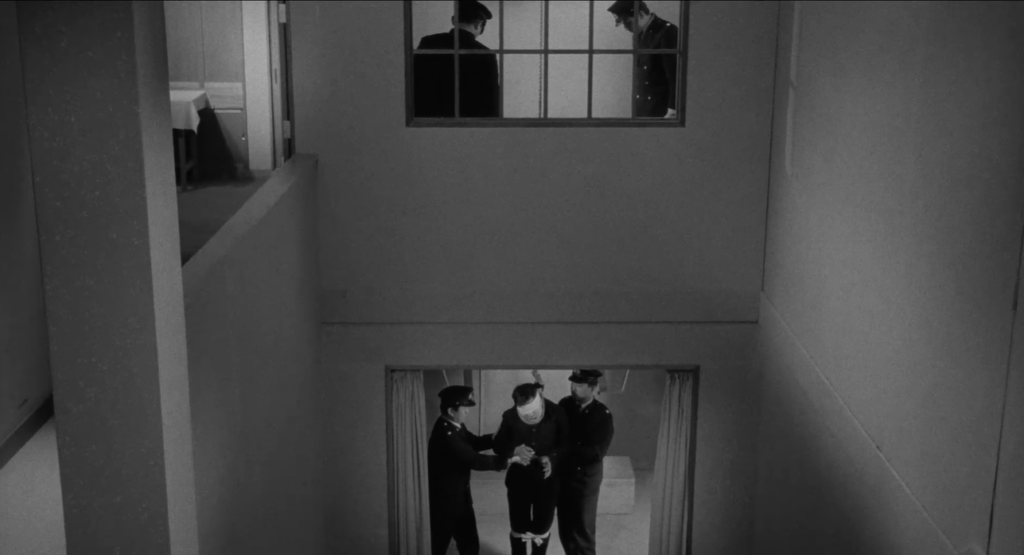
Upon first viewing, it’s apparent that cultural iconoclast Nagisa Oshima’s 1968 film Death by Hanging is a multilayered piece that isn’t content to play out in anything resembling a conventional manner. The filmmaker’s own opening narration states that 71% of the Japanese population was in favor of the death penalty. Then he sharply challenges that contingent, asking if they’d ever witnessed an actual state execution or have seen the inside of an execution facility. Seemingly, the viewer is in for quite the anti-death penalty screed.
But then, the movie proper begins. Out of the gate, we are made to witness the state executed hanging execution of a young man called R. When R miraculously survives the hanging, the staff is plunged into a long debate over what the heck to do now. Is it ethical to try to hang him again? Slowly, upon realizing his personality has shifted to “blank slate”, the officials set out to restore him to his old self, in order for him to recall and understand the weight of his crimes. This, per their rationale, would justify a redo of his hanging. This moves us into a Brechtian delirium of the facility slowly shifting into a theater of sorts with the officials pantomiming his crimes of rape and murder. It’s brilliant dark comedy of a uniquely unsettling variety as the various men become more and more engrossed in their tasks, even reveling in them. Their own past sins come to light, inviting us to try our hand at the comparative scales of justice. Along the way, Korean/Japanese tensions are a major concern, as well as one’s past wartime actions, incestual notions, and much more. A thought provoking work of small-scale greatness by one of Japan’s most controversial directors.