


Amanda Seyfried is the Woman Clothed by the Sun.
DIRECTED BY MONA FASTVOLD/2026 (U.S. Wide Theatrical Release)
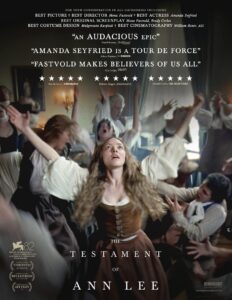
Biopics have a tricky reputation. The history of this genre marred by unfaithful characterizations, historical inaccuracies, and a tendency to craft their narratives with rose-colored glasses. Naturally, most audience members have since learned to digest these films with a hefty grain of salt. Ignoring issues of credibility, there is the additional predicament of selecting an appealing subject. Exactly how do you get an audience of millions to care for this exaggerated caricature of a real person? Is it through an honest, factual lens? Perhaps leaning into a pre-existing nostalgia factor (I’m looking at you Elvis)? Or maybe it involves taking a creative risk by opting for an unconventional subject? It is the latter approach that triumphs here. The subject in question: a young woman declaring herself as the Second Coming of Christ who preaches celibacy and practices physical worship through dance.
Our protagonist’s life is chronicled much like an old-fashioned storybook fairytale through the gentle narration of one of her dedicated followers, Mary (Thomasin McKenzie). Beginning in 1736 Manchester, the young Ann Lee (Amanda Seyfried) is a respectful daughter, loving sister, and a determined hard worker. Though we don’t spend a significant amount of time in her childhood, there are elements here that directly shape her future. Specifically, Ann witnesses her parents engaging in sexual intercourse. The complex emotions that arise from this singular moment ignite her pursuit for an answer within her faith. The course of her life is further permanently altered upon attending a meeting held by Jane and James Wardley. The couple are Quakers who believe that Jesus’s Second Coming will be female, and who encourage public declarations of sin through such physical acts as dancing, shouting, and singing.
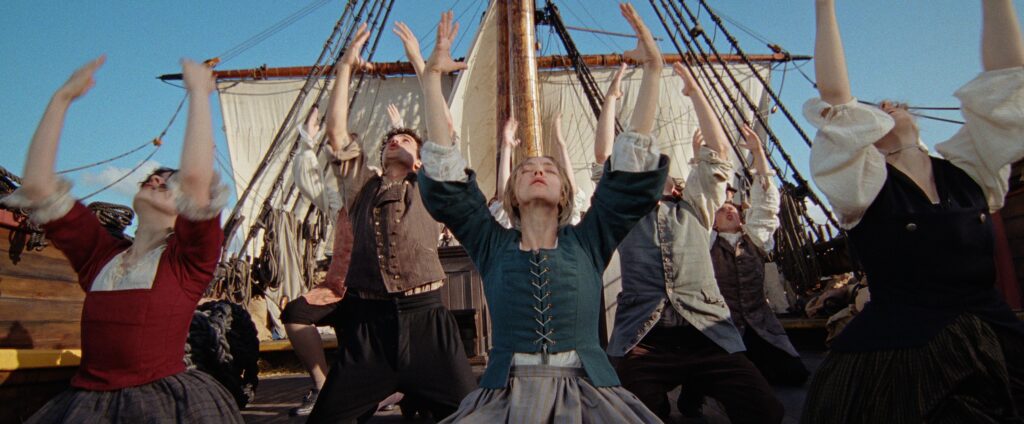
Deemed the “Shaking Quakers” because of their unconventional form of worship, Ann discovers a sense of community amongst them. With her dutiful brother, William (Lewis Pullman), by her side, Ann rapidly rises as an essential figure in their group. Through the Shakers she meets her husband Abraham (Christopher Abbott), but their relationship is fraught with tension that stems from Ann’s reluctant attitude towards sex. Most tragically, Ann gives birth to four children who never survive early infancy. When the Shaker’s begin to draw the ire of the locals, Ann is arrested and imprisoned. In the confines of the cell, she is visited by vivid visions that inspire her core belief that celibacy is the route to salvation. Upon sharing her experiences with the other Shakers, they declare that Ann is the female Messiah they have been waiting for. What follows is a dramatic venture across the seas in search of a new home in America with a mission to spread their gospel.
As atypical biopics go, The Testament of Ann Lee is every inch as ambitious of a project as it presents itself to be. Arriving fresh off the heels of the critical acclaim of 2024’s The Brutalist, husband-wife duo Brady Corbet and Mona Fastvold have come together once again to collaborate on this script. This time around hats have been traded; now it is Fastvold behind the camera in the director’s chair. There is a similar structure shared between the two films, as both are period pieces structured around an ambitious individual paving their own path in a shifting world. Equally epic in proportion and production, Fastvold seems to embrace the challenge with vigor. To top it all off, this film is a musical. The term “musical biopic” is usually reserved projects like Walk the Line and Rocketman that revolve around musicians. In this instance, Fastvold bends the mold to redefine a genre on the brink of going stale.
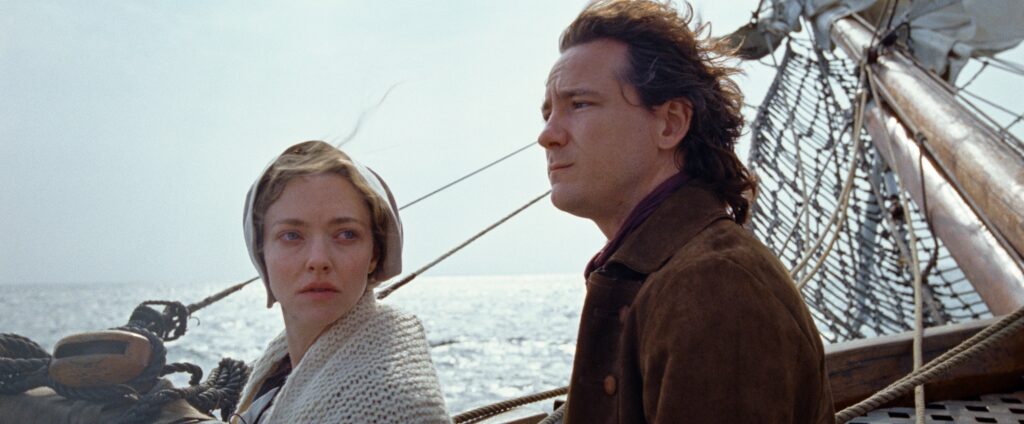
As to be expected, a project about the Shakers is filled to the brim with dancing and music. A significant amount of kudos needs to be bestowed upon the film’s choreographer, Celia Rowlson-Hall. Each sequence is haunting and ethereal in nature, straying somewhere between a complex Broadway number and utter unhinged madness. Bodies flail and twist in a visceral visual display of passion and faith. As peculiar as this practice may be, Rowlson-Hall makes it easy to sit back and marvel at such a captivating sight. Through every number, her choreography breathes life into the all-consuming faith of the Shakers. Each dance is accompanied by an equally enchanting score, for which composer Daniel Blumberg deserves his own praise. The instrumentals themselves are pleasant, but the hymn-inspired songs truly steal the show. There is a wide array of ensemble numbers, and the core cast each gets their opportunity at a brief solo. Seyfried delivers a vocal performance that made me fantasize of a world in which we saw her don a certain iconic pink dress. When the spellbinding movements are paired with the rousing music, the result is a breathtaking display of cathartic artistry.
Undoubtably, The Testament of Ann Lee is ultimately Seyfried’s film. Outside of her impressive musical talent, her performance is as raw as an open wound. Her Ann is tender and kindhearted, yet there is an underlying hint of spunk lurking behind those wide eyes. Guided by an unflinching sense of determination, Ann’s steadfast commitment to both her people and her beliefs inspires her every action. Her relentless passion verges just on the edge of aggression and this translates her stubborn pursuits. In what is certainly a career defining performance, Seyfried’s commanding presence anchors The Testament of Ann Lee even when it falters.
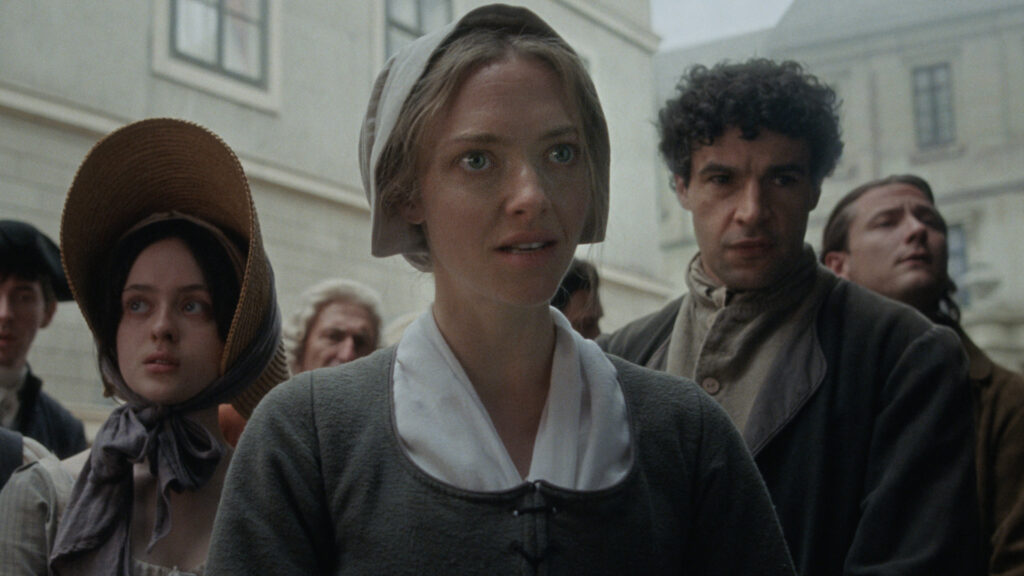
While Fastvold is not lacking in creative gusto, that does not necessarily equal perfect execution. As Ann’s life story progresses, the script edges on repetitive. Fortunately, the shift to America recovers the dwindling plot enough to re-engage the audience. Fastvold does a thorough job exploring the facets of Ann as a leader of the Shakers, she does so with a reverent touch. By the second half of the film, Ann appears less human and more like an untouchable deity. Between Fastvold’s generous camera and Mary’s devote commentary, the film can feel like an extended memorial. Thankfully, it is this choice to include the story’s narration that recovers this slight fumble. Mary’s role as one of Ann’s followers offers a satisfactory explanation for the occasional heavy-handed praise. Ann may have been composed of mere flesh and blood, but to her community she is a mouthpiece sent from the heavens. Naturally, any interpretation of Ann’s legacy would reflect this kind of love.
The Testament of Ann Lee falls just short of flawless with just a few minor hiccups. Regardless, this is a powerful exhibition of raw artistry untampered by the concern of commercial success. This is filmmaking on an advanced level all the way down the chain. Fastvold uses the camera to craft frame after frame of jaw-dropping visuals of museum-level quality. Her work here is breathtaking in all of its creative freedom. Ann Lee was a woman guided to build a community for her faith with a sense of conviction that is palpable through the big screen. Beautiful, boisterous, and about as bold as they come, The Testament of Ann Lee is a reminder of the excellence that can result from unrestrained artistic creation.