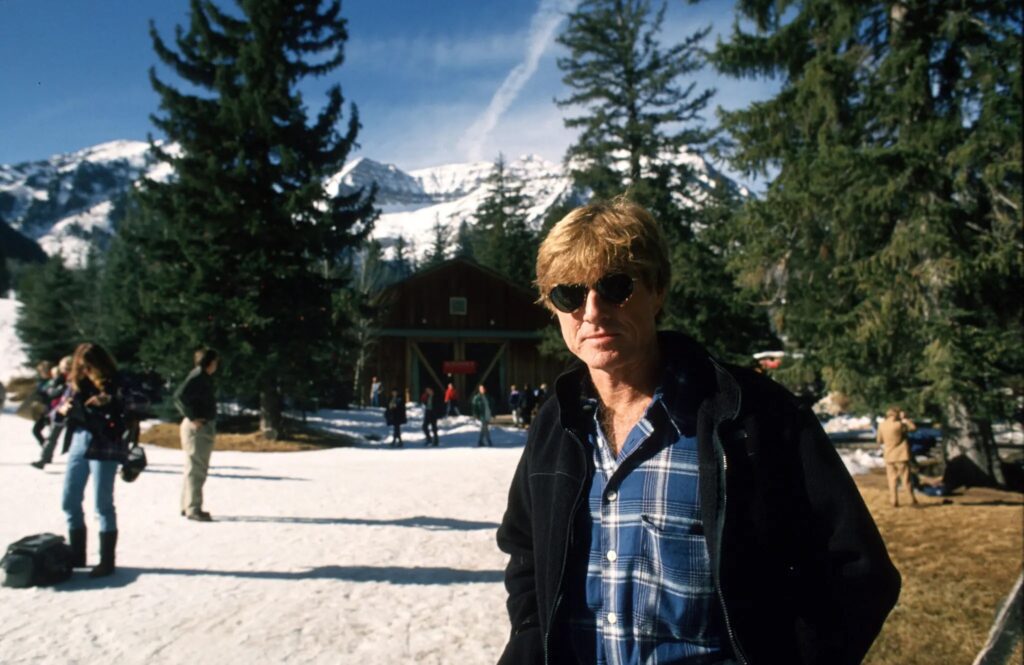


The Sundance Kid: Robert Redford Helped us Experience the joys and Sorrows of Life Through Film

It takes a master storyteller to summarize an essential part of his early life in relatively few words.
Norman Maclean proved himself up to this task a few years after retiring as a professor at the University of Chicago. His novella “A River Runs Through It” brought him acclaim for how he so beautifully crafted the account of his childhood in Missoula, Montana. It was one of three stories published in a 1976 book of the same title, which was nominated for a Pulitzer Prize in Letters in 1977.
The semi-autobiographical work weaves Maclean’s telling of his growing up along the Blackfoot River with a strong emphasis on Presbyterian doctrine, a rigorous attention to academics — and, of course, the relentless pursuit of fly fishing. Following a debate with a friend about Western writers, actor Robert Redford found himself just as hooked on Maclean’s narrative as a trout was on the end of the fly fisherman’s rod and line.
“In 1981, during a visit to Montana, I had a discussion about Western writers with my friend Tom McGuane. We debated the authenticity issue: living it and knowing it versus just loving it,” Redford writes in the foreword to the 2017 reissue of Maclean’s book. “Several names were thrown out — Wallace Stegner, Ivan Doig, A.B. Guthrie, Vardis Fisher — before McGuane suggested he could settle the question by having me read ‘A River Runs Through It’ by Norman Maclean. ‘This is the real thing,’ he said.
“I distrust such proclamations, but when I read the first sentence … I thought I might be in for something. When I looked at the last line, I knew it. And when I finished reading the novella, I wanted to bring it to the screen.”
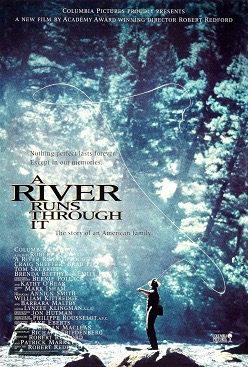
A decade later, Redford realized his dream of turning Maclean’s story into a movie. Starring Craig Sheffer as Norman Maclean; Brad Pitt as his brother, Paul; and Tom Skerritt as his father, the Rev. John Maclean, A River Runs Through It was released Oct. 9, 1992, in the United States. Redford directed the film and provided periodic narration throughout, making use of Maclean’s stirring prose.
This was one of nine movies Redford directed, although he made his biggest mark on the entertainment industry as an acclaimed actor. Redford died September 16 at the age of 89 in his home in Utah. He was also known for helping independent moviemakers receive attention for their works through his Sundance Film Festival.
A River Runs Through It was an ideal project for Redford to pursue. Known as an enthusiastic outdoorsman and an avid environmentalist, the movie combined the elements of great storytelling and gorgeous scenery of the Montana countryside. Redford understood that he had compelling source material in Maclean’s writing.

The first line in Maclean’s novella, which so captivated Redford, reads:
“In our family, there was no clear line between religion and fly fishing. We lived at the junction of great trout rivers in western Montana, and our father was a Presbyterian minister and a fly fisherman who tied his own flies and taught others. He told us about Christ’s disciples being fishermen, and we were left to assume, as my brother and I did, that all first class fishermen on the Sea of Galilee were fly fishermen and that John, the favorite, was a dry-fly fisherman.”
Maclean concludes his remarkable story with these profound thoughts:
“Of course, now I am too old to be much of a fisherman, and now, of course, I usually fish the big waters alone, although some friends think I shouldn’t. Like many fly fishermen in western Montana where the summer days are almost Arctic in length, I often do not start fishing until the cool of the evening. Then in the Arctic half-light of the canyon, all existence fades to a being with my soul and memories and the sounds of the Big Blackfoot River and a four-count rhythm and the hope that a fish will rise. Eventually, all things merge into one, and a river runs through it. The river was cut by the world’s great flood and runs over rocks from the basement of time. On some of the rocks are timeless raindrops. Under the rocks are the words, and some of the words are theirs. I am haunted by waters.”
A River Runs Through It won the Academy Award for Best Cinematography (Philippe Rousselot) in 1993. It was also nominated that year for Best Adapted Screenplay (Richard Friedenberg) and Best Original Score (Mark Isham).
As both an actor and director, Redford thrived on presenting complex stories.
He starred in Three Days of the Condor in 1975, capitalizing on Americans’ disillusionment with the government in the wake of the Watergate scandal. The film follows a CIA staff member piecing together the motives behind an agency operation that killed his co-workers, all the while trying to avoid becoming the next victim.
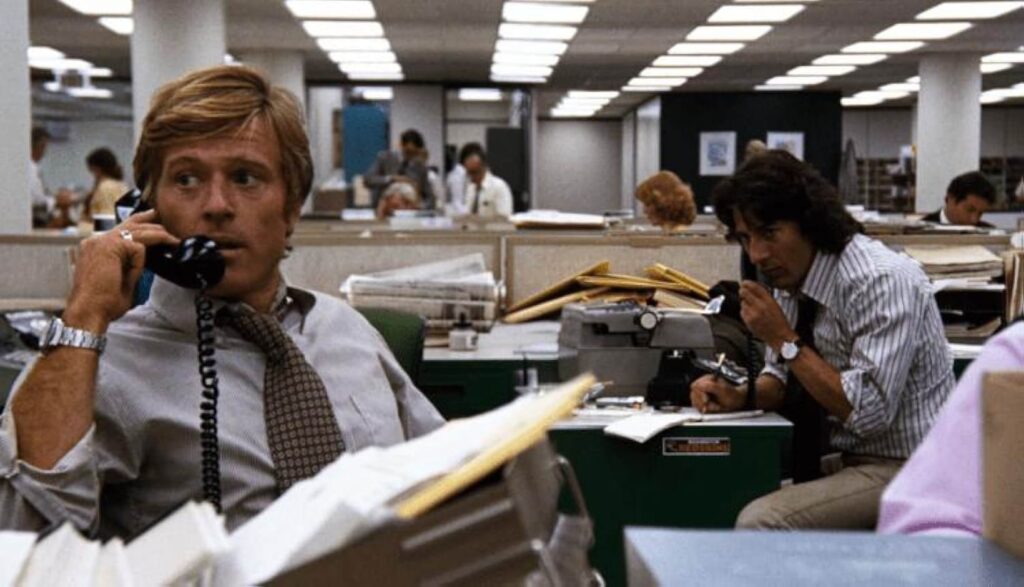
Redford followed this up in 1976 by portraying Washington Post reporter Bob Woodward, who helped chronicle Richard Nixon’s downfall as a result of Watergate. Also starring Dustin Hoffman as Carl Bernstein and Jason Robards as Ben Bradlee, the movie became a classic in how it portrayed the intricate work involved in investigative journalism, particularly when it came to covering political corruption.
Behind the camera, Redford struck gold with his first project. He won the Academy Award for Best Director with Ordinary People, released in 1980. Starring Mary Tyler Moore, Donald Sutherland and Timothy Hutton, the film showcases members of a family struggling to hold themselves together in the midst of loss, grief and anger.
Given her work in two popular sit-coms, Moore found it difficult landing the role of Beth Jarrett. The mother of this family was known for being emotionally distant, very critical and, at times, rather harsh. This in no way fit the light-hearted, comedic persona that Moore presented on TV.
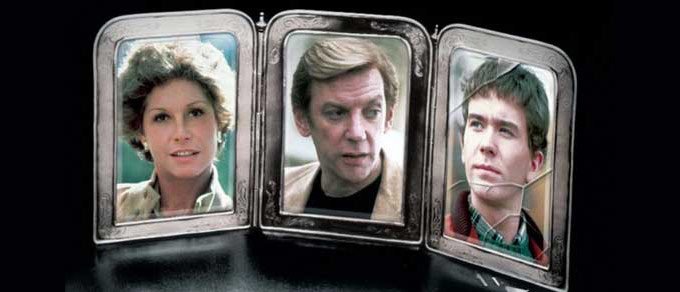
But encouraged by Redford, Moore found it within herself to conform to this character. She was nominated for an Academy Award for Best Actress in 1981, one of six nominations the movie secured that year (aside from Best Director, it won Oscars for Best Picture, Best Supporting Actor and Best Adapted Screenplay). Redford inspired the best from his cast members with his directorial debut.
Redford worked with Rob Morrow, Ralph Fiennes, John Turturro and Paul Scofield in 1994’s Quiz Show, focusing on the quiz show scandal of the 1950s. The movie examines the influence of the new medium of television on audiences and their reaction when they discover that some of what’s being presented isn’t legitimate.
In front of the camera, Redford always soaked up the attention. He was blessed with the marquee good looks of the quintessential leading man.
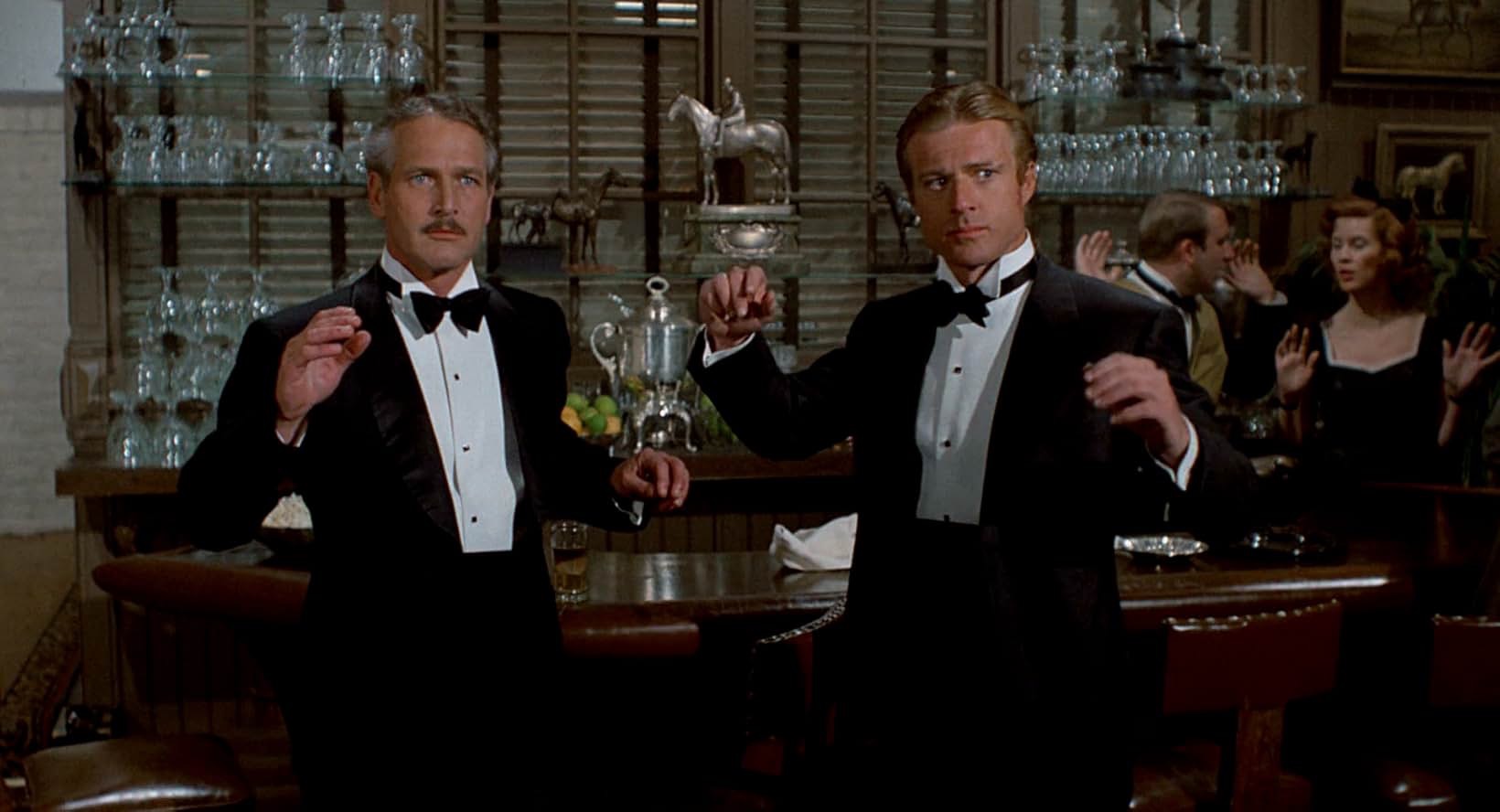
More than a few people’s knees weakened when he teamed with fellow Hollywood hunk Paul Newmann in 1969’s Butch Cassidy and the Sundance Kid. The two men, who became lifelong friends, paired again in 1973’s The Sting. Due to the chemistry these two actors generated, both movies are considered cinematic classics.
Redford also paired very well with leading actresses. He starred with Jane Fonda in 1967’s Barefoot in the Park, Barbra Streisand in 1973’s The Way We Were, Mia Farrow in 1974’s The Great Gatsby, Faye Dunaway in 1975’s Three Days of the Condor, and both Glenn Close and Kim Basinger in 1984’s The Natural.
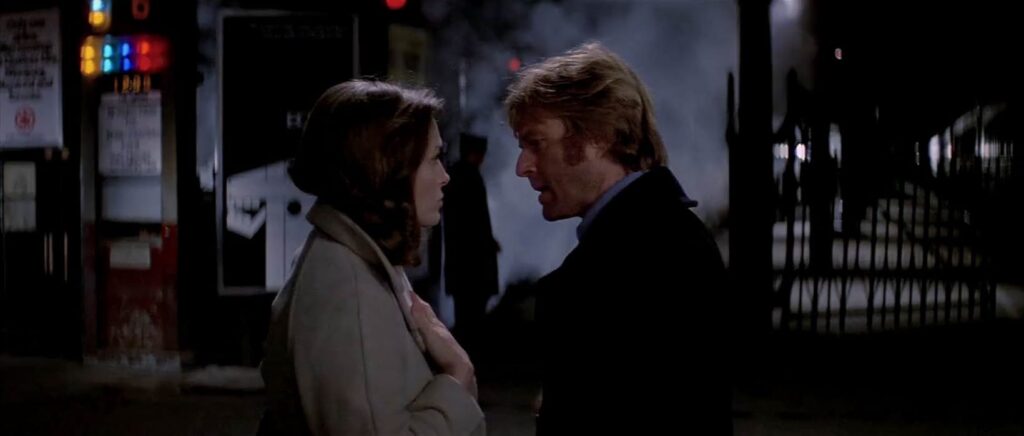
Redford returned to outdoor-centered films from time to time. He starred in 1972’s Jeremiah Johnson, displaying the determination that a man needed to confront the harsh conditions of life in the Rocky Mountains. This is said to be one of Redford’s favorite movies in which he performed.
In 1998, Redford directed and played the lead in The Horse Whisperer. Portraying a man who has extraordinary abilities to understand and help horses, the film gave Redford a new perspective on these magnificent animals. The Facebook site Red Carpet offered this:
“When Robert Redford took on The Horse Whisperer in 1998 — as director, producer, and star — he thought it was simply going to be another demanding project, a story about healing, loss and the mysterious bond between humans and animals. What he didn’t expect was how deeply it would alter his relationship with horses, forever changing the way he saw them. Before the film, Redford was no stranger to horses. He’d ridden them in countless Westerns, from Butch Cassidy and the Sundance Kid to Jeremiah Johnson. To him, they were co-stars — majestic, powerful, but ultimately part of the job. However, when he began working closely with Buck Brannaman, the real-life horse trainer who inspired the film’s title character, Redford discovered an entirely new dimension of these animals. Brannaman taught him that horses weren’t just to be controlled: They were to be understood. Their fear, their trust, their silence, all were part of a conversation if you were patient enough to listen. Redford later admitted, ‘I realized that horses don’t lie. They’ll show you who they are if you give them the respect they deserve. That honesty struck me in a way I’d never experienced.’
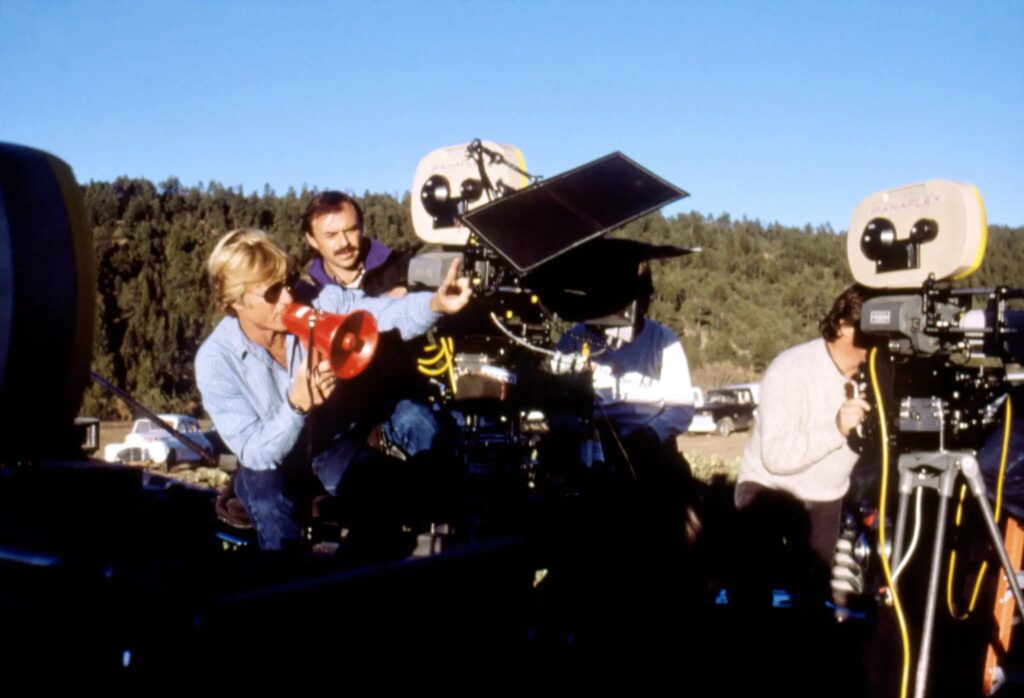
“During filming, Redford often stayed long after shooting wrapped, quietly observing the horses in the Montana dusk. Crew members recalled seeing him lean on the fence, watching them breathe and shift in the fading light as though he was absorbing something beyond words. It wasn’t about performance anymore; it was about connection. After The Horse Whisperer, Redford didn’t just love horses — he revered them. They became symbols of truth, freedom and spirit, reflections of the very things he’d always sought in storytelling and in life. For him, the film wasn’t just art; it was initiation into a lifelong respect for one of nature’s most soulful creatures.”
Redford brilliantly conveyed life’s beauty and pain in all his projects. Aside from his body of work, his lasting legacy will be that he worked tirelessly through his Sundance Film Festival to help other filmmakers pursue their dreams just as he did.
On her Instagram account, actress Reese Witherspoon offered this tribute:
“What an incredible artist and champion for art, culture and independent film. I will be forever grateful for my days at Sundance & the Sundance filmmakers lab where I learned so much from so many fellow filmmakers. Thank you, Robert Redford, for sharing your passion for movies with so many of us.”