

Luc Besson Takes a Darkly Comedic Bite out of Bram Stoker’s Gothic Tale
DIRECTED BY LUC BESSON/2026 (U.S. Theatrical Release)
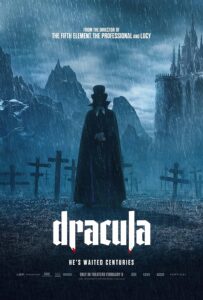
I’ve long ago stopped making a point of seeing every movie French supposed super-director Luc Besson directs (much less writes, produces, or otherwise attaches his name to), so take this with whatever grains of salt you see fit, but: this Dracula adaptation is his first film since the early ‘90s that I haven’t overall disliked.
Though it says “based on the novel by Bram Stoker”, it’s even less accurate to that than Francis Coppola’s version– that being a far superior maximalist version of Dracula. This, though, does seem to owe several debts to that film. Beyond the obvious ornate stylings of the vampire himself, the whole angle of poor ol’ Dracula simply doing what he does out of love– lost love from a long time ago, but love nonetheless- is key to both films though not Stoker. Unlike Coppola’s film, however, Besson’s scarcely qualifies as a horror film.
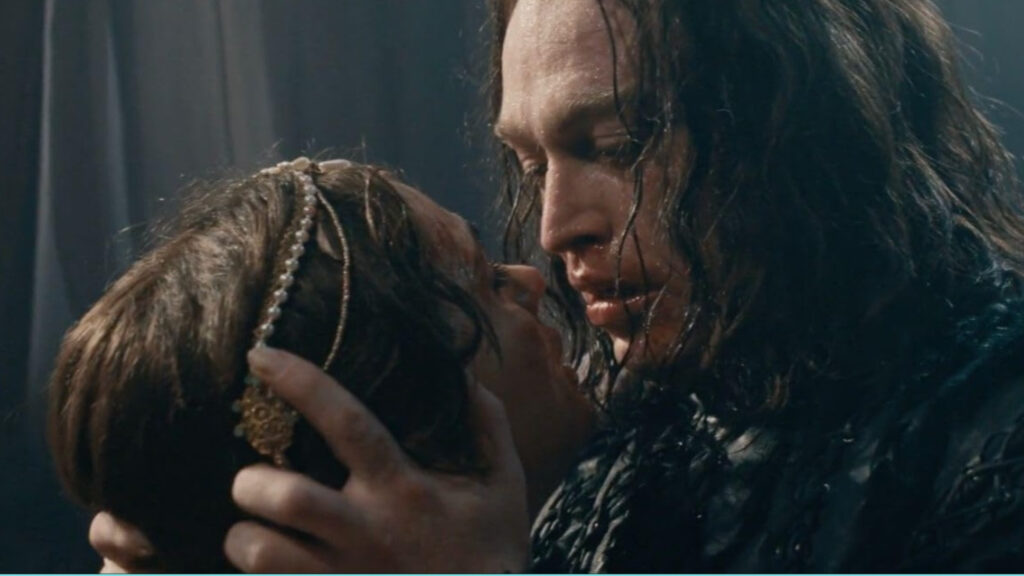
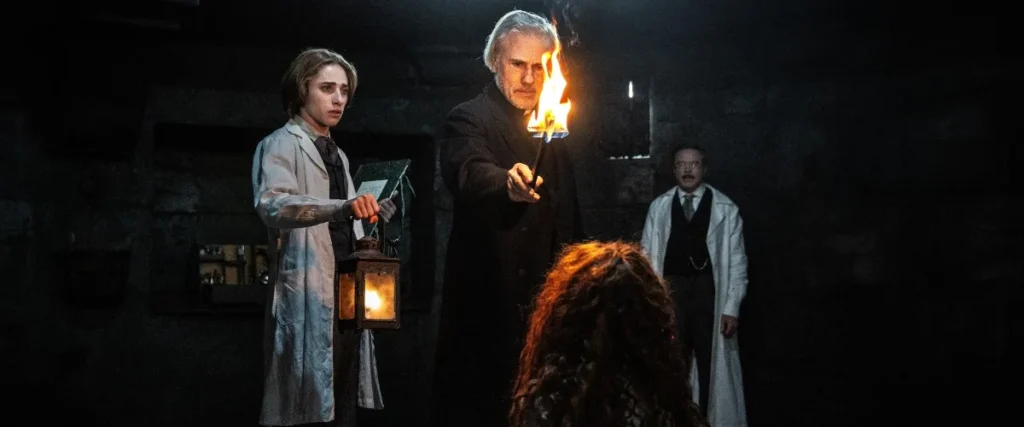
At times, in fact, Besson’s Dracula (aka Dracula: A Love Tale) feels like a bizarre dark comedy (in its weirder moments, it gives way to choreographed dance numbers), something I found positively amusing about it. This humorous aspect is spurred on by Christoph Waltz as the resident Van Helsing surrogate, The Priest. As a result, and despite the feeling that his scenes were filmed quickly and mostly away from everything else, Waltz comes away one of the winners in this. As does Caleb Landry Jones as Dracula, who has the great benefit of being the only prominent male character worthy of any of the film’s females. (The rest, including Jonathan Harker, are milquetoast or, in the case of the Priest, off limits).
This incarnation of Dracula never turns into a bat or a wolf or anything, though he does harbor weird Sith powers to move things with the Force. He lives in his huge gothic castle not with any sexy undead wives, but a gaggle of CGI gargoyles that do his bidding. Even by conventional Dracula standards, this version is particularly religious in its focus. I get the distinct impression that Besson might be somehow serious about those aspects of the story- something that is essential in the Stoker source material, but often downplayed in other adaptations. Here, Dracula- the monster- is redeemable. Could the semi-cancelled director, dragged low by sexual harassment allegations (all dismissed in court, but still…), be projecting to some degree? Hmmm.