


Hollywood to Honor one of its Finest Storytellers
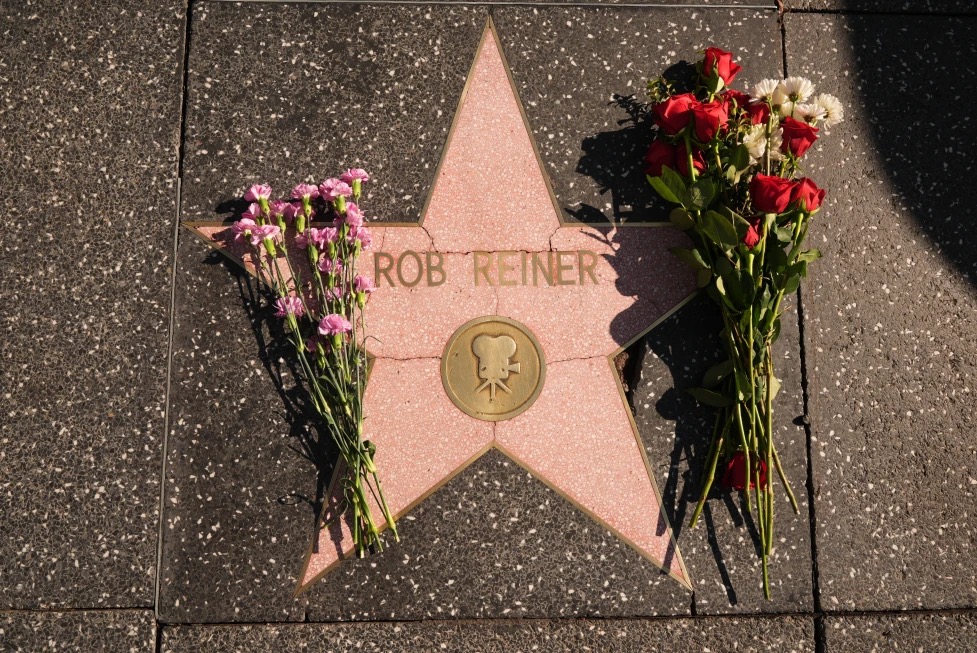
When your directorial debut feature film is This is Spinal Tap, you know you’ve made the right career choice.
In 1984, Rob Reiner presented what would become a cult classic with the mockumentary of a heavy metal band in his first try as a director. His final film was the 2025 sequel, Spinal Tap II: The End Continues.
Reiner displayed his brilliance behind the camera in all those years in between. What made him stand out among his peers was that he excelled with different movie genres.
Those who worked with Reiner and were influenced by his films mourned his death late last year. Reiner, 78, and his wife, 70-year-old Michele Singer Reiner, were tragically killed December 14 in their Los Angeles home. Their son, 32-year-old Nick Reiner, was charged with their murders.
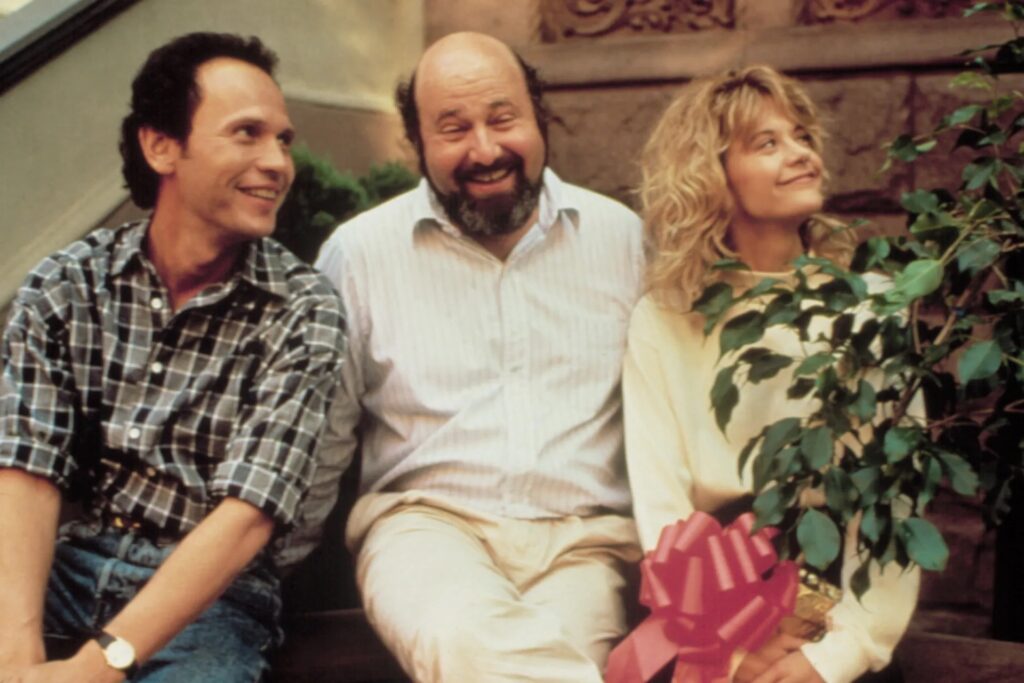
Some of Reiner’s friends will offer a tribute to him March 15 during the 2026 Academy Awards ceremony. Meg Ryan and Billy Crystal (who co-starred in Reiner’s 1989 film When Harry Met Sally) as well as Wil Wheaton and Jerry O’Connell (who co-starred in Reiner’s 1986 movie Stand by Me) will commemorate the life and work of this acclaimed actor and director.
Reiner grew up in the entertainment industry. The son of acting veterans Estelle and Carl Reiner, he learned how to navigate life in the public eye at an early age.
The foundation of Reiner’s talent was comedy. His father, Carl Reiner, developed the television sitcom classic The Dick Van Dyke Show; the elder Reiner also was a lifelong friend and collaborator with comedy writer and director Mel Brooks.
However, Rob Reiner made compelling dramatic and romantic films as well. From Misery and The Story of Us to A Few Good Men and Rumor Has It, he knew how to appeal to a broad range of audiences.
Like many of the characters presented in his movies, Reiner spoke his mind. He strongly advocated on behalf of various political and social causes.
He developed close friendships with many other actors, writers and comedians. Several of them issued a joint statement following his death.
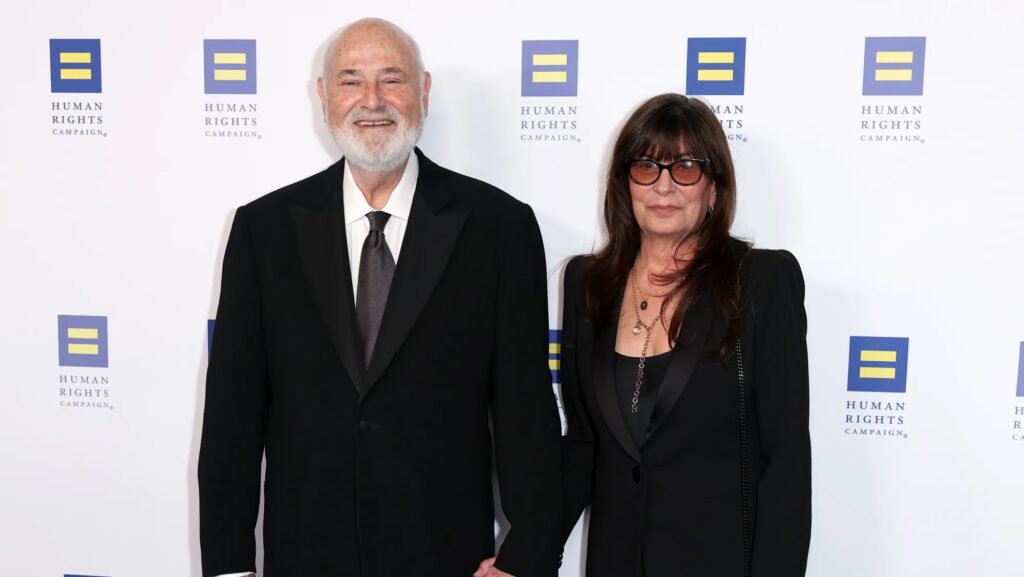
The statement was signed by Albert and Kimberly Brooks, former U.S. Ambassador to Spain James Costos and Michael Smith, Billy and Janice Crystal, Larry David and Ashley Underwood, Barry and Diana Levinson, Lou Mirabal and Marc Shaiman, Martin Short, and Alan and Robin Zweibel. According to a story published December 16 by Associated Press, it reads:
“Going to the movies in a dark theater filled with strangers having a common experience, laughing, crying, screaming in fear, or watching an intense drama unfold is still an unforgettable thrill. Tell us a story audiences demand of us. Absorbing all he had learned from his father, Carl, and his mentor Norman Lear, Rob Reiner not only was a great comic actor, he became a master storyteller. There is no other director who has his range. From comedy to drama to ‘mockumentary’ to documentary, he was always at the top of his game. He charmed audiences. They trusted him. They lined up to see his films. His comedic touch was beyond compare, his love of getting the music of the dialogue just right, and his sharpening of the edge of a drama was simply elegant. For the actors, he loved them. For the writers he made them better. His greatest gift was freedom. If you had an idea, he listened, he brought you into the process. They always felt they were working as a team. To be in his hands as a filmmaker was a privilege but that is only part of his legacy.
“Rob was also a passionate, brave citizen who not only cared for this country he loved, he did everything he could to make it better. And with his loving wife, Michele, he had the perfect partner. Strong and determined, Michele and Rob Reiner devoted a great deal of their lives for the betterment of our fellow citizens … They were a special force together — dynamic, unselfish and inspiring. We were their friends, and we will miss them forever. There is a line from one of Rob’s favorite films, It’s a Wonderful Life: ‘Each man’s life touches so many other lives. And when he isn’t around, he leaves an awful hole, doesn’t he?’ You have no idea.”
Reiner began working on television as a teenager. He appeared in various TV programs before landing a job as a writer for The Smothers Brothers Comedy Hour in 1968.
Reiner’s major acting role came in 1970 with the debut of All in the Family. He portrayed Michael Stivic, an ideal foil to the TV show’s main character, Archie Bunker (Carroll O’Connor).
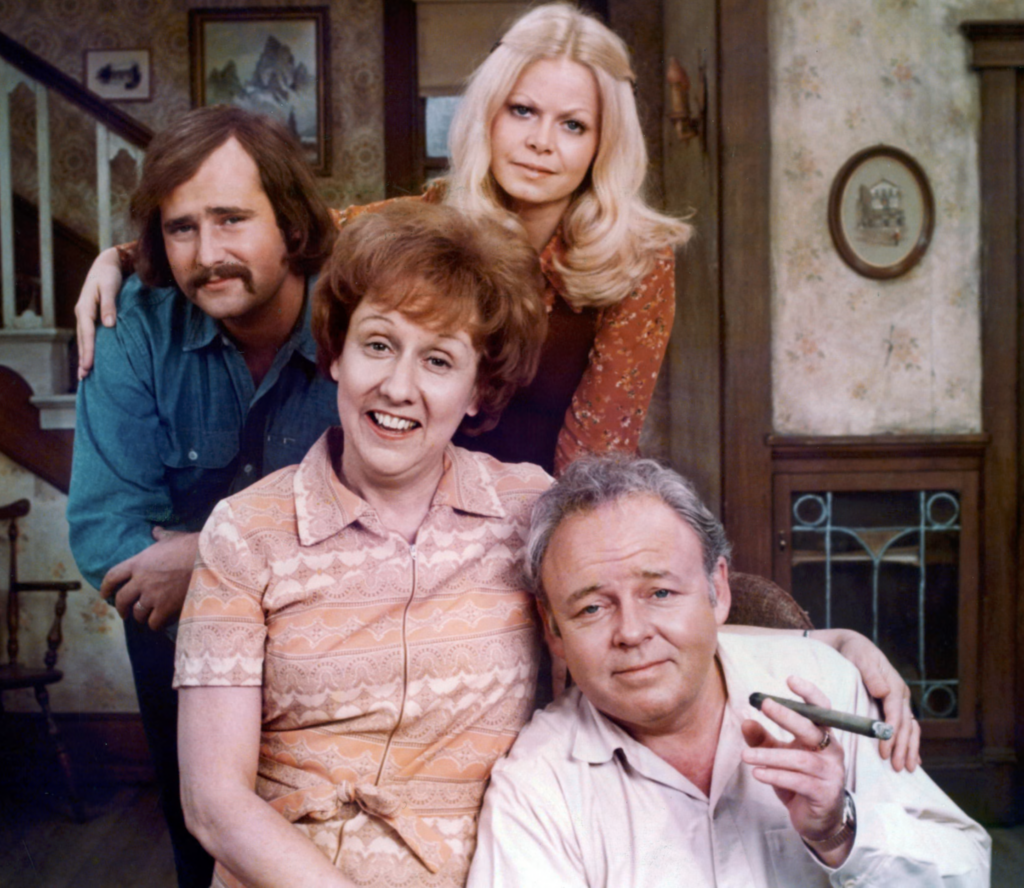
Developed by Norman Lear, All in the Family broke ground for television comedies. Lear used the sitcom format to explore issues such as racism, war, religion and sexism. Reiner won two Emmy Awards for his participation in the show; he also earned three other Emmy Award nominations along with five Golden Globe nominations.
He enhanced his reputation further when he began directing films. Reiner’s initial offering made critics take notice of his genius for moviemaking.
Reiner wrote the screenplay for This is Spinal Tap with comedians Christopher Guest, Michael McKean and Harry Shearer, who went on to play the members of the fictional British band Spinal Tap. Reiner portrayed a documentarian named Marty DiBergi, who is following the members of Spinal Tap on their U.S. tour.
Much of the acting in the film makes use of improvisational comedy. Numerous celebrities made cameo appearances in the movie including Ed Begley Jr., Dana Carvey, Billy Crystal, Fran Drescher, Howard Hesseman, Angelica Huston, Bruno Kirby, Paul Shaffer and Fred Willard.
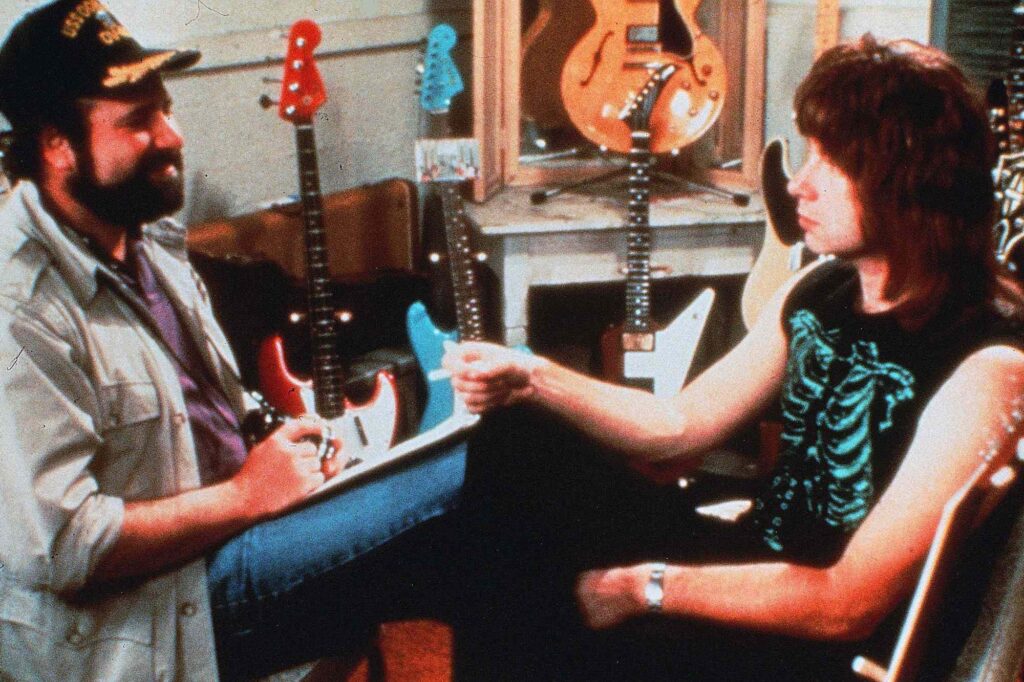
This is Spinal Tap satirized rock ‘n’ roll bands as well as rock concert films. The movie was so realistic that many people believed Spinal Tap was an actual group.
“The movie looks like a documentary filmed during the death throes of a British rock band named Spinal Tap. It is, in fact, a satire. The rock group does not really exist, but the best thing about this film is that it could. The music, the staging, the special effects, the backstage feuding and the pseudo-profound philosophizing are right out of a hundred other rock groups and a dozen other documentaries about rock,” Chicago Sun-Times film critic Roger Ebert wrote in a review published March 1, 1985, giving the movie four out of four stars. “The movie is absolutely inspired in the subtle way it establishes Spinal Tap’s badness. “The satire has a deft, wicked touch. Spinal Tap is not that much worse than, not that much different from, some successful rock bands.”
Guest and McKean began playing music together in college. They created their Spinal Tap characters for a 1978 comedy sketch program called The TV Show.
This is Spinal Tap follows in the footsteps of comedic documentary spoofs such as Albert Brook’s 1979 film Reel Life. It also inspired Guest to develop his own mockumentaries: Waiting for Guffman (1996), Best in Show (2000) and A Mighty Wind (2003).
Reiner followed up This is Spinal Tap with other acclaimed movies: The Princess Bride (1987), A Few Good Men (1992) and The American President (1995). Reiner periodically played supporting roles in his films.
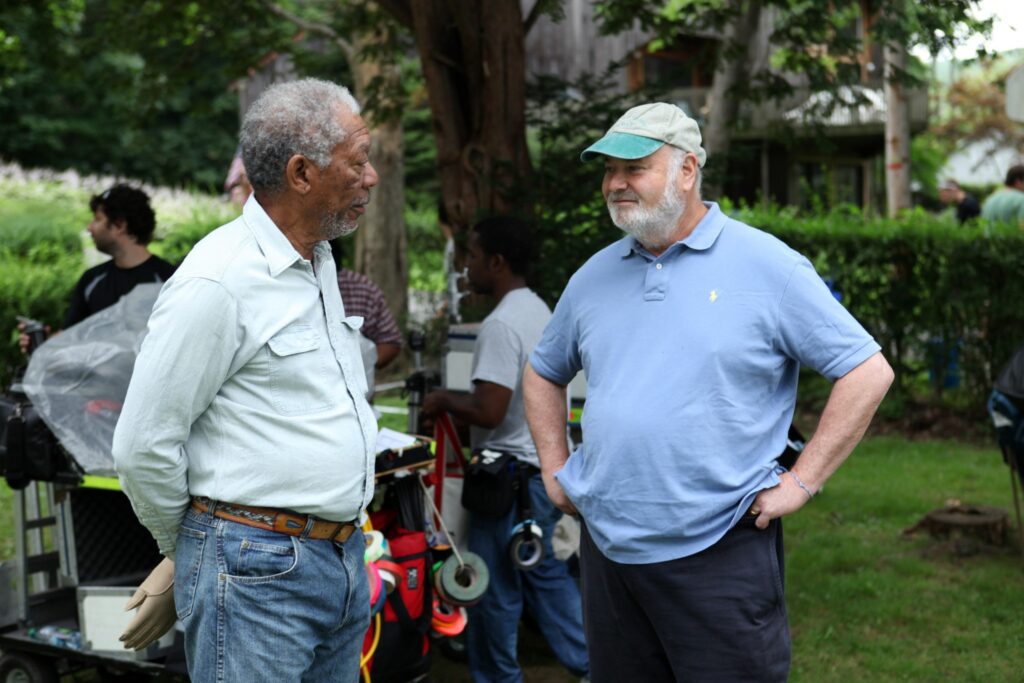
Reiner’s movie Shock and Awe (2017) chronicles the efforts of journalists from the Washington bureau of media outlet Knight Ridder as they examine what led to the U.S. invasion of Iraq in 2003. Reporters Jonathan Landay (Woody Harrelson) and Warren Strobel (James Marsden) remained skeptical of the Bush administration’s claim that Iraq possessed weapons of mass destruction. They discover that much of the information used to justify the invasion was fabricated while evidence casting doubts on their presumptions was ignored.
Reiner played their boss, John Walcott, who urged them to follow the facts wherever they lead. Walcott at times confronts other Kight Ridder newspapers, such as the Philadelphia Inquirer, that won’t run the Washington bureau’s articles. Knight Ridder was one of the few news organizations to question statements coming from the White House about the war; many others got caught up on the Bush administration propaganda about Iraq posing a threat to the United States.
Shock and Awe allowed Reiner to highlight the need for vigilance when it comes to holding our government accountable. It mirrored his own activism and dedication to pursuing the truth. Reiner’s body of work leaves no doubt of his talent for weaving compelling narratives while showcasing life in all its complexity.