


The Legacy of Paul McCartney is Alive and Well in Morgan Neville’s Latest Music Doc
DIRECTED BY MORGAN NEVILLE/2026 (U.S. Theatrical/Streaming Release)
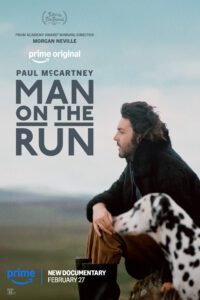
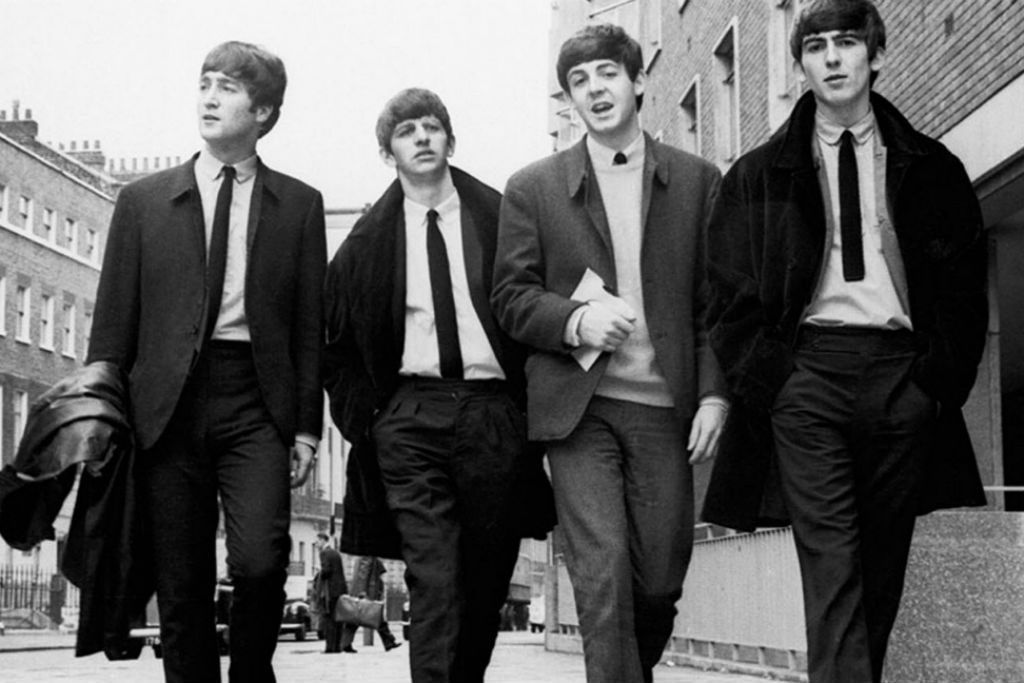
Paul McCartney has been performing at the same level—that is, for the largest audiences possible—almost since the Beatles broke through in the early ‘60s. Even in the last few months, Beatlemania seems to have hardly subsided, with several of their hits charting again and a compilation album debuting in the Billboard Top 10. It seems every other month we get some reminder that Sam Mendes’s four-film project is set to release in 2028, most recently with the most basic of film stills. Perhaps that’s why Morgan Neville’s new documentary takes another angle: What happened to Paul McCartney after the Beatles?
It’s true that since the Beatles first made it very, very big, the members of the Fab Four have been the subject of intense public fascination, both as a band and as individuals. All these decades later, it might seem hard to believe that there might be anything new to be said about any of them at any phase of their careers, particularly Paul, the central musical savant and one-time “cute one” of the group. His own legacy continues to spin on with new music and creative endeavors, appeasing both longtime fans and continuously picking up new ones. Some projects have been more dignified than others. Thankfully, Morgan Neville’s approach to Macca tells the musician’s story with an energetic yet journalistic engagement. Man on the Run maintains an air of creative mystery even while coming clean with details that have been whitewashed in the past. In watching it, one thing becomes quite certain: Paul is not nor ever has been dead.
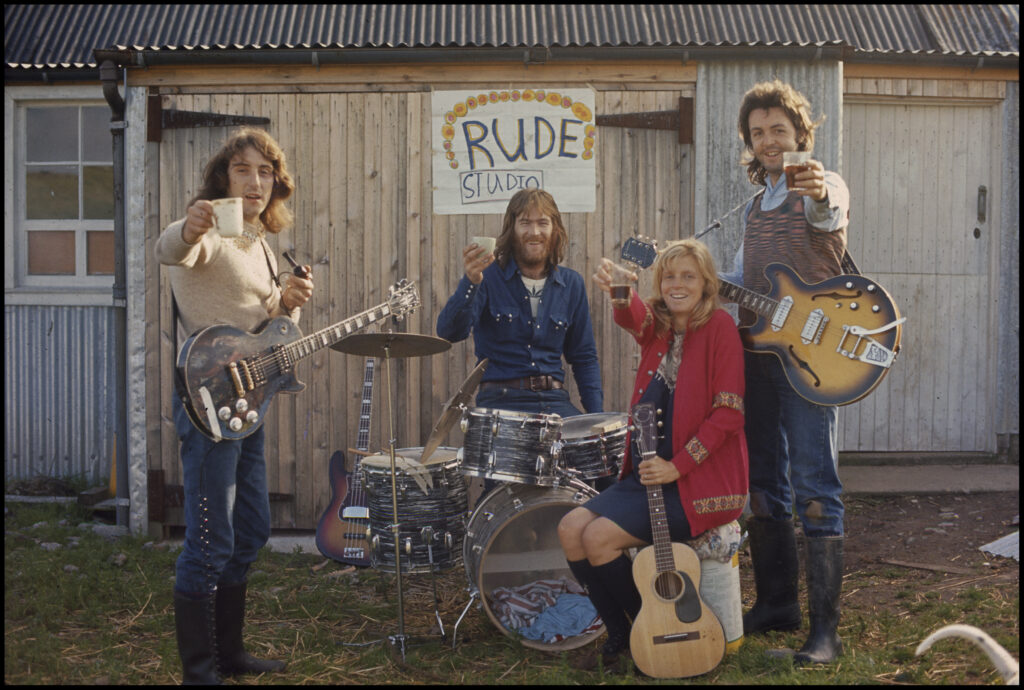
TAYLOR BLAKE: It might be helpful for each of us to start by level-setting our knowledge and fandom. The Beatles are baked into Western culture, so even as a young Millennial, I’m more than conversant about their music and legacy. I only started digging into McCartney’s solo work with the release of McCartney III in 2020 and into Wings’ discography after weeks of hitting repeat on “Let Me Roll It” on the Licorice Pizza soundtrack in early 2022. The band has been in my Spotify Wrapped every year since. Still, could I name anyone in Wings besides Paul and Linda?
Some of this is a me problem. My curiosity about the music I listen to pales in comparison to the films I watch, so I’ve been content to listen to Wild Life, Red Rose Speedway, Band on the Run, Venus and Mars, and more with no context. Neville has tapped into something, though. I wouldn’t call myself a Beatles fan yet still I can name at least 20 of their songs off the top of my head. (Does everyone born after 1970 know the lyrics to “Here Comes the Sun” by osmosis?) Man on the Run feels like a refresher on an era a lot of us never knew or have forgotten about. Is it because domestic life on a sheep farm in Scotland isn’t as exciting as Beatlemania? Is it because we’d rather forget Paul’s “so bizarre” TV special? Is it because adulthood isn’t as sexy as being a genius wunderkind?
JIM TUDOR: I’m a longtime Beatles obsessive who’s probably forgotten more trivia about the group than most people would ever care to know. My dad turned my brother and I onto them by playing the “Red Album” greatest hits records while we decorated the Christmas tree every year. (Why that music then? Beats me, but we loved it). He didn’t care for their later, “strange ‘Yellow Submarine’ stuff”, as he called it, but during our high school years, my brother and I gravitated into that as well. In 1998, we even traveled to Liverpool to see all the Beatles sights. I tell anyone who will listen that all this matters because, in the mere seven years (or thereabouts) that Beatles were a band, they legitimately revolutionized popular music at least twice. Their music still sparks my imagination and fascination like few other things. Yet, I also would have a difficult time naming any members of Wings beyond Paul or Linda. Only recently have I been making an effort to listen to every McCartney solo and Wings album start to finish, as there are some I’ve never done that with. Admittedly, Paul’s 1991 classical music foray, Liverpool Oratorio, defeated me and sidetracked me from the endeavor.
Being squarely and fully a Gen-Xer, I’m old enough to remember numerous Beatles and Beatles-adjacent marketing revivals. On one hand, the Apple Corps. powers-that-be (which are, above all, the surviving band members and appointed family members of those passed) are keen to keep the brand alive and well, but on the other, they definitely don’t commit to anything quickly. Consequently, Paul McCartney has, more than once, opted to fill any collective Beatles void with projects that are him-centric. Huge concert tours, photo books, special album re-issues, TV specials, and of course, documentaries.
This latest documentary, the satisfying if not Earth-shattering feature-length theatrical release, Man on the Run, boasts the high-profile direction of Oscar winning filmmaker Morgan Neville. Despite having quite the crowded recent filmography (in past two years, Neville somehow crafted three other big-deal documentaries, one being a Lego animated movie about Pharrell Williams, another a tonally varied diptych about Steve Martin, and the Netflix offering Breakdown: 1975), Man on the Run, covering McCartney’s immediate post-Beatles life and subsequent band, Wings, lands as the carefully crafted and thoughtful piece it needs to be. I say “needs to be” because the Wings era has gotten the extensive documentary treatment before.
Back in 2001, we got Wingspan, a two-hour television event that was presented like a kinda-sorta addendum to the great Beatles Anthology mini-series that aired a few years earlier. The Wingspan doc arrived with a big book, a multi-disc remastered greatest hits CD set (of which I gladly purchased the blue, canvas-bound book version), and goodness knows what else. The TV special was a perfectly fine affair, dragged down only by the framework of Paul’s daughter Heather interviewing him about the era. Consequently, Paul—and Wingspan itself—play it very safe. When discussing his major marijuana possession arrest in Japan—a harrowing ordeal if also one that was completely avoidable—Paul gave his daughter a very half-hearted admission of guilt capped with a little speech about how he never should’ve been using the drug. You can tell that she doesn’t buy that for a minute. By contrast, Man on the Run pulls few if any punches, competitively. Neville’s chronicling of the Japanese arrest and subsequent prison stay carry that weight not felt previously while not talking around or hollowly justifying anything.
TAYLOR BLAKE: If that documentary is as compelling as you say it is, then you may have answered the question about why this was made. Since Paul is an EP on this film, it’s safe to say this isn’t a pure third-party look at this era, but it never feels fawning. The cannabis controversy feels quaint in 2026, but it’s never positioned as an injustice. Paul admits the aforementioned “so bizarre” TV special came about because he’d reached a point in his career where people wouldn’t tell him “no.” As I’ve listened to much of Wings’ work in a vacuum, I also had no idea his music in the early ‘70s was critically panned. (C’mon, “Love Is Strange” and “Little Woman Love” are bangers!) Perhaps the biggest tell that I’m a Millennial is that I had no idea Paul was blamed for the Beatles break-up at first—in my lifetime, that’s always been a crime laid at Yoko Ono’s feet.
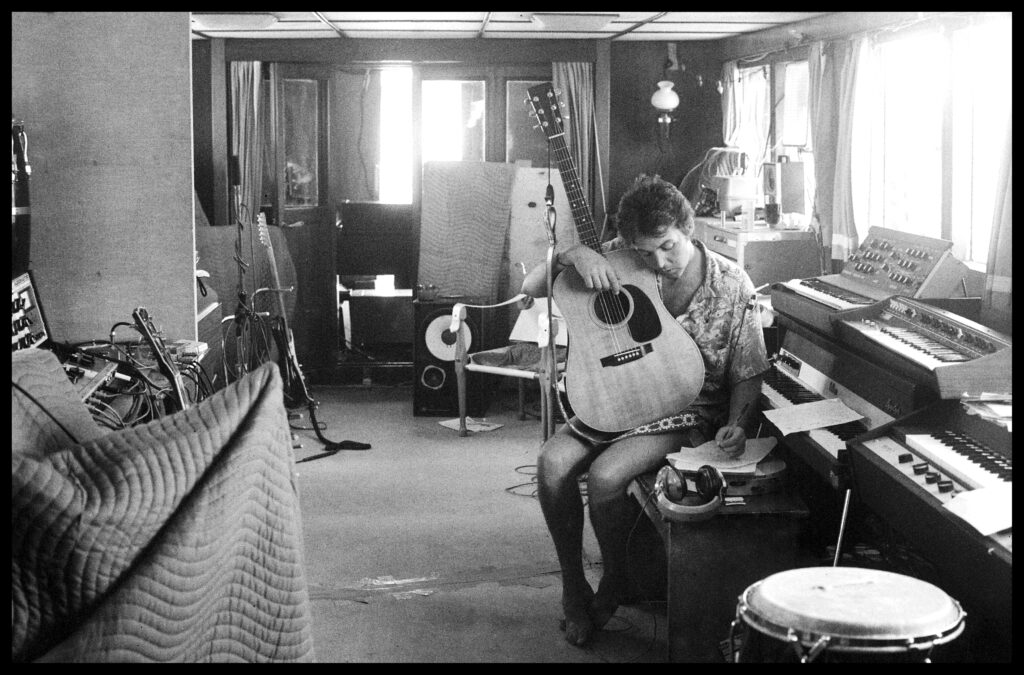
That said, he’s one of the few celebrities with a near-unanimous approval rating, with no questions about his artistic merit, and without the words “controversy” and “scandal” on his Wikipedia page—some admiration is earned. One other Neville documentary that’s relevant here is 20 Feet From Stardom, which focuses on backup singers for the likes of the Rolling Stones. Mick Jagger returns to provide commentary next to Sean Ono Lennon, Paul, (from her lifetime) Linda, and their children. Unlike 20 Feet, Piece by Piece, or Breakdown: 1975, we never see a talking head. They’re all voicing over archival footage, photography, animation, and—best of all—original handwritten lyrics, notes, and diary entries. Though the marketing materials are emphasizing the “unprecedented access” Neville had, he has a knack for crafting all of this so it feels like taking a trip through Paul’s mind and memories. (Perhaps Paul watched Piece by Piece and realized how dull this would be if he shared nothing new.)
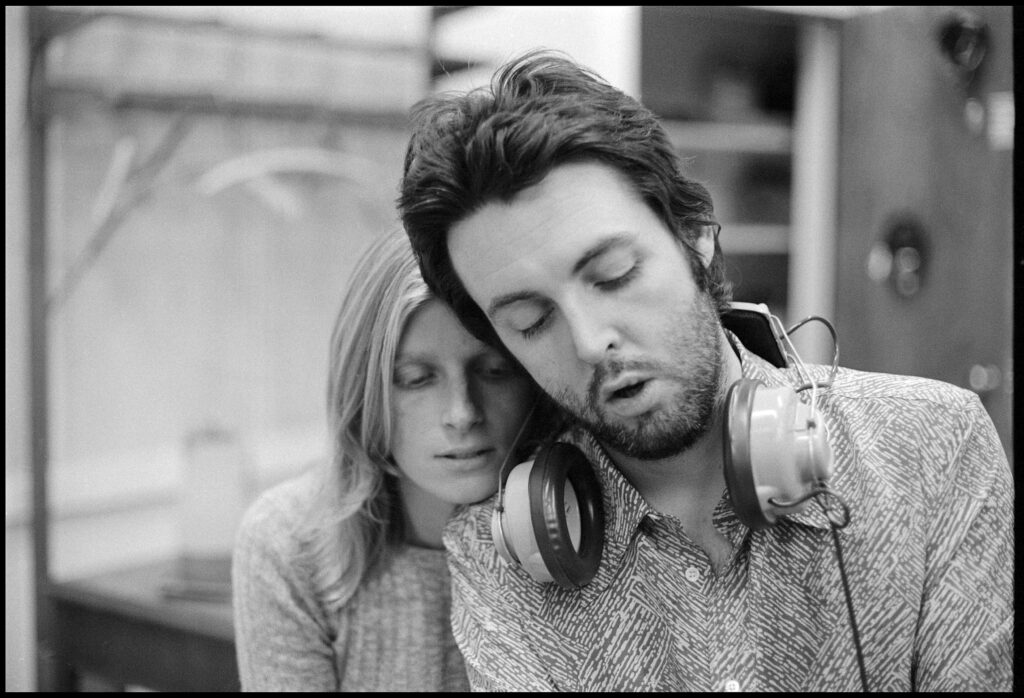
Neville positions Man on the Run as the story of Paul growing up, but it also functions as a love letter to Linda. This isn’t the most journalistic analysis, but one of my key takeaways from this doc is she was the coolest. She joined a band on her famous husband’s new band on a whim then learned to sing and play keys; traveled the world; raised her kids on the road; and didn’t hire a stylist, a nanny, or a cook. Sure, the self-styling means she and Paul had matching mullets for awhile, but that’s an astounding level of confidence.
Jim, you and I first saw this movie at the St. Louis International Film Festival last November, and it rocked in the surround sound of a theater. While it’s a bummer this didn’t get a wider theatrical release so more could experience that, it does play well with a soundbar at home. Man on the Run isn’t the same emotional experience as seeing him live, but as you said, it is a satisfying watch.
JIM TUDOR: The observation that “it feels like taking a trip through Paul’s mind and memories” is very astute, and indeed gets at the heart of why Man on the Run is so compelling. I’ve never heard Paul speak so confessionally about the Beatles breakup, particularly the narrative that he was to blame. In the Beatles Anthology doc, he notoriously boiled the breakup down to, “It was just time for it to end.” At long last, this new film undoes that, replacing it with convincing introspection. Though for the record, Yoko has always been who the public’s blamed, though that’s absolute racist, chauvinist garbage. Paul did in fact make certain power grabs in the Beatles’ waning days, but he was also, by several accounts, the only one putting any real energy into it at that point. Like most things, it’s complicated. Man on the Run doesn’t serve as any kind of final say on this nor most matters it covers, but that’s not Neville’s mission.
It was interesting to learn more about Linda, who, like Yoko, was the victim of a lot of unwarranted and just plain mean criticism and mockery during her life. I found the “Linda is cool” segment of the film a bit too much of an obvious course-correction, though she definitely was adventurous in art and life, and a great crusader for animal rights. She photographed the cover of Abbey Road, for gosh sakes. I’ve stood at that same vantage point, and darn near got hit by a car. (London motorists are so over tourists photographing that crosswalk). Her death hit me harder than I thought it would, for sure.
It’s funny, when I was far younger, I mistakenly thought that the song “Band on the Run” was “Man on the Run.” I went as far as to plan a rock music-driven absurdist comedy film called “Man on the Run”, using the song. When I learned that that wasn’t what Paul was saying in the song, I just thought that that makes the whole thing even funnier. I’m glad I never made that project. (I’ve got over 100 more short movies from that period that the world must be spared from ever seeing). I don’t know why Neville landed on the title “Man on the Run”, but I’d like to imagine that he also misheard “Band on the Run” and opted to name a film after that wrong title. What exactly Paul is on the run from, I can’t quite say, but one thing it does make clear is that Wings only carried him so far. He’s had to hoof it on his own for much of his career. And in true Paul McCartney fashion, he never walked when he could run.