


Elphaba and Glinda Find More Magic (and Few Answers) in Oz
DIRECTOR: JON M. CHU/2025
A theme I keep returning to as I evaluate Wicked: For Good: consistency.
In one sense, it’s because part of me just wants to tell you to go back and read my review of last year’s Wicked: Part One. Much of what audiences loved in Part One hasn’t changed, and the critiques I had a year ago remain. Once again, the spectacle of Oz deserves the biggest screen and loudest speakers possible with sequined gowns, intricate physical sets, and powerhouse solos. And once again, lighting washes out actors’ faces and desaturated coloring hides them in shadow, leaving me baffled: How does this sloppy filmmaking technique live beside such musical and practical craftsmanship?
But in another way, I’m contemplating the importance of consistency in an adaptation. The plotting of Part One stayed faithful to the Broadway show almost to a T, but For Good spreads its monkey-bound wings into the realm of new material. The sequel picks up not long after where last year’s box office smash (and Act One of the stage show) left off. Elphaba (Cynthia Erivo), now Oz’s most wanted criminal, lives in hiding except when surfacing to rescue imprisoned or enslaved animals, more and more of whom are losing their ability to speak each day. Because Glinda (Ariana Grande) has ignored her conscience and stayed loyal to the Wizard (Jeff Goldblum) and his new press secretary Madame Morrible (Michelle Yeoh), she has become as a public figure to counter the fear Elphaba inspires. As Glinda the Good, she appears to be a powerful witch to protect Ozians from the Wicked Witch of the West, but the title comes with more material perks than magical powers. One of these perks: her engagement to Fiyero (Jonathan Bailey), recently appointed as the captain of the guard tasked with hunting Elphaba down.
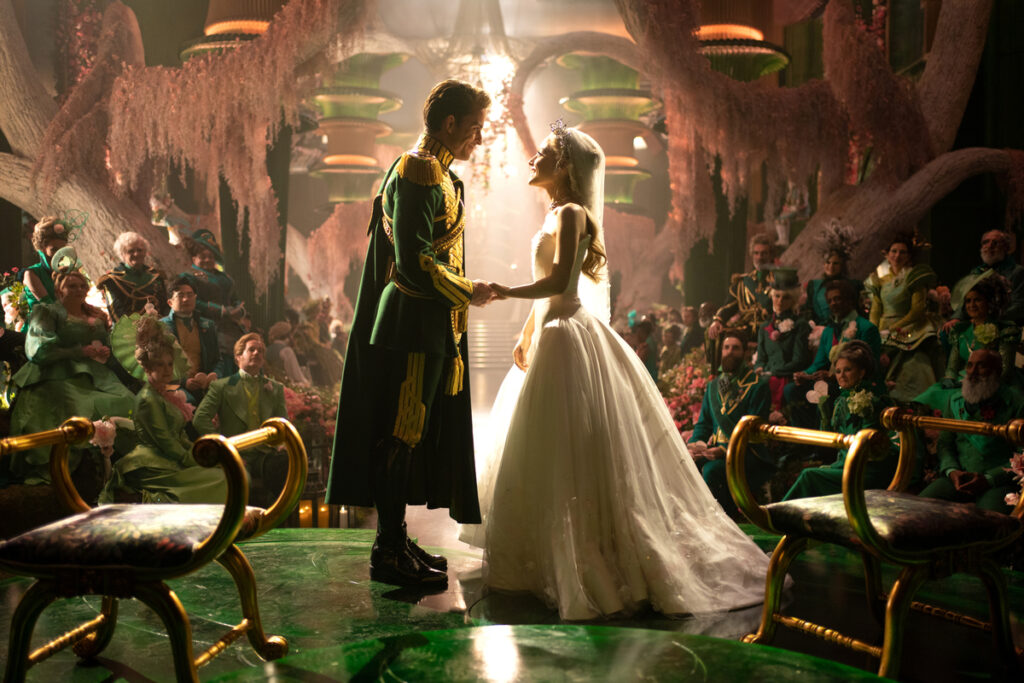
Adaptations almost always benefit from riffing on their source material, and For Good only runs about 15 minutes shorter than Part One thanks to three new songs, lengthier versions of the Broadway numbers, and added scenes. (For comparison, the second half of the Broadway soundtrack includes 8 tracks running 28 minutes, while the official film soundtrack features 11 tracks lasting 45 minutes.) Some of these choices are welcome, such as Elphaba’s anthem “No Place Like Home” and Glinda’s ballad “The Girl in the Bubble,” both of which expand the story’s ideas and the opportunities for our leading ladies to show off their pipes. Other additions feel less essential, such as a rescue on the Yellow Brick Road and glimpses of Glinda and Fiyero’s wedding preparations. They fit the spirit, but they serve more as padding. (I sure hope two-time Oscar nominee Colman Domingo earned a nice check for his one minute of dialogue as The Cowardly Lion—I’m sure it was inconvenient to step away on his lunch break while shooting The Running Man.)
But the bigger concern than the new detail being superfluous is that it undercuts its ending. (Spoiler alert!) The gist of the finale stays consistent with the show: Elphaba fakes her death and leaves with Scarecrow Fiyero (attempting to hide the reigning Sexiest Man Alive in a Mod Podged layer of burlap), and Glinda becomes Oz’s new leader after the Wizard returns to Kansas. But in the new context, these events feel less triumphant. On stage, Elphaba’s departure feels like her only option for survival, and it’s a happy one because she runs away with her prince. But in “No Place Like Home,” Elphaba creates a rallying cry to encourage the marginalized animals to not abandon their homeland, singing “When you want to leave discouraged and resigned, that’s what they want you to do…Oz belongs to you, too.” At best, this makes her emigration hypocritical; at worst, it argues oppressed people should give up their fight. Meanwhile in “The Girl in the Bubble,” Glinda muses on the privilege that has protected her from hardship, ultimately choosing action against the fascists ruling Emerald City. While the political system of Oz is fuzzy, her forcing out the Wizard and her unilateral arrest of Madame Morrible amounts to a coup. Glinda commits her burgeoning magical powers to protecting all citizens of Oz, but she never corrects the narrative about the Wicked Witch of the West, and why would the “small-minded” people who never gave Elphaba a chance choose better next time? Glinda is repeating the cycle the Wizard sings about in “Wonderful:” “The truth is not a thing of fact or reason; the truth his just what everyone agrees on.” If Wicked: For Good were braver (and better), it would have abandoned consistency to rewrite the ending, perhaps forcing Elphaba accusers like Tin Man Boq (Ethan Slater) to take responsibility for their lies. (End spoiler alert.)
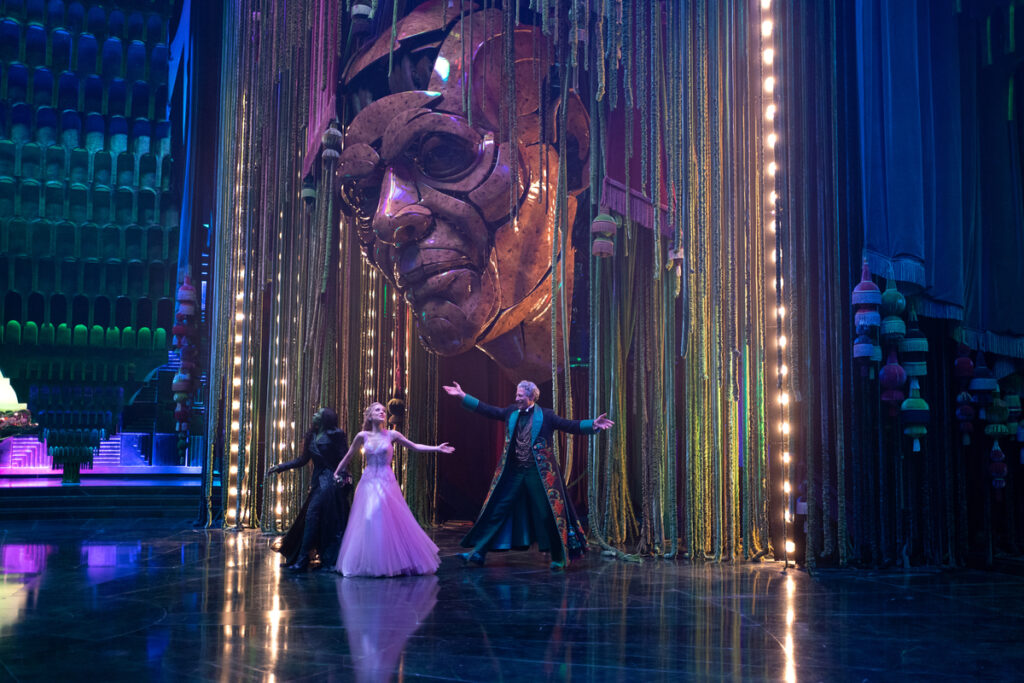
Several hundred words into this review, it’s worth clarifying Wicked: For Good is still enjoyable as a crowd-pleasing musical sprinkled with a dash of comedy, albeit without a number as killer as “Defying Gravity” and with fewer Glinda costume changes than in Part One. But this sequel falls short of the promise last year’s Best Picture nominee, which raised crunchy questions in its first scene: Why does wickedness happen? Are people born wicked or do they have wickedness thrust upon them? On stage, they’re are left unresolved, forcing us to consider whether we’ve accepted the definitions of “good” and “bad” given to us without thought. For Good, frankly, just forgets those questions along the way. Audiences need more popcorn-worthy movies that explore prejudice, the seduction of power, and the tension between what is easy and what is good, but even more, they need ones willing to follow through on their convictions.