


A Short Month Yields Many Stripes of Cinema.
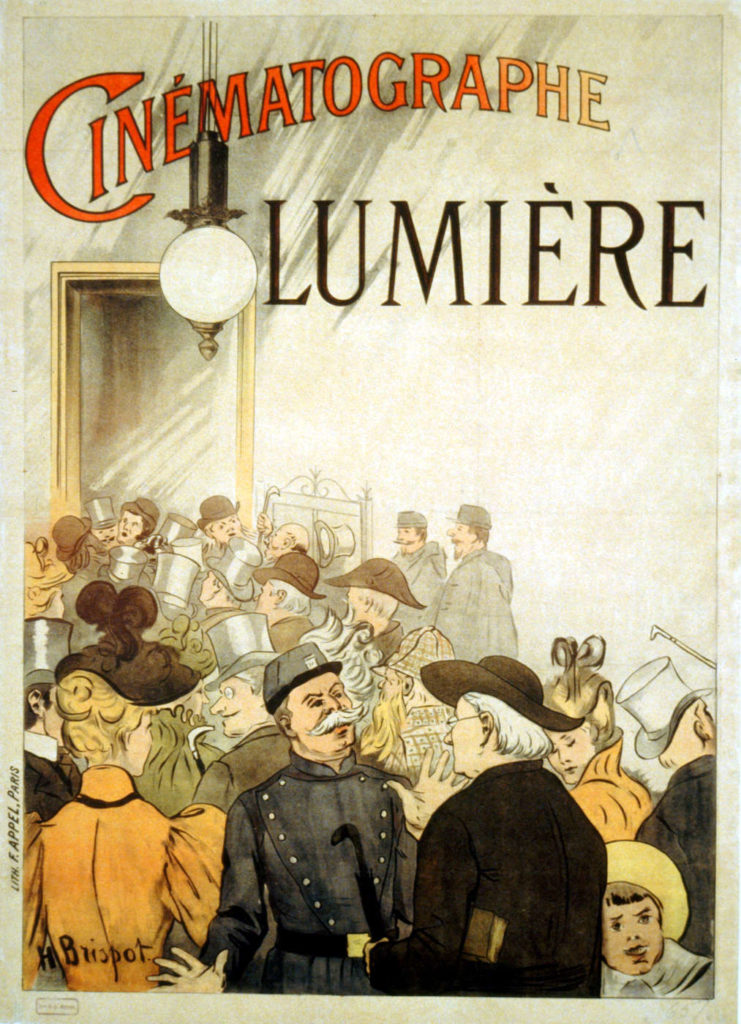
December 28, 1895… You’re in Paris, with no evening plans. You could venture out to the Grand Café where, word has it, two inventor brothers are hosting the public premiere of their ballyhooed motion picture device, the cinematographé. But, it’s winter. It’s that week inbetween holidays, and you’re probably kind of tired. Do you really want to go pay to hang around the basement of a café to see the latest contraption somebody’s talking up?
If you opt to stay home, you’d enjoy some good rest and time to yourself. Can hardly blame you… Although, on the other hand… as it turns out, you’d be missing The Birth Of Cinema.
Hyperbole, perhaps, but many historians indeed pinpoint the December 28 cinematographé exhibition by Auguste and Louis Lumière as the start of moviegoing as we’ve known it. You can’t have “cinema” without gathering in a cinema, no?
From that moment on, the French staked a big claim in the development, distribution, and artistic viability of film and filmmaking. Until World War I, France comfortably sat atop the world’s quickly emerging movie hierarchy. It’s telling that the country’s Big Three early-early film companies- Gaumont, Pathé, and Éclair- all still exist in some form today. The same can not be said of the similarly pioneering film companies of the United States.
Unlike most every other country, the French hold cinema in particular high regard. There, it is truly considered an art form (as opposed to the lip service Hollywood gives such a notion), tied closely and politically to national identity. They are possessive of their artists, and that very much includes filmmakers. As daunting as such an attitude can be, without it, a number of cinema’s steps forward likely wouldn’t have happened. This includes but is not limited to the Nouvelle Vague– a.k.a. the French New Wave- an essential midcentury filmmaking movement that changed movies forever.
France has been a country for exponentially longer than its cinematic business usurper, the U.S. has. Therefore, it’s only natural that its attitudes, ideas, values, and even dreams would be far more matured than that of ‘Merica. It’s good to remember these things as we venture into the wealth of French cinema. For us at ZekeFilm, in terms of our own movie watching, the simple allure of alliteration and nothing more led us to dub the second month of 2026 “French February.” Below, we each individually share our findings…
– Jim Tudor

François Truffaut in Day for Night (dir. François Truffaut, 1973)
Elevator to the Gallows
Directed by Louis Malle / French / 1958
by Max Foizey


I’ve always wanted to get stuck in an elevator. It seems like it would make for a neat story to tell at parties. But I probably wouldn’t find it so neat if I had just committed murder and was trying to make my getaway. Then it would just be a drag. That’s the crux of Elevator to the Gallows, the debut narrative feature film from director Louis Malle. Malle, coming off of documentary work with Jacques Cousteau, was just 24 years old when he directed and co-wrote the screenplay (with Roger Nimier) of Gallows, adapted from Noël Calef’s 1956 novel.
Distressed lovers speaking over the telephone make plans to meet up at a nearby cafe in a half hour. Before then, the man, Julien (Maurice Ronet) rappels down the outside of a building. Entering an office through a window, he shoots and kills a man (Jean Wall) sitting behind a large desk. The room is otherwise empty, the only witness to the crime is a black cat randomly walking along the railing outside of the office. Taking care to make it look like a suicide, the man exits the buidling and is about to drive away when he notices that he left the rope he used to gain access to the office swinging in the wind for all to see, if they would only look up. The man goes back inside the building and takes the elevator in order to retrieve the rope. The elevator stalls.
The woman, Florence (Jeanne Moreau) is waiting at the cafe. A half hour passes. The man does not show. She jumps to the conclusion that he didn’t have the guts to go through with the murder, that he’s a coward. She leaves the cafe in anger, walking the streets wondering what the future holds for their relationship and their future together. Meanwhile, Julien’s car is stolen by a young couple, Louis (Georges Poujouly) and Véronique (Yori Bertin), who soon thereafter manage to get themselves into bloodier trouble. They find themselves on the run from the police, who have recovered the stolen car and believe Louis to be Julien due to the car’s registration. Unaware that he is wanted for murder, just not the one he committed, Julien does his best to escape the stalled elevator before he is discovered.
Even a few minutes before Elevator to the Gallows ended, I had no idea how the story was going to wrap up. While I found the conclusion to be a bit of a disappointment, it does not rob the rest of the film of its impact. Vintage automobiles, cool French fashion, a striking opening shot, and an impressive interrogation scene contribute to the movie’s ice cold vibe. The best sequence may be when Florence takes an angry nighttime walk lit only with natural light, with neon signs casting shadows on her furious face. This is a moody little movie with hypnotic black and white cinematography by Henri Decaë and an incredible, winsome score by the one and only Miles Davis. There are long stretches in the film without music, but Davis’ somber score is the film’s secret weapon.
Cléo from 5 To 7
Directed by Agnès Varda / French / 1962
by Robert Hornak


Who knew we’d get the perfectest dollop of French New Wave-y rule-shuffling from the littlest and onlyest woman of the lot of ‘em. It’s not till you see it that you realize it took the female perspective to lop off, or at the very least out-class, the twin-headed culture thrust called Truffard, with their 400 Breathless Blows and their critics-make-right reordering of what-makes-cool in shades of jump cuts and last-shot ambiguity.
It’s all there in Varda’s mission statement of a movie, depicting as it does the entire film movement’s animus in the shape of a singer on the cusp of fame and death simultaneously. By ’62, the Wave had broken across the world, its burgeoning influence mirrored in Cléo’s dependence on mirrors to exorcise her deep fears, themselves masked by abject self-awareness of the emptiness of beauty. That cancer is looming/growing inside that attractive shell is almost lost when that attractive shell so quivers with righteous irritation for a solid 45 minutes of straight screen time, making us hate her for her snooty entitlement and child-whine, till you realize that for you too there’s nothing quite like the distraction of self-pity to ease the pain of bad news coming. We see ourselves in her and we hate her on behalf of our own longsuffering friends.
Then the pivotal moment, at nearly the exact half-way mark, when she sings a song – and her voice is plaintive-spiritual – that features lyrics as the ultimate mirror reflecting her deepest, saddest terror at withering into nothingness – the beautiful loneliness of the mid-century existentialist. That scene, singing piano-side, is from among a full quiver of New Wave tricks the most pointed and appropriate, Cléo’s eyes turning slowly to the camera, all fourth-walled out, her voice booming soft in what becomes the acoustics of not her studio apartment but a rapt concert hall, the piano accompaniment populating out into a full orchestra, and her tears wrung down from her gaze into the abyss.
After this, she ditches wig and friends alike, striking out into the Paris air, searching for less a distraction (as were the hat shops and cab rides) than a clean heart to present to the gods upon her destined arrival. And she finds it in an unwanted intrusion by a stranger, a man at waterside, he who’s whiling away his final hours before returning to the Algerian conflict, possibly to die, and finds in his predicament a chatty answer to her problem: in the most French and new and wavey way, she is left alone again (doomed to separation somewhere beyond the final image) but left happy, toting a feeling of kinship with the ship of fools that we all find ourselves de-boarding at the end of the final reel.
Varda’s exploration of newfound fame, coated with anxiety and coded for misunderstanding – as you might assume it’s by a man, and the shrieking female at its center intended for mockery – is statuesque in the black-and-whiteness of its time, but humble in its final acceptance of the fragility of all egos once disease is holding the leash.
The Passion of Joan of Arc
Directed by Carl Theodor Dreyer / French / 1928
by Taylor Blake


My first admission: Until this month I had never seen The Passion of Joan of Arc!
My second admission: I don’t think it’s very watchable 98 years later!
I’d like to thank director/co-writer Carl Theodor Dreyer and his collaborators for the filmmaking innovations they brought to cinema, including intricate set designs, quick editing, and angled close-ups. (And that’s just what Turner Classic Movies highlighted in its overview.) Without this movie, who knows? We might live in a world without courtroom dramas like 12 Angry Men. I’d also like to thank Maria Falconetti for giving 100% even with a camera in her face for at least half the runtime of the film. (And with the risk of dehydration that comes with crying in every single one of those shots!) Without her, we might live in a world where Anne Hathaway never found a scene to win herself an Oscar.
I counter with this: Can reenacting a courtroom transcript be cinematic? If it can, this Q&A session isn’t it. The real-life political machinations of her trial are complex and fascinating, but her accusers in this film are cartoonish villains. We spend most of the film watching them shout then cutting to reactions from a face that likely inspired Frodo’s appearance post-Ringwraith stabbing. The last 10 minutes bring a bombardment of action out of nowhere as Joan meets her fate.
Is The Passion of Joan of Arc worth checking out as a historical artifact? Absolutely! And to be fair, it does sound like prints of Dreyer’s original vision may not exist anymore, which could make my frustrations with the pacing moot. But what a wonderful thing that an art form can evolve in 98 years.
Portrait of a Lady on Fire
Directed by Céline Sciamma / French / 2019
by Claire Meisch
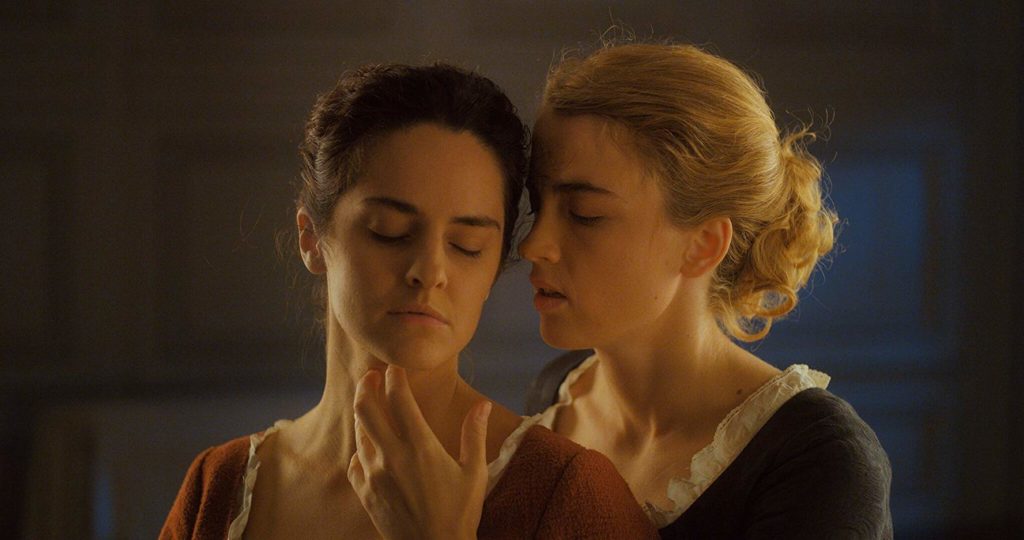

I would be the first to admit how significantly my French film knowledge is lacking. When it comes to the works of Godard and Truffaut, I am woefully incompetent. However, I do tend to pride myself on my personal expertise when it comes to queer filmography. That is exactly why it has been such a sore spot that I have somehow managed to avoid one of the more acclaimed entries among the ranks. Applauded by sapphics and critics alike, Portrait of a Lady on Fire made waves when it was released in 2019. Writer and director Céline Sciamma takes the reins with an expert-level focus, which is supported by an established background in arthouse films that handle themes of sexuality and the complexity of coming into oneself. Sciamma weaves each delicate thread together to craft what very well may be recorded in history as her magnum opus.
As with any truly great love story, Portrait of a Lady on Fire does not occur in this century. Taking place in 18thcentury France, talented artist Marianne (Noémie Merlant) travels to a distant isle after being conscripted to paint a wedding portrait for a young bride-to-be. It is not until her arrival that Marianne discovers the complexities this job presents. The woman in question, Héloïse (Adèle Haenel), has proven to be a rather impossible muse. Frustrated by her restrictive circumstances and dreading the upcoming nuptials, Héloïse has stubbornly refused to pose for a proper portrait. Under the guise of Héloïse’s newly hired companion, Marianne gradually works to earn the trust of her mysterious subject. By day she takes morning walks along the coastline and provides polite conversation; by night the hours are measured by clandestine brush strokes. As time passes, the two women form a connection that rapidly transcends any definition of platonic. Casual conversation morphs into magnetic attraction, and it isn’t long before Marianne and Héloïse tumble over the edge into more intimate territory.
Perfectly paced, brilliantly acted, and visually stunning, it is easy to understand the critical appeal of A Portrait of a Lady on Fire. The costumes, though not overwhelming in number, are beautiful in their detailing. Craggy cliffsides and windy European beaches are somehow made to seem charming and welcoming. I must state my personal appreciation for the lighting department, as each frame – whether in daylight or moonlight – is gloriously lit. This is an art that seems hard to come by these days. To put it in simple terms, this is a beautiful looking film.
Even more lovely than the scenery is the story of Marianne and Héloïse’s relationship. Initially wary and unsure of each other, the two women engage in cautious dance tinged with a burgeoning sense of curiosity. Marianne’s gaze is constantly pulled to her secret subject as she greedily memorizes each of her minor details. Instead of being repulsed by her companion’s intense scrutiny, Héloïse only responds in kind as her piercing eyes stare back with unflinching confidence. The intimacy depicted here is of the rare breed that surpasses sexual chemistry, though this is not to suggest the physical sensualness between them is lacking. Their love language is crafted from a mutual intellectual attraction to literature, art, and music. It is as much a melding of minds as it is bodies, which is ultimately infinitely more intense. We already understand from the opening sequence that this relationship is a victim to the passage of time, but somehow their love does not feel tragically doomed. The romance between Marianne and Héloïse may be fleeting, but the emotions it has inspired are guaranteed to last a lifetime.
Ultimately, what truly propels this film to such great critical heights is the female factor. This is a film about women through the lens of a woman. Truly, the fact that Portrait of a Lady on Fire is directed by a female elevates the content astronomically. Outside of the central romance, there is an entire separate introspective take on gender. When Marianne and Héloïse are not alone, they are occasionally accompanied by the young housemaid, Sophie (Luàna Bajrami). The connection between these three is handled with the kind of familiarity only a female director could achieve. As the three sit before the fire swapping their interpretation of the tragic tale of Orpheus and Eurydice, the scene is achingly reminiscent of today’s modern sleepover. Together, these women learn to support each other in a society that has been constructed to work against their desires. It is a masterful portrait of the powerful binding nature of womanhood.
Jules and Jim
Directed by François Truffaut / French / 1962
by Erik Yates


Jules and Jim (Jules et Jim) was my immediate thought of what to watch when it was announced that February would be “French February” for our ZekeFilm Film Admissions. Having a serious hole in my French New Wave oeuvre, it seemed natural to go straight to the master himself, Francois Truffaut. While I had seen Francois Truffaut appear in Steven Spielberg’s Close Encounters of a Third Kind, I must fully confess that I had not watched any of the films he had written and directed. A serious admission, I know, but after all, that is what this column is about.
In 2001, Cameron Crowe directed the Tom Cruise led remake of Abre Los Ojos (Open Your Eyes) called Vanilla Sky. In this film, the protagonist, David Ames has a framed colorized poster of Jules and Jim in his New York apartment. We learn in Vanilla Sky that Jules and Jim, specifically the character of Catherine (Jeanne Moreau), is what shaped David’s idea of what love could be. While a simple detail, and a complementary nod from one director to another, it re-enforced the enormous influence that Truffaut, and specifically Jules and Jim has had on cinema, since its 1962 debut.
The story is simple. In 1910, Parisian Jim (Henri Serre) meets Austrian Jules (Oskar Werner). They form a friendship that is deeper than all that life has to throw at them, both good and bad. This will include the Great War, World War I, where they will be pitted against each other, and the introduction of Catherine to their lives who will marry Jules but love them both fully over the course of the film.
The film is carried by a narrative that flows in and out of different episodes of the lives of these three individuals with voice-over narration to connect these episodes to create a living, breathing, three-dimensional tale of how romantic ideals of the bohemian life smack up against the rigidity of society. While the time frame is set 50 years prior to the film’s 1962 release date, it very much feels contemporary to the early 1960’s, and even continues to resonate today. The first half of the film embodies the carefree bohemian spirit that Jules, Jim, and Catherine share, but the last half of the film, and its tragic conclusion, demonstrates the effect of that attitude being lived out in a far more structured reality.
Jules and Jim isn’t a love-triangle in a traditional sense in that Catherine isn’t the love interest of both men, though both love her. The film is titled Jules and Jim, with no Catherine in the title, because the love of these two men for each other is the central focus. The bond they share is a true love that allows them to both pursue and lose Catherine, and their other romantic loves, throughout their lives, keeping their friendship as the anchor to weather all of the storms of life. Nearly 65 years later, Catherine’s laughter (captured in the poster of David Ames’ apartment) and spontaneity continues to shape not just David Ames, but all of us, in our cultural views of what love could be.
La samouraï
Directed by Jean-Pierre Melville / French / 1967
by Justin Mory


When last month’s Japanese January was announced, I must admit having momentarily entertained an idea with this year’s expanded definition for the Film Admissions feature of attempting to argue why Jean-Pierre Melville’s 1967 French crime thriller could be considered a “Japanese” film. Yes, within its recognizably serie noir plotting and milieu of hats, trench coats, nightclubs, police lineups, interrogations, shootouts, and double crosses, La samouraï does present a title protagonist who appears to superficially live by the ancient code of bushidō in his isolation, opacity, and personal resolve. I attempted to grapple with this notion while watching the film recently and articulating some of those unique qualities in my personal writing lab otherwise known as Letterboxd:
Jean-Pierre Melville’s La samouraï is a crime thriller stripped to its bare elements, with its central character of the hitman, caught between a police investigation and the criminals who hired him, so tightly focused that he simply does not exist outside the stark parameters of his life-and-death actions. A fedora, a trenchcoat, hands stuffed deeply in pockets; the icy cool regard beneath the hat brim of Alain Delon as Jef Costello’s glacial features looks out at a steel-gray world of off-beige motives, blue-dinge betrayals, and glowing-white distractions. No, the only otherwise colorless reality for this monochrome cipher is a crumbling efficiency where he sleeps with the least amount of furnishings, the latter few undoubtedly chosen on the sole basis of necessity. The one potentially relatable detail of a parakeet squawking in a cage near the window, we come to realize halfway through, is no mere pet, but rather has been carefully placed to alert the killer, through the telling presence of molten feathers newspaper lining its bottom, of any possible disturbance from intruders during his absences. Indeed, everything from the slant of his hat to the pace of his stride has been calculated, chosen, considered, reconsidered. Women when not offering sex are merely perceived as alibis, men as pursuers or pursued, the indifference of day or night a city-cage to endlessly trawl through. Even the possibility of their arising an iota or basic recognition of common humanity in this ancient warrior, cast adrift in the modern, is ultimately and fatally defined by an object’s absence. “Empty.”
Grasping at a description of this elusive figure above, I now feel inclined to avoid placing Costello within a tradition or country of origin, adopted or otherwise, but rather defining him in terms of personal action or self-motivation as an outsider within whatever framework he happens to find himself. Bringing to mind perhaps, a maverick independent filmmaker, fond of Stetson hats, dark glasses, and large Cadillacs, who went so far as to often live on the sets of the films he made, on soundstages he owned and self-operated. In other words, Melville himself, who magpie- as opposed to parakeet-like collected impressions and influences from around the world – including his own nom de guerre/film itself, “Melville” – and redirected them into something perhaps very French: a spiritual foreigner self-defining himself both within and outside the context of his own native land.
Au revoir les enfants
Directed by Louis Malle / French / 1987
by Jim Tudor


Quite intentionally and by his own design, it’s impossible to pin down Louis Malle as a filmmaker. Such ping-ponging from one type of film to an altogether different type, sometimes in different countries and/or languages, is both commendable in artistic practice but also a natural distancer for those of us who parse filmmakers via connecting tropes in their work. You know, the auteur theory… that method championed by the French New Wave directors… that Louis Malle was a big part of…?
offenedWith 1987’s acclaimed and beloved Au revoir les enfants, Malle finally opened up. He does so in a very blatant way, lightly fictionalizing a true incident that played out at a French Catholic boarding school he was attending circa 1944. The film does a deceptively excellent job of settling in with day to day student life and all the mundane details of existing in a world that’s cold, brown, and dull in color. Glimpses of grace infiltrate the narrative. A sermon about the primary responsibility of the wealthy being to care for the poor is delivered during parents weekend. One offered father storms out of the surface, oh-so-insulted. When our young protagonist learns that one of the new students is secretly Jewish and attending the school under a pseudonym, he becomes a party to the valiant effort made by the school’s headmaster to protect said student, and two others. This, though, cannot last.
Au revoir les enfants lands as achingly personal, and tragically, as a precise example of the kind of blunt cautionary storytelling that our current powers-that-be have never bothered to properly digest. The boys’ sense of sheer helplessness as the Gestapo runs roughshod over their classmates and their world is a palpable thing. Prior to that, the nuances of the politics of occupied France are part of the eye-opening fabric of Malle’s memory play, from a Milice shakedown to chatter about resistance to what most people do, try to ignore all that. But it all comes around for us eventually.
*****
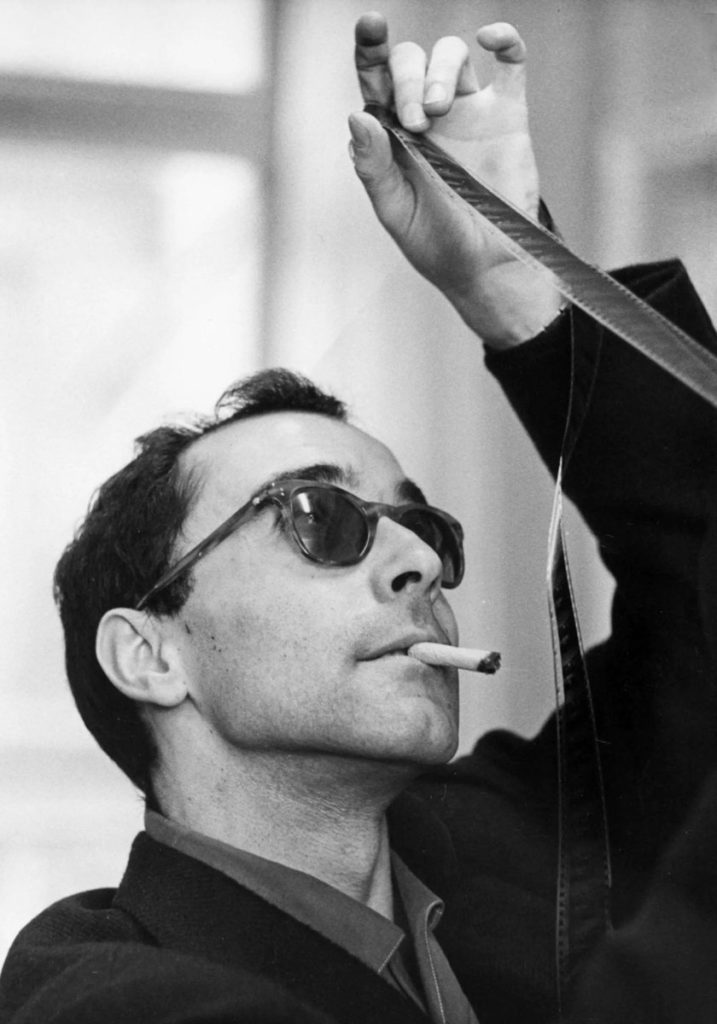
Jean-Luc Godard