


Dwayne Johson Lands Some Blows But The Smashing Machine is Not Quite a Knock Out
DIRECTED BY BENNY SAFDIE/2025

When a biopic scores a theatrical release during awards season, audiences are sure to expect a treat. Or at least a spirited debrief in the car ride home from the theatre. The Smashing Machine lands right smack in that category, and it boasts an impressive cast and crew to boot. Director Benny Safdie takes his own swing at the genre with a somewhat unconventional subject: Mark Kerr, a former MMA fighter and a pioneer of the UFC. For the lead role, Safdie did not have to search far. The responsibility here rests on the equally muscular shoulders of pro-wrestler and WWE legend Dwayne Johnson. Every aspect of the iconic persona of “The Rock” has been shed away here for Johnson to play Kerr at both his peak and drug-fueled rock bottom. This is a comeback story, for Kerr and Johnson both.
Through Safdie’s lens, we start in Brazil at the beginning of Kerr’s road to international success. The instant the first opponent hits the mat, it is evident that we are witnessing a singular kind of talent bloom. Kerr has an impressive professional history, but The Smashing Machine narrows the focus down to his time in Japan as a competitor in the Pride Fighting Championships. This an era where the UFC itself was still in its infancy to the point that a “no eye-gouging” has to be introduced. By the late nineties, Kerr himself was a star athlete in his prime with a respectful attitude and a fierce love for the competition. Clips of violent fights are mixed with his calm intellectual observations on the sport that he obviously loves. Outside the ring is a different reality entirely. This kind of career takes a significant physical toll on the body, which Kerr attempts to combat by abusing opioids. As Kerr puts it, “a day without pain is like a day without sunshine”. The drug use and the shaky, somewhat volatile relationship with his girlfriend Dawn (Emily Blunt) exposes a vulnerable side to the UFC fighter. When Kerr is forced to confront the concept of a professional loss directly, his tightly controlled demeanor unravels in a spree of self-destructive behavior that threatens to derail a promising future.

Benny Safdie is in typical fine form behind the camera. One of the more shocking aspects of The Smashing Machine might be the more mellow pace its director settles into. Compared to the energetic style so distinctive of his previous work – think Good Time and Uncut Gems – it almost feels laidback in nature. The delivery takes a kinder approach with this particular subject, perhaps because of its biographical nature. Whereas a typical sports biopic feels triumphant and victorious, The Smashing Machine portrays the harsh reality of an athlete who leaves empty handed. Outside of this slight variation to the genre, there are hardly any bells and whistles to be found. Safdie plays it uncharacteristically safe with his storytelling and the final product comes across as sanitized. If you are looking for graphic wrestling and a history of MMA fighting, certainly do not rely on this film for either. There is no real explanation of the logistics of the sport, nor is there a high percentage of these brutal matches actually shown on screen. Extreme emotions are left behind for a more clinical look inside the ring. There is no extravagant flare here, just the cold reality of the life of a fighter.
With a mediocre script, The Smashing Machine leans into powerful acting. Past work has established that Safdie is remarkably successful at encouraging actors to go beyond their range. His partnership with the Rock is further evidence of this. After a string of box office blunders, it is relatively apparent that Johnson is launching his redemption tour right here. And he’s out for blood. This is a far cry from the sanitized family films and high-budget action flicks that have become the building blocks of a lengthy but critically mixed career. With a little assistance from some delicate prosthetics, the line between Johnson and Kerr blurs until it is a mental struggle to differentiate the two men. There is a rawness to Johnson’s approach that is uncharacteristic of his standard macho, intimidating action hero roles. This massive titan of a man is flayed to the bone until all that remains is an insecure, wounded soul bending under the weight of his failures.
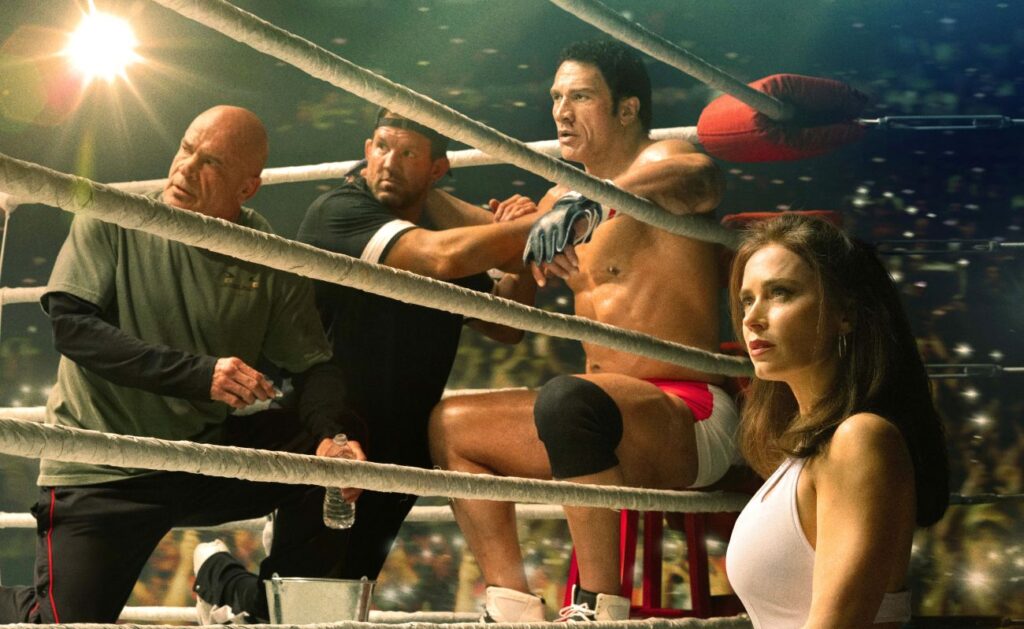
Emily Blunt is a solid scene partner as Kerr’s girlfriend, Dawn Staples. Their roles in the relationship are pretty stereotypical, and Blunt appears to be playing more of a caricature than a real person. It is not until the halfway marker that the script decides to add layers to Dawn’s character. Her presence in Kerr’s life may initially appear supportive, but her caring attitude sours rapidly after her boyfriend’s rehab stint. Each clash between the couple carries the same intensity as a match in the ring. Kerr’s controlling behavior and his intimidating physique endows an element of danger each time they argue. However, Dawn has all the reckless abandon of a loose cannon with a quick fuse. Their dynamic is every kind of unhealthy but the push-and-pull between them is hard to look away from. The rest of the cast is populated by a variety of non-actors. Professional MMA fighter Ryan Bader takes on the role of Mark Coleman, a UFC competitor pulling double duty as Kerr’s trainer and best friend. The friendship between the men has potential for exploration but is sadly put on the backburner. Kerr’s fall from grace is accompanied by Coleman’s own return and rise to glory. Through it all, both remain valiantly supportive of each other’s careers. There is no bad blood here, which is a refreshing change for once.
It is no shock that the word “Oscar” has been circling The Smashing Machine since it’s conception. The year 2025 has promised solo projects from both Safdie brothers after their professional creative disbanding. All critic’s eyes are on these two, and expectations are high. Add a Dwayne Johnson in a “never before seen” type of role and interested crowds are sure to consider buying a ticket. The final result lands somewhere adjacent of award worthy. Safdie does take a different approach here than his previous work, and his style fits this kind of project beautifully. Unfortunately, the script struggles to rise anywhere above mediocre. It is Johnson’s emotionally charged performance that becomes the beating heart of the entire film. It elevates the shaky script into an introspective piece of work about an athlete relatively unknown by the masses. This film could very well be the vessel that propels Johnson all the way to the top, and towards earning one of those coveted golden statues.